The multilingual intranet has evolved from an optional internal tool to a strategic asset for many companies in Murcia. Organizations with teams across different regions, countries or time zones need a digital workspace where corporate information reaches everyone in a clear, localized way. Publishing a manual, policy or procedure in only one language is no longer enough: internal communication must adapt to each person, their cultural context and the way they work. Q2BSTUDIO approaches this challenge from a software engineering perspective, not with a generic portal template, and builds solutions that scale with the operation.
A truly multilingual intranet requires more than a language selector. It must manage equivalent content in several languages, maintain consistent technical terminology, control which users can edit each version and ensure that date, currency and data formats display correctly in every region. It also needs to support targeted publishing by department or subsidiary, a common requirement in companies with a presence in multiple countries. When this work is done with scattered tools, errors, duplication and contradictory messages appear. That is why Q2BSTUDIO designs an information architecture in which multilingual content is a core part of the data model, not an afterthought.
User experience also changes in a multilingual intranet. A person working in a subsidiary in Mexico, a colleague collaborating from Barcelona and another teammate at the headquarters in Murcia may need different policies, local news and different service catalogs. Navigation must show relevant options in each user's language while preserving global governance. Designing this from the start reduces workload and builds trust in the internal channel. At Q2BSTUDIO, we do not start with a generic welcome page, but with a discovery process that identifies real workflows, technical constraints and business goals. This prior analysis allows decisions about platform, integrations and deployment model before writing a single line of code.
One of the factors that most influences the success of an intranet is its ability to integrate with the rest of the applications already used in the company. It is common to work with an ERP, a CRM, cloud office tools, HR systems and support platforms. An isolated intranet loses value. When it acts as an entry point to processes that live in other systems, it becomes essential. The custom software development that Q2BSTUDIO delivers makes it possible to connect the intranet to these systems through APIs, message queues or events, adapting behavior to the specific business rules of each organization. The goal is that employees do not need to switch tools to consult data or approve a workflow: the intranet presents the information and executes the action in the source system.
Technology infrastructure is another critical aspect. Many intranets are born with a simple architecture that later becomes difficult to maintain at scale. Q2BSTUDIO designs deployments on cloud AWS/Azure, with separate development, test and production environments, and with managed services that simplify maintenance. When confidential documents or customer data are involved, we also use private network models, VPNs and private endpoints. This allows the intranet to operate with the security guarantees expected by a large company without losing the flexibility of the cloud. The choice between AWS and Azure is made according to the specific needs of the project, not because of a closed technical preference, which provides independence and cost optimization.
In terms of cybersecurity, a multilingual intranet concentrates a lot of sensitive information: contracts, employee data, financial documentation, intellectual property and internal communications. Any breach has legal, economic and reputational consequences. That is why Q2BSTUDIO applies a layered security approach. It sets role-based access policies, requires strong authentication for administrative profiles, records relevant actions in auditable logs and includes controls aligned with GDPR. Identity and access management must be connected to the company's active directory or to the identity provider already in use. In addition, it is advisable to carry out penetration tests and configuration reviews to detect risks before they become incidents. Security is not an add-on: it is part of the architecture, especially when information is available in several languages and regions.
Artificial intelligence brings capabilities that were hard to imagine until recently. An internal search engine trained on company documentation can answer questions in the user's language, citing the exact source and showing related content. AI agents can classify documents, suggest translations, summarize meeting minutes, write announcements coherently in different languages or detect outdated content. At Q2BSTUDIO, models are selected and deployed according to the criticality of the data and the required level of privacy. In some cases, it is better to use public cloud models; in others, private models or retrieval augmented generation (RAG) techniques to reduce hallucinations and maintain traceability. The important thing is that AI is integrated into real workflows so that teams see concrete value, not an isolated experiment.
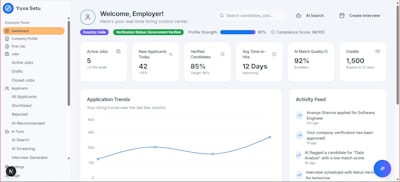
Measuring results is another pillar that many companies neglect. An intranet must be evaluated with objective data: active users, average search time, request resolution, procedure compliance or impact on onboarding processes. To do this, Q2BSTUDIO integrates dashboards based on BI/Power BI that combine intranet data with business indicators. These dashboards show management which content works, which languages have the most demand, which departments use the platform most and which automated workflows are generating the greatest time savings. Information is presented in a visual and accessible way, so decision-making no longer depends on perceptions but on evidence.
Q2BSTUDIO's approach to a multilingual intranet project follows an iterative methodology. First, a diagnosis is carried out to understand current processes and the expectations of the areas involved. Then a minimum viable product is defined to solve a clear use case, for example publishing corporate news in three languages and enabling document search. This MVP is put into production in weeks, not months, allowing real feedback and priority adjustments. Next, functionality is expanded: AI-assisted translation, BI dashboards, ERP integration or automation of internal requests. Finally, system administrators are trained so they can manage the portal and content autonomously. With this approach, investment is spread over time and the risk of building a solution that does not adapt to real needs is reduced.
Companies in Murcia operating in sectors such as agrifood, logistics, tourism or professional services have a growing need to coordinate teams serving customers in several markets. A well-designed multilingual intranet can accelerate onboarding, reduce response time for internal incidents, align criteria between branches and protect corporate knowledge. All of this has a direct impact on profitability. In addition, it makes it possible to automate repetitive tasks and free up time for higher-value activities. Q2BSTUDIO, as a software development company with experience in AI, cybersecurity, cloud and analytics, offers a complete vision that is not limited to installing a platform: it accompanies the client in the transformation of their internal communication.
If your company is thinking about centralizing multilingual documentation in an intranet and making sure the right information reaches the right person in their own language, an initial conversation can help identify what to address first. Q2BSTUDIO offers a free discovery session to understand your context, evaluate integration with current systems and propose a roadmap with measurable results. From custom software development to a deployment on AWS or Azure, including security management and automation with AI agents, the goal is to turn a truly multilingual, data-driven corporate intranet from a pending project into an efficiency engine for your organization.