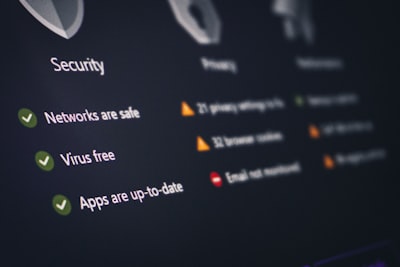
The security and architecture audit for multilingual intranet in Madrid 2026 has become a mandatory step for companies that want to avoid incidents, cost overruns and compliance problems. A corporate intranet is no longer a simple document repository: it is the digital operations center where teams from different countries, languages and departments work. Therefore, evaluating its technical design and protection measures before expanding or launching it is as important as building a solid foundation.
Q2BSTUDIO, a custom software development and technology company, supports organizations in Madrid with a practical, results-driven approach. Its team reviews both the cybersecurity side and the strength of the architecture, paying attention to the specific risks of multilingual platforms and the opportunities offered by AI.
The Madrid context in 2026 requires organizations to compete with modern technology tools, but also with secure processes. A poorly audited multilingual intranet can generate data leaks, slow searches, translation errors in automated workflows and a poor user experience. In addition, IT teams face constant pressure to adopt generative AI, intelligent agents and real-time dashboards. Without a prior audit, those adoptions often become isolated projects that do not deliver measurable value.
The audit should not focus only on finding vulnerabilities. It must also analyze whether the architecture can support expected growth, whether integrations with corporate systems are maintainable, and whether the data model can handle complex queries. In this sense, a multilingual intranet adds difficulties: content needs per-language versions, permissions must respect geographic areas, and search engines must understand queries in several languages. A team experienced in custom software development knows that every element must be designed with evolution in mind.
The architectural analysis starts with a review of components, APIs and services. Q2BSTUDIO evaluates whether the intranet uses open standards, whether microservices are properly isolated, and whether integrations with cloud providers such as AWS or Azure are configured without exposing credentials. It also reviews container strategy, orchestration and network policies. The goal is not to impose a specific technology, but to find the right balance between performance, maintainability and security.
The database is another pillar. The audit includes an analysis of the SQL schema, query quality, proper indexes and the state of migrations. A multilingual intranet usually works with content tables, translations, metadata and relationships between documents. If the model is not normalized, concurrency problems and slow response times appear. The audit identifies bottlenecks and offers actionable recommendations so the internal team can execute them without stopping operations.
In authentication and authorization, the review focuses on how passwords, sessions, single sign-on and role-based access control are managed. In a multilingual intranet, permissions often vary by country, branch or functional area. It is necessary to prevent a user in one office from accessing reports from another region due to a policy error. The exposure of sensitive data, especially in AI-driven environments, is one of the most critical risks. Therefore, the audit also reviews endpoints, API responses and access logs.
AI adds an additional layer of complexity. Many modern intranets include AI agents capable of answering questions, summarizing documents and automating tasks. These agents rely on techniques such as RAG, which combines generative models with internal knowledge sources. However, if document permissions are not applied correctly, the model can reveal confidential information. In addition, prompts can be manipulated to extract data. An AI audit must verify response traceability, training data hygiene and the cost of each query. Q2BSTUDIO addresses these challenges with AI methodologies applied to the real world.
AI governance is another aspect that cannot be ignored. Companies need to define who can create or modify agents, what data can be used, how automated decisions are documented, and what human oversight exists when a response can have relevant consequences. In 2026, European regulations and the principle of accountability push organizations to maintain clear records of how each model works, which versions are used, and what control mechanisms exist. The audit helps implement these governance layers without slowing down innovation.
Deployment is another critical point. A multilingual intranet without a well-defined continuous delivery process runs the risk of breaking production at the most unexpected moment. The review must cover secrets management, environment separation, branching strategy, automated tests, backup plans and disaster recovery policies. It is also advisable to review observability: centralized logs, usage metrics, alerts and request traceability. Without that information, it is impossible to know whether an outage is due to a network, database or external service problem.
In parallel, the audit pays attention to data protection and regulatory compliance. Multilingual intranets store personal data from employees, customers and suppliers in several countries. This requires retention, encryption, anonymization and right-to-be-forgotten policies. The audit verifies whether the system is ready to respond to access and deletion requests, whether contracts with cloud providers comply with the GDPR, and whether remote accesses use secure tunnels. In hybrid environments, the recommendation is usually to use private connections and secure endpoints in Azure or AWS, avoiding exposure of internal services to the Internet.
Cost visibility is also part of the equation. Many organizations launch AI projects without knowing how much they spend on infrastructure, tokens, storage and licenses. In the end, finance demands justifications and the project loses credibility. An audit introduces clear metrics and tracking dashboards, often supported by BI solutions such as Power BI, so management can see the relationship between technology investment and business results. In this way, expansion decisions are based on data rather than intuition.
Production readiness is the moment of truth. It is not enough for the application to work in a test environment. It is necessary to verify the ability to withstand peaks of users, proper synchronization with Active Directory or identity providers, the performance of multi-language searches and the ability to integrate with systems such as SharePoint, Teams or ERPs. The audit also defines rollback plans and acceptance criteria so that launch does not depend on luck.
Q2BSTUDIO structures its audit service in phases. First, a discovery session is held to understand the business, workflows and operational constraints. Then code, infrastructure and deployment processes are analyzed. Finally, a report is delivered with severity levels, quick wins, a remediation roadmap and an implementation estimate. This approach allows technical and business leaders to prioritize actions with judgment, avoiding unnecessary investments.
The value of this audit is perceived when the company can operate its intranet with confidence. Development teams stop fixing urgent incidents and begin to work on improvements that drive productivity. Security managers know that the exposure surface is reduced. And executives obtain a realistic roadmap to turn the intranet into a competitive advantage. This is possible thanks to a combination of cybersecurity, solid architecture and intelligent use of AI.
In addition, the audit serves as a starting point for building custom software that adapts to the internal processes of each organization. Standard solutions do not always understand the particularities of a multilingual company. Therefore, Q2BSTUDIO recommends complementing the audit with specific developments when necessary. In this way, technology stops being a bottleneck and becomes a business enabler.
In the Madrid context of 2026, with an increasingly internationalized economy, having a secure multilingual intranet is not a luxury. It is a condition for attracting talent, collaborating with foreign offices and offering a coherent digital experience. The security and architecture audit is the tool that makes it possible to achieve this with criteria, transparency and a results-oriented approach. Q2BSTUDIO offers discovery sessions to analyze each specific case and propose the scope of the audit. It is not about selling technology for the sake of selling, but about accompanying the company on its way to a safer, more efficient intranet prepared for the coming years.