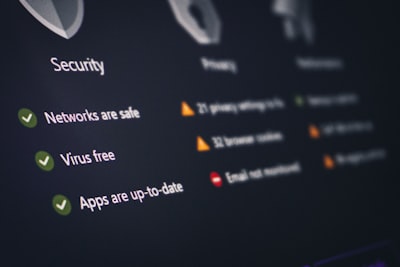
The corporate intranet has ceased to be a simple document repository. In 2026, a multilingual intranet is the company's operational hub: it connects teams, automates processes, centralizes knowledge and must do so with guarantees of security, performance and data sovereignty. For companies with offices in several countries, complexity multiplies. Translating the interface is not enough; a solid architecture is needed to manage permissions by region, comply with local regulations and offer a fluid experience in each language. Therefore, before expanding functionality or incorporating artificial intelligence, it is advisable to carry out a security and architecture audit that puts risks, costs and opportunities on the table.
Q2BSTUDIO, a software development and technology company based in Córdoba, addresses this challenge from a comprehensive perspective. Its team combines custom software development with artificial intelligence, cloud and cybersecurity. Instead of just reviewing code, they analyze the intranet as a complete system: business processes, integrations, infrastructure and data governance. This vision makes it possible to detect vulnerabilities that a traditional auditor would overlook, such as information leaks through AI models or incorrect configurations in cloud services.
A security and architecture audit for a multilingual intranet is not a superficial check-up. It involves reviewing code quality and SQL queries, evaluating indexes, execution plans and potential bottlenecks. It also includes the analysis of authentication and authorization, with special attention to role-based access control (RBAC) and the principle of least privilege. Exposure of sensitive data, secrets management in deployment, production environment configuration, monitoring and backup strategy are equally critical. All of this is documented with severity levels, quick wins and a prioritized roadmap.
The term 'architecture' is not limited to choosing a framework or a database. It includes integration patterns, cache strategy, state management, fault tolerance and the ability to scale horizontally. An intranet designed for a single language can work well with a monolithic architecture; a multilingual platform with thousands of users, however, needs decoupled components, well-designed APIs and observability mechanisms. The audit must validate that the current architecture can support expected growth without having to rewrite the entire system.
Regarding data access, SQL queries are often the first source of problems. An inefficient query that works in development can lock a table in production. The audit reviews the existence of appropriate indexes, relationships between tables, proper transaction management and schema migrations. It also detects queries that cross too much data or generate unnecessary locks. Optimizing these aspects improves response speed and reduces infrastructure cost.
The multilingual dimension adds layers of complexity. It is not just about having a language selector. Each language version may be subject to different regulations; access permissions may vary by subsidiary; content translation and approval flows must be automated to avoid relying on emails or loose files. An audit must verify that the architecture supports localization without duplicating business logic, that texts are not hardcoded, that dates, currencies and formats are handled correctly, and that the user experience is consistent across all languages.
From a security standpoint, the audit must validate the threat model. A user from one country should not access information from another country without explicit authorization. Data retention policies must align with GDPR and other local regulations. Encryption in transit and at rest is mandatory, but so is identity management in hybrid environments, where the intranet coexists with Active Directory, Microsoft Entra ID or other identity providers. Monitoring anomalous access and generating audit trails are essential elements to demonstrate compliance to regulators.
Penetration testing, or pentesting, complements static analysis. While code review looks for evident weaknesses, a pentest tries to exploit vulnerabilities from an attacker's perspective. Q2BSTUDIO has experience in both approaches and turns findings into concrete recommendations, prioritized by impact and likelihood of exploitation. This approach avoids generic reports and provides real value to both the technical team and management. In addition, its cybersecurity services cover both preventive review and incident response.
The cloud brings elasticity, but it also introduces new attack surfaces. In AWS, S3, IAM, VPC and CloudTrail services must be configured carefully. In Azure, access policies, diagnostics and private endpoints require granular review. Q2BSTUDIO analyzes the specific configuration of each environment, checking that there are no exposed credentials, open ports or overly permissive policies. It also recommends hybrid architectures when the intranet needs to connect to on-premises systems through IPsec VPN or Azure ExpressRoute.
Artificial intelligence has changed the rules of the game. A modern multilingual intranet usually incorporates semantic searches, virtual assistants and automatic summaries. The audit must cover specific AI risks: prompt leakage, document permissions not respected by the model, traceability of responses generated through RAG, token costs and autonomous agent behavior. Q2BSTUDIO evaluates the AI architecture so that models only access the information the user is authorized to see. For regulated environments, it recommends private LLM deployments, secure VPN tunnels and private endpoints in Azure, preventing confidential information from leaving the controlled infrastructure.
AI governance is becoming a specialization in its own right. Companies need clear policies about which data can be used to train models, who can create prompts, how responses are reviewed and what protection measures are applied against misuse. The audit assesses whether the intranet's AI strategy is consistent with the organization's compliance framework and whether sufficient controls exist to ensure transparency and traceability.
AI agents are an unstoppable trend. They automate complex tasks, answer questions, generate reports and execute actions. However, in a multilingual intranet they must operate within clear boundaries. The audit must verify that each agent has a defined purpose, that its actions are reversible or require approval, and that its decisions can be audited. Q2BSTUDIO helps design secure AI agents, connected to corporate data sources and aligned with business strategy, avoiding the risks of improvised deployments.
Observability is another pillar. A multilingual intranet generates thousands of events per day; without clear metrics, improvement is impossible. The audit must establish performance, availability and user experience indicators. The collected data can feed dashboards in Power BI, where business leaders visualize response times, usage by language, incidents and costs per service. Q2BSTUDIO integrates BI and monitoring so that management makes data-driven decisions, not intuition. Cost visibility is also essential: every API, every AI model and every cloud service must have an owner and a defined budget.
Q2BSTUDIO's methodology combines technical and business thinking. First, a discovery phase that maps workflows, dependencies and KPIs. Then, phased delivery, with a minimum viable product that goes into production in weeks. Integrations with SAP, Odoo, Microsoft Dynamics, Salesforce, HubSpot, NetSuite, SharePoint and Teams are solved through APIs, without replacing existing systems. AI governance is configured with human supervision in sensitive processes and with panels for the business team to adjust prompts or monitor costs without depending on engineering. This approach turns the audit into an investment with measurable return.
The result of a well-executed audit is a faster, more secure intranet ready to grow. Cycle times are reduced, repetitive manual tasks are eliminated and employee experience improves. When technology fulfills its function, the business benefits from more fluid internal communication and data-driven decision making. Companies that integrate AI into their workflows achieve greater competitive advantages than those that use it in isolated experiments, but only if the underlying infrastructure is solid.
In summary, the security and architecture audit for a multilingual intranet in Córdoba is not a formality, but a transformation lever. It makes it possible to know the real state of the system, correct vulnerabilities before they are exploited and lay the foundations for incorporating AI, cloud and analytics securely. Q2BSTUDIO combines custom software development, artificial intelligence, cybersecurity, cloud services and BI to offer a complete and contextualized solution. If your company operates in several languages and wants its intranet to be a strategic asset, a professional audit is the right first step.