In 2026, a medium-sized company in Córdoba set out to solve a problem that had been slowing its operations for years: information was spread across many tools, teams did not share a common working language, and internal processes depended on manual approvals. Management needed a multilingual intranet that not only communicated, but integrated systems, reduced errors and provided reliable data. After analyzing different alternatives, they chose Q2BSTUDIO, a company specialized in custom software development and data-driven digital transformation. This success story explains how the project was executed in 2026, what technology was used, and what results were achieved.
The company operated in sectors where international collaboration is common. In fact, part of the team was in Spain, another in Latin America, and another worked in Portuguese. Each office managed its own templates and processes. The ERP, CRM, and SharePoint were in use but did not unify knowledge. Documents were duplicated, versions were lost, and translation of content was handled through emails and external translators. The lack of a common platform not only generated frustration, but also very high coordination costs.
The first step was a diagnosis. Q2BSTUDIO interviewed operations, administration, and technology leaders to identify critical workflows, points of friction, and baseline metrics. Instead of starting from a template, they defined a working model based on the company's reality. Indicators such as internal request resolution time, number of documentation errors, and cost per process were agreed upon. This phase made it possible to design an intranet that was truly adapted to the business.
The final solution was a multilingual intranet built with custom software. Q2BSTUDIO combined a modern corporate portal with an artificial intelligence engine that automatically classified content, tagged it, and distributed it in the appropriate language. This was built on cloud services from AWS and Azure, which guaranteed scalability, availability, and access control. The infrastructure was deployed in a private, virtualized environment, with encryption in all communications and continuous monitoring.
The artificial intelligence was not a promise; it was embedded in daily work. For example, when an employee created a procedure in Spanish, the system automatically generated English and Portuguese versions, checked consistency against corporate glossaries, and notified the quality owner before publication. In cases where accuracy was critical, a human had to validate the content. This combination of automation and human oversight is the foundation of the secure, efficient AI systems that Q2BSTUDIO deploys in enterprise environments.
In addition, the intranet included AI agents that helped employees find relevant information without knowing the exact folder structure. An operations employee could ask naturally what the purchasing procedure in Brazil was, and the agent searched documents, summarized the steps, and attached updated forms. If the content did not exist or was outdated, the agent flagged it and opened an update request. This feature drastically reduced queries to other colleagues and improved team autonomy.
Process automation was another pillar. Q2BSTUDIO connected the intranet to the ERP and CRM through APIs and orchestrated workflows. Hiring requests, supplier onboarding, and expense approvals no longer depended on email and spreadsheets. Each task had an owner, a deadline, and a record in the system. If a step was stuck, the owner received an alert and the supervisor saw the exact status of each request.
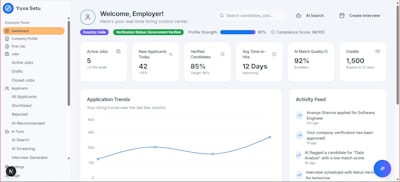
Visibility for executives was one of the most valued achievements. With Business Intelligence and Power BI dashboards, activity indicators were centralized. Management could see the volume of requests by area, average response time, number of completed tasks, and internal satisfaction. The panels updated in real time and made it possible to compare performance across offices and teams. This turned the intranet into a management lever, not just a document repository.
Cybersecurity was a cross-cutting requirement. The multilingual intranet stored personal information, contracts, and commercial data. To protect it, role-based access control, multifactor authentication, strong password policies, and a detailed audit log were applied. In addition, penetration testing and a vulnerability review were conducted before launch. GDPR compliance was documented at all times, which was essential for internal and external audits.
The rollout was phased to minimize operational impact. During the first weeks, a pilot group of 12 employees tested the tool and provided improvements. Then it was extended to the rest of the organization, with short training sessions and supporting materials. The Q2BSTUDIO team supported each phase and adjusted workflows according to real usage. In less than three months, the intranet was the company's main corporate tool.
Results exceeded initial expectations. The administrative burden on the operations team fell by around 45%, because the system eliminated repetitive tasks and centralized information. The execution time of critical processes accelerated by around 32%, and the document error rate dropped from 21% to less than 7%. Return on investment was achieved in less than ten months, counting savings in working hours and improvements in data quality.
Beyond the numbers, the project changed how employees related to technology. The intranet was perceived as a real help, not as an imposition. Employees stopped searching for information in endless folders and began to trust the platform to resolve doubts, publish documents, and coordinate tasks. Communication between offices became more fluid thanks to automatic translations and shared workspaces.
One of the most important lessons from this case is that technology must adapt to the process, not the other way around. Integration with existing systems, team commitment, and prior definition of indicators were more decisive factors than choosing a specific AI model. It also became clear that human oversight is still necessary in sensitive decisions, and that gradual rollout reduces resistance.
Q2BSTUDIO is a software development and technology company with experience in implementing multilingual intranets, process automation, artificial intelligence, and cloud solutions. This project combined custom applications, AI agents, Power BI dashboards, and a secure infrastructure on AWS/Azure. The company also offers related services such as cybersecurity, technical consulting, and support in all project phases.
If your company in Córdoba is considering a multilingual intranet or a similar digital transformation project, the first step is to analyze current processes and define expected outcomes. Q2BSTUDIO can help you build a custom, measurable, and secure solution, connected to your current systems and ready to grow in 2026. Well-planned technology can change a team's productivity and competitiveness in just a few weeks.