The cost of custom software development is often seen as an expense, but in reality it is a strategic decision that directly affects operational quality. The question of whether it reduces human error deserves a nuanced answer: yes, when the software is designed with that purpose in mind. Digitizing a process is not enough. You have to model business rules, incorporate automatic controls and build an experience that guides the user toward the right action. Custom applications can achieve this because they are born from a deep analysis of each workflow.
Human error has hidden costs that are often not reflected in accounting: an incorrectly issued invoice can delay payment, a badly entered piece of data can cause an incorrect shipment, a report with outdated metrics can lead to a wrong decision. Generic management software tries to mitigate these risks with standard configurations, but every organization has particularities that universal design cannot contemplate. Custom software development makes it possible to close these gaps, because every screen, every field and every alert responds to a specific risk that the company wants to avoid.
One of the most effective ways to reduce human error is validation at the source. When a person enters data, the application can immediately check whether the format is correct, whether the value is within an acceptable range or whether there is a duplicate. This validation does not depend on the employee's attention; it is embedded in the system logic. In addition, approval workflows can require certain operations to pass through more than one person, so that a one-off error does not become a critical problem. The cost of developing this protection layer is minimal compared with the losses it prevents.
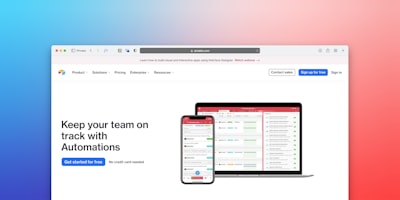
Process automation extends this protection even further. Repetitive steps, such as generating a report, updating a database or sending a reminder email, can be executed without human intervention. This eliminates errors caused by fatigue, lack of time or simple forgetfulness. However, automation should not be an end in itself. It must be designed to respect business criteria and to be auditable at any time. A correctly automated process leaves traces of every action, making it possible to understand what happened if something does not go as expected.
Artificial intelligence adds an intelligent layer to custom software. AI algorithms can analyze large volumes of historical data to detect anomalous patterns. For example, they can warn that an order is unusually large, that a customer is changing their purchasing behavior, or that a machine is consuming more energy than normal. These alerts arrive before the problem materializes, giving managers time to act. Instead of waiting for human error to cause a failure, AI helps prevent it.
AI agents represent the evolution of this idea: they not only warn, they also act. An agent can receive an email, extract the relevant data, check that it meets the conditions and update the management system. If its scope of action is correctly defined, the agent reduces manual workload and, with it, the possibility of mistakes. However, it is advisable to establish supervision mechanisms so that automatic decisions can be reversed if they are not correct. The balance between autonomy and control is essential for AI agents to be a help, not a source of new errors.
Cybersecurity is also related to human error. Many security breaches start with a weak password, a misconfigured permission or a malicious link opened by an employee. Custom software can reduce this risk by applying role-based access policies, multi-factor authentication and encryption protocols. It also facilitates the creation of activity logs that make it possible to detect unusual behavior. If someone makes a mistake, the system is prepared to contain it and to identify what happened.
The infrastructure where software runs also influences reliability. AWS and Azure cloud services offer monitoring tools, automatic backups and disaster recovery plans. When a custom application is deployed in a well-designed cloud architecture, errors derived from manual server management are reduced: a forgotten update, a full disk, an expired certificate. The cloud does not eliminate all problems, but it turns many operational risks into the provider's responsibility, with measurable service level agreements.
Business analytics, especially with Business Intelligence (BI) tools such as Power BI, plays a key role in preventing human error in decision-making. When reports are prepared manually, each area is likely to use different sources or different calculation criteria. A Power BI dashboard, connected to the same database used by the custom application, ensures that everyone is talking about unique data. This avoids unproductive arguments about whether a figure is correct and allows more time to be spent interpreting data and making decisions.
Change management is also part of the equation. Implementing custom software is not only a technological project; it is a transformation process that requires training, communication and adjustments. If employees understand why a process is automated and how it makes their work easier, adoption is faster and errors caused by unfamiliarity decrease. Q2BSTUDIO accompanies this process with agile methodologies and discovery sessions, so that the work team participates in defining workflows and feels ownership of the solution.
The budget for custom software development should not be evaluated without considering its total cost of ownership. Generic software may seem cheaper at first, but it forces companies to adjust processes, pay annual licenses and live with functions that are not used. A custom application, on the other hand, focuses on priority needs and can be expanded in phases. Q2BSTUDIO structures projects so that the client sees value from the first iterations and controls spending at each stage. That transparency makes the cost a manageable investment, not an unknown.
The goal is not to eliminate people from the process, but to allow them to focus on what they do best. Custom software handles memory, precision and traceability. When a person stops wasting time looking for data or correcting errors, their energy goes to activities that create value: negotiating with clients, improving service, innovating in product. In this new dynamic, development cost is amortized much faster because it improves everyone's productivity.
In short, the cost of custom software development reduces human error if the project is conceived with that objective. Technology is a means, not an end. The key is to identify the processes where failures are most damaging, design clear rules and choose a technology partner that understands the business. Q2BSTUDIO combines experience, talent and current tools to offer solid solutions in cross-platform applications, artificial intelligence, cybersecurity, AWS/Azure cloud and Business Intelligence. Therefore, when a company asks whether it is worth investing in custom software, the right answer is another: can it afford to keep dragging the costs of human error?