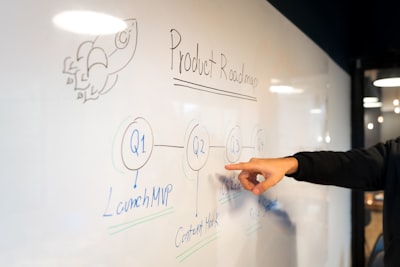
The cost of custom software should not be read as an invoice, but as a map. When an organization includes its own application in its innovation roadmap, it is deciding which capabilities it wants to control, at what pace it wants to evolve, and which data it wants to leverage. The price of a development responds to technical and strategic variables: functional scope, complexity of integrations, required security level, and collaboration model with the provider. That is why any cost analysis must start with strategy, not with budget.
An innovation roadmap needs to compare options. You can buy a standard solution and adapt the company. You can build custom applications and adapt the technology. The second option is more expensive in the short term, but cheaper in the long term if differentiation is real. A custom application removes dependencies on features you do not use, reduces manual processes, and allows you to experiment with new business logic exactly when you need it.
Cost accumulates in layers. The foundation is architecture: choosing between monoliths and microservices, deciding whether data lives in the cloud, designing APIs to connect systems. On that foundation, business modules, user experience, and automations are built. Each layer has an implementation cost and a maintenance cost. A good estimate is not limited to programming hours; it includes change management, testing, security, and operations.
Infrastructure on AWS or Azure cloud is one of the points where project cost changes the most. A cloud architecture allows pay-per-use, scaling on demand, and shorter deployment time. For an innovation roadmap, this means you can launch a prototype with a minimal budget and increase investment only when indicators confirm it. At Q2BSTUDIO, we connect custom development with managed cloud services so that cost grows with value, not before value.
Security cannot be a late addition. The cost of custom software includes access control design, identity management, and penetration testing. If innovation accelerates, the exposure surface also grows. A development that ignores cybersecurity can cause losses far greater than the initial savings. Therefore, investment in protection must appear from the discovery phase, not at the final phase.
Artificial intelligence adds a new dimension to cost. Custom software can integrate with AI models to automate repetitive tasks, classify documents, predict demand, or personalize the user experience. AI agents, in particular, allow software to act on data and execute processes with human supervision. This changes the innovation roadmap because the cost of developing an AI capability becomes a reusable asset across multiple areas.
The Business Intelligence layer turns operational data into decisions. A custom software project generates a large amount of information: transactions, interactions, performance. Integrating it with Power BI or other BI tools makes it possible to measure the impact of innovation in real time. The cost of this integration is low compared with the value of knowing what works and what does not. Without that metric, the roadmap is just a wish list.
Automation is the bridge between a custom application and operational efficiency. Every process that can run without manual intervention frees hours for higher-value activities. A well-built automation platform reduces errors and accelerates business response time. The cost of automating a process should be evaluated by the volume of work it avoids, not by technical complexity.
An innovation roadmap with a limited budget needs a phased delivery plan. You do not have to fund the entire project at the beginning; you can build a first module, validate it with real users, measure results, and decide the next iteration. This logic of incremental cost is the most compatible with innovation. A technology partner must explain what functionality each phase delivers, what infrastructure it needs, and what indicators will be used to evaluate progress.
Q2BSTUDIO approaches custom software cost from a product perspective, not a project perspective. First, a discovery phase is carried out to understand the current state, business vision, and technical constraints. Then an architecture is designed in which application development, cloud, security, and artificial intelligence are part of the same framework. Estimates are broken down by phase and reviewed as real market learning is obtained.
Cost must also take the team into account. Custom development requires architecture, backend, frontend, data, DevOps, and quality profiles. Each of these profiles contributes to ensuring innovation does not stay in theory. Continuous communication between the business and the technical team is a cost factor, but it is also the factor that prevents building something nobody wants.
The transformation driven by the innovation roadmap relies on applications that evolve. Evolutionary maintenance is different from corrective maintenance. It is not only about fixing bugs; it is about adding functionality, adapting to new regulations, and leveraging new cloud capabilities. The cost of that evolution is the premium for continuous innovation.
When comparing custom software cost with alternatives, it is important to use a total value framework. The price of an annual license may seem lower, but it includes hidden costs of integration, customization, training, and loss of flexibility. A custom application, on the other hand, can be modular to grow with the company. The decision is not only technological; it is strategic.
The innovation roadmap must include risk management. Custom software development has less functional fit risk than buying standard software, because the specification is built with the client. It has more execution risk if you do not have an experienced team. That risk is mitigated by selecting the right partner, using agile methodologies, and delivering frequently.
In summary, custom software cost fits into the innovation roadmap as an experimentation enabler. It is not the easiest expense to explain, but it is the one that allows sustainable competitive advantage. With the right combination of architecture, cloud, security, data, and AI, every euro invested expands the company's ability to detect opportunities and respond quickly. Q2BSTUDIO helps organizations turn that cost into a growth lever.