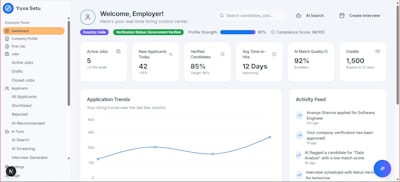
When a company operates with teams in several countries, clients who speak different languages, or offices that have grown through acquisitions, information tends to become fragmented. Each office uses its own tools, documents are duplicated, and employees waste hours searching for answers that should be one click away. A well-designed multilingual intranet is no longer an organizational luxury: it is the backbone that connects people, processes, and data in a secure, orderly digital environment ready to scale.
How do you know if your company needs one? Look at the symptoms. If new employees take weeks to understand internal policies, if support teams answer questions that are already documented, or if each subsidiary manages its own file repository without a common standard, the answer is yes. The lack of an intranet accessible in multiple languages creates errors, friction, and invisible costs that accumulate silently.
A modern intranet goes beyond the classic news portal. It becomes a digital workspace where documents, forms, approval flows, calendars, and collaboration tools coexist. For this to work in complex organizations, you need custom software that adapts to your processes, not the other way around. Generic solutions often fit poorly in companies with international operations.
The multilingual component adds a strategic layer. It is not enough to translate menus or labels. You have to manage content versions in each language, respect local regulations, and ensure that an employee in Berlin receives the same relevant information as one in Mexico City, with cultural nuances and consistent terminology. Good design separates structural content from local content, allowing each team to publish in its own language without losing corporate coherence.
Technology matters a lot. Recommended architectures rely on the cloud, whether AWS or Azure, to ensure availability, elasticity, and disaster recovery. The connection between the intranet and internal systems must be made with secure tunnels, encryption, and access control. At this point, experience in cloud infrastructure is decisive to avoid bottlenecks and vulnerabilities.
Artificial intelligence has changed the rules of the game. A multilingual intranet with AI capabilities allows users to search information using natural language, summarize long documents, recommend content according to each user's role, and even execute administrative tasks through AI agents. These virtual assistants can handle vacation requests, generate certificates, or update master data, freeing the team from repetitive tasks.
For AI to work well, it needs organized data and connections with business systems. An isolated intranet loses much of its value. That is why integrating it with your CRM, ERP, support tools, and collaboration platforms is essential. Integration can be done through APIs, events, or native connectors, and it must allow the intranet to act as a command center, not an island.
Automation of internal processes is another major benefit of a well-built intranet. Purchase requests, supplier onboarding, IT tickets, or document reviews can be initiated from the intranet and move through automatic approval flows. Every step is recorded, and managers receive notifications without endless emails. A custom software approach makes it possible to model these rules exactly as the organization needs them, instead of accepting the limitations of closed packages.
Visibility is another central benefit. When the intranet records processes and queries, it is possible to measure real team productivity, detect bottlenecks, and improve decision-making. Dashboards based on Power BI and other business intelligence tools turn internal data into clear indicators. Management can compare performance by area, language, or region and act quickly.
Launching a multilingual intranet project requires method. First, a brief diagnosis to map information flows and the most urgent pain points. Then, a functional prototype that solves a concrete use case in a few weeks. Finally, an incremental deployment that allows measuring results and adjusting before scaling. This sequence reduces risks and avoids oversized investments in features that no one uses.
Content governance is one of the most underestimated points. In a multilingual environment, you have to decide who can publish, in which languages, and with what review flow. An editorial committee can define templates, styles, and translation criteria, while local managers adjust messages to their context. A perfect intranet is useless if no one owns its maintenance.
Security cannot be an afterthought. Access must be role-based, with robust authentication, activity auditing, and protection of personal data according to regulations such as GDPR. If the intranet handles confidential information, it is wise to include penetration testing and cybersecurity reviews before each launch. A provider with experience in this area brings peace of mind and avoids future problems.
What about return on investment? A multilingual intranet reduces time spent searching for information, accelerates employee onboarding, reduces operational errors, and facilitates collaboration among dispersed teams. Although savings depend on company size, it is common to recover the investment in less than a year thanks to increased productivity and reduced administrative work.
Employee adoption determines the project's success. An intranet only generates value if it is used daily. That is why the experience should be designed with the end user in mind: visible search, relevant notifications, and easy access from any device. Short training sessions and a feedback channel during the first weeks help correct deviations and build trust.
Q2BSTUDIO is a software development and technology company that supports organizations throughout the entire process: from initial design to daily operation. Its approach combines custom software, artificial intelligence, cloud AWS/Azure, cybersecurity, and business intelligence to build intranets that people actually use. If your company needs a multilingual intranet, having a technology partner that understands both strategy and technical detail makes all the difference.