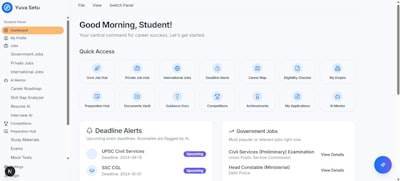
Does a multilingual intranet support third-party integrations? The answer is yes in practice, but the key is in how those integrations are implemented. An intranet that only translates content is not enough; it needs to be connected to the systems the organization uses every day to become a work hub.
A well-designed international portal communicates with a CRM to synchronize contacts, with an ERP to review orders, with document management tools to index files, and with collaboration platforms to unify messaging. It can also connect to HR systems, ticketing solutions, and technical knowledge bases. The technical feasibility of these integrations depends on the intranet exposing well-documented APIs and consuming third-party APIs with robust authentication and error-handling patterns.
Third-party integration is not a functional extra; it is what turns an intranet into an ecosystem. When each department works in its own tool without communication, data is duplicated, decisions are made with outdated information, and employees waste time searching for references. A multilingual intranet with real connectivity reduces friction and allows a subsidiary in Mexico, an office in Germany, and another in Singapore to work with the same source of truth, regardless of each user's language.
From a technical point of view, integration patterns can be synchronous using REST calls, or asynchronous using message queues and events. An event-driven architecture is especially useful for real-time data updates: when a customer changes their information in the CRM, the intranet receives the event and updates linked records without manual intervention. This requires defining retry, deduplication, and fault-tolerance strategies, because communication between systems is never completely reliable.
The multilingual dimension adds an extra layer of requirements. Integrations must handle content in multiple languages, respect regional date and number formats, and support translation workflows for metadata, categories, and permissions. The intranet should also allow languages to be configured by profile, department, or location, and connect to machine translation or translation memory services to reduce content maintenance workload.
This is where custom software applications make the difference. Standard software usually offers prefabricated connectors, but every company has unique processes that do not fit a generic mold. A custom-developed solution makes it possible to model the integration flow with exact business rules, add specific validations, and adapt the user experience to the language and culture of each region. Q2BSTUDIO designs custom applications so the intranet can expand without breaking existing systems.
Security and cybersecurity are starting conditions in any integration project. Each connection to an external system can expand the attack surface if measures are not taken. Multi-factor authentication, role-based access control, end-to-end encryption, audit logging, and periodic permission reviews should be applied. Cybersecurity is not a final module; it is a cross-cutting property that must be present in the architecture from day one.
The infrastructure that supports the intranet also determines the quality of integrations. Using cloud services on AWS or Azure provides a scalable foundation to manage demand spikes, deploy components in multiple regions, and connect managed identity and database services. In a multilingual intranet, data residency may require choosing a specific region to comply with local regulations; the cloud allows this flexibility without giving up operational centralization.
Artificial intelligence (AI) brings capabilities that seemed impossible a few years ago. An integrated intranet can use AI to answer queries in each employee's language, extract information from documents, recommend content, or automatically classify requests. AI agents, when designed with human supervision, can perform tasks such as creating a ticket, updating a customer record, or sending a notification to a department manager. The challenge is not implementing isolated AI, but connecting it to existing processes and systems.
Business visibility also improves when the intranet is integrated with BI/Power BI platforms. Dashboards then show indicators such as employee onboarding time, activity by department, open incidents, or intranet adoption levels. Executives and team leaders get a clear view without having to use technical tools, because the information is presented inside the same portal.
Q2BSTUDIO, as a software and technology development company, approaches this type of project by combining process analysis, integration architecture, agile development, and post-launch support. Its methodology includes discovery sessions to map current systems, prioritize use cases, and define success indicators. The Q2BSTUDIO team does not start from a closed product; it starts from the business problem and develops the most appropriate solution, integrating existing technologies and avoiding unnecessary investment.
A practical issue that many organizations overlook is the lifecycle of integrations. A connector works today, but third-party APIs change, are deprecated, or modify their usage limits. The intranet must have monitoring mechanisms, detailed logs, and automated tests to detect issues before they affect users. Automating these controls reduces response time and frees the internal team from repetitive supervision tasks.
When choosing a provider, it is worth asking how the governance of integrations is managed. Can permissions be revoked individually? How are accesses audited? Where are logs stored? What happens if an external service fails for several hours? An experienced company will respond with a concrete plan and provide clear documentation so the client keeps control of their platform.
In short, a multilingual intranet integrated with third-party systems is a real competitive advantage, as long as it relies on a well-defined architecture, solid security, and a technical partner that supports the company beyond code delivery. The combination of custom applications, AWS/Azure cloud, AI, cybersecurity, and BI/Power BI is what allows the intranet to stop being a simple document repository and become the operating brain of the organization.