A multilingual intranet is not just a document repository: it is the digital backbone of internal operations when a company operates across countries, languages and organizational cultures. For executives and IT leaders, the relevant question is no longer “which platform do we install”, but rather “what measurable results can we expect from it”. This article addresses that question from a technical and business perspective and explains how a well-executed implementation impacts productivity, costs and decision-making.
Q2BSTUDIO approaches these projects as a combination of engineering and strategy. It does not simply install a template: it studies current processes, identifies bottlenecks and defines indicators before writing code. This turns the intranet into a results platform, not just another technology expense.
The first measurable result usually appears in reduced search time. In traditional intranets, employees lose valuable minutes looking for an updated version of a tariff, an internal policy or an instruction manual. In a multilingual intranet with generative AI, the user asks a question in their own language and receives a synthesized answer with the original source. Measuring this indicator is straightforward: average time to resolve internal queries. With a correct implementation, that time is often reduced by more than half.
Another quantifiable benefit is process acceleration. When talking about expense approvals, supplier onboarding or HR requests, every day of delay affects the business. By integrating the intranet with systems such as SAP, Odoo, Salesforce or Microsoft Dynamics through APIs, information flows automatically and tasks run with less manual intervention. In addition, AI agents can validate certain routine decisions autonomously, always with clear and auditable rules.
Defining indicators correctly requires separating correlation from causation. It is not enough to observe that productivity is rising; each improvement must be linked to a concrete change in the intranet. For example, if training is redesigned, the natural metric is the average time to complete a course, not overall satisfaction. This discipline turns the project into a continuous improvement process.
Quality also improves. An operator working with a localized version of a procedure makes fewer errors than one who mentally translates instructions from a foreign language. Measurable results include a lower defect rate in records, fewer rejected invoices and greater consistency in master data. In manufacturing and logistics companies, this has a direct impact on quality and compliance indicators.
Employee satisfaction is another variable to monitor. Internal surveys, adoption rate and frequency of use reveal whether the platform genuinely helps or becomes a burden. A multilingual intranet with a personalized experience reduces friction, allows each person to see resources in their own language and supports internal mobility. Organizations that measure these data before and after often see a significant improvement in eNPS or workplace climate scores.
To achieve these numbers, technical architecture matters. A robust solution relies on microservices, API integrations and a unified interface. This is where custom software development has an advantage: instead of adapting the business to a closed product, each workflow is designed to fit real operations. Q2BSTUDIO has seen cases where a company reduced new employee onboarding time by 30% using an intranet that combines localized content, automated guidance and progress tracking.
Cloud brings elasticity and security. But it is not enough to host everything on the internet. It is advisable to use AWS/Azure cloud services with virtual private networks, encryption at rest and in transit, and role-based access control. For companies with sensitive data in their own facilities, secure connections can be established between the intranet and the on-premises environment. This combines cloud flexibility with the governance required by an internal system.
In parallel, cybersecurity must be designed in from the start, not added at the end. A multilingual intranet concentrates confidential information about employees, customers and suppliers. Multi-factor authentication, access audits and data retention policies are key elements. Moreover, if the intranet includes AI, clear boundaries must be defined to avoid data leakage: the model should not be trained with internal information without explicit authorization.
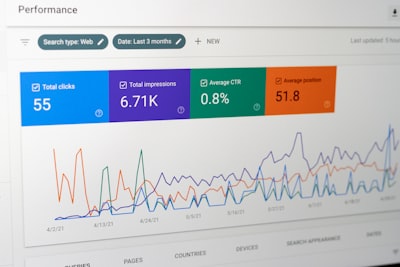
Visibility for management is achieved through a dashboard based on Business Intelligence. With Power BI, for example, internal processes, response times, adoption levels and operational costs can be visualized in real time. Executives do not need to browse PDF reports: they view an interactive panel where each indicator is linked to a reliable data source. This observability capacity is what turns an intranet into a strategic tool.
Integration with existing systems is another critical factor. Many companies try to build an isolated intranet and then see adoption drop. A correct strategy connects the intranet with the tools people already use: email, calendar, ERP, CRM and internal applications. Deep links and notifications in the usual channel reduce the learning curve and accelerate return.
Another often overlooked aspect is content governance. A multilingual intranet is not a static project: it needs content owners for each language, clear publication flows and versioning. If it is not managed well, information becomes outdated and users stop trusting it. Therefore, the project must include roles, permissions and a periodic review process. Technology helps, but editorial responsibility must also be defined.
In terms of implementation, an iterative approach is most effective. First, a pilot is defined with a concrete area, such as HR or quality, and launched in a few weeks. This phase allows validation of languages, integrations and metrics. Then it expands to other units, always comparing indicators with the initial situation. This logic is used by Q2BSTUDIO teams in automation and AI projects: generate value early, measure and scale.
The budget of a multilingual intranet cannot be evaluated solely through development cost. It must be considered as an investment in operational efficiency. If a company with 500 employees saves 30 minutes per person per week, the annual impact is equivalent to several hundred thousand euros. This calculation, together with error reduction and employee experience improvement, is the basis for presenting the case to the finance department.
The immediate future involves AI agents that act on internal data: reading a document, updating a record, answering a request or escalating an exception. The key is that these agents act with permission, traceability and clear limits. When that is combined with a multilingual intranet, efficiency stops being occasional and becomes structural.
The key is turning information into action. A multilingual intranet that does not produce decisions or save time is simply an internal website. When designed with AI, data and automation, it becomes a performance platform. For companies operating in several countries, that ability to measure and improve is the difference between growing with order or growing blindly. And that is, ultimately, the result obtained with a well-executed strategy.