A multilingual intranet is more than a document repository: it is the communication and operations core for companies with teams in multiple countries. When employees speak different languages, the platform must deliver the same working experience in every language, without duplicating effort or creating information silos.
The need for a multilingual intranet grows with international expansion, remote work, and the addition of distributed profiles. Organizations need an employee in Mexico, another in Germany, and another in Japan to access the same policies, procedures, and news, each in their own language. This requires a solid technical architecture, not a simple automatic translator.
The main feature of a multilingual intranet is per-language content management. The system must allow creating local versions of each page, setting a default language, controlling which translations are published, and managing review workflows. Without this foundation, content becomes outdated or mixed across languages.
Beyond translation, localization matters. Dates, currencies, numeric formats, and legal references change by region. A well-prepared intranet must adapt these elements automatically and allow administrators to configure regional variants within the same language, such as Spanish from Spain or Spanish from Latin America.
Another pillar is role and location-based personalization. A commercial employee should see different indicators, news, and tools than a production employee. The multilingual intranet must integrate with the corporate directory, for example Active Directory, to assign permissions dynamically and display only relevant information.
This is where artificial intelligence becomes a differentiator. Traditional search engines look for exact words; a modern intranet uses AI to understand query intent, find answers in multiple languages, and show them with context. Implementing artificial intelligence solutions reduces the time employees spend searching for documents.
AI agents take this experience further. They can answer questions about internal policies, summarize long documents, suggest training courses, or guide employees through processes such as vacation requests. These agents learn from corporate documentation and respond in the language each user prefers.
For an intranet to work in a multilingual environment, integration with custom software is often necessary. Many companies have internal tools, ERPs, or CRMs that do not provide a satisfactory multilingual experience. The intranet can act as a unifying layer and, through custom software development, connect critical processes without replacing existing systems.
The cloud also plays a fundamental role. An AWS/Azure cloud infrastructure provides scalability, availability, and processing capacity to host content in different regions. It also facilitates the deployment of AI services, machine translation, and real-time analytics without large investments in on-premises servers.
A multilingual intranet cannot be discussed without considering cybersecurity. By concentrating sensitive information from several countries, the platform must protect access through secure authentication, data encryption, session auditing, and access control. A weak security policy can turn the intranet into an entry point to internal systems.
For leadership areas, the intranet must deliver data, not just documents. Integration with Business Intelligence tools such as Power BI makes it possible to visualize usage KPIs, content consumption, issue resolution, and productivity by department. These dashboards help justify investment and detect bottlenecks.
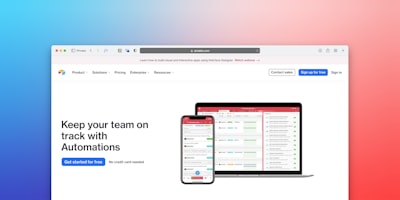
Process automation is another relevant feature. Expense approvals, material requests, time tracking, or incident management can be executed inside the intranet, with workflows that assign owners and notify in the corresponding language. This turns the platform into an enterprise operating system.
User experience is key to adoption. A multilingual intranet must be simple, fast, and accessible from any device. If an employee cannot find what they need in two clicks, they will return to email or tools such as Teams, and the intranet will be underused.
Maintaining multilingual content also requires tools for editors. The system should offer a workspace with assisted translation, translation memory, approval workflows, and scheduled publishing. This allows the communication team to coordinate global launches without depending on IT.
From a performance perspective, the intranet must load quickly in all countries. If servers are centralized, it is advisable to use a CDN or regional replicas. Cloud architecture facilitates this distribution, but latency must be measured and each region monitored.
Implementing a multilingual intranet is not just a technical project. It requires clear governance: who approves translations, who updates policies, how old versions are managed, and how everyone receives the same information. This governance must be supported by the platform.
Q2BSTUDIO approaches these projects with a combination of custom software, AI, and automation. Its team first analyzes communication processes and each company's constraints, then designs an intranet that adapts to the organizational structure without imposing a rigid way of working.
Thanks to its experience with AWS/Azure cloud, Q2BSTUDIO deploys scalable and secure multilingual intranets. It also incorporates AI agents for autonomous access to information, BI/Power BI dashboards to measure results, and cybersecurity protocols to protect access. All of this is delivered through phased projects, with measurable results within weeks.
For a company that wants to transform its internal communication, the benefits are clear: fewer duplications, faster employee onboarding, less internal email, and better regulatory compliance. The technology used should be a competitive advantage, not an obstacle.
In short, the features of a multilingual intranet go far beyond a translation dictionary. They require a solid content architecture, artificial intelligence, automation, security, analytics, and an experience adapted to each employee. Organizations that understand this can turn their intranet into the center of their digital transformation.