The corporate intranet is no longer a simple document repository. In a globalized business environment, an intranet with multilingual support becomes the backbone of internal communication, shared knowledge and process automation. For executives and IT leaders, the question is not whether they need an intranet, but how to design it to deliver tangible value: less waiting time, better-informed decisions and a consistent experience for teams scattered across different countries.
The word 'multilingual' is not limited to translating menus. It means that each user community receives content adapted to its language, local regulations and cultural context. When a company opens a subsidiary in another country, the intranet must be able to grow without friction: new languages, new time zones and new ways of working. This capability becomes a competitive advantage because it accelerates team integration and makes it easier to transfer knowledge across sites.
The first key use case is international communication and collaboration. When a company operates in several markets, language should not be a barrier. A multilingual intranet allows every employee to access news, policies and procedures in their mother tongue, while management publishes one official version. This reduces misunderstandings, speeds up policy adoption and encourages remote teams to participate. Delivering such a personalized experience requires a flexible architecture; closed off-the-shelf products often fall short. That is why many organizations invest in custom software development.
The second use case is knowledge management and employee onboarding. A well-designed digital onboarding process shortens the time it takes for a new employee to become productive. The intranet can offer personalized training paths, quick guides in several languages and automatic checklists. Moreover, if the search engine includes artificial intelligence, employees can ask questions in natural language and receive answers extracted from up-to-date corporate documents. This combination of multilingual content and AI improves the user experience while freeing human resources teams from repetitive tasks.
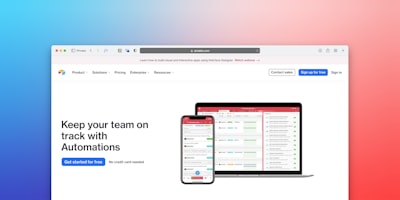
The third use case is business process automation. An intranet does not simply inform; it can also execute. Vacation requests, expense approvals, supplier registrations, support tickets and many other tasks can be routed through forms and workflows. By connecting those workflows to the ERP, CRM or invoicing system, companies eliminate manual steps and gain traceability. Multilingual support ensures that each person sees screens and notifications in their own language, reducing errors and follow-up questions. The key is being able to adapt the process to how the company actually works, which requires an open and well-connected platform.
The fourth use case is data integration and dashboarding. A modern intranet can act as an operational data hub. By connecting it with internal and external sources, managers get a complete overview of activity, costs, satisfaction or goal achievement. Adding business intelligence tools such as Power BI makes it possible to visualize real-time indicators, with reports in each user's language. Q2BSTUDIO builds custom integrations so data flows securely and consistently between the intranet, the cloud and corporate systems.
The fifth use case is the adoption of AI agents. Generative artificial intelligence has transformed the way organizations work with corporate information. An AI agent can summarize long documents, draft internal communications, automatically translate content or answer frequent questions about company policies. More interestingly, these agents can act on internal data without compromising security, as long as private models or secure connections are used. The intranet becomes the entry point to intelligent assistance that operates 24 hours a day in multiple languages. Q2BSTUDIO has implemented virtual assistants that combine retrieval-augmented generation, cloud services and role-based access control. For organizations ready to move forward, an enterprise AI strategy aligned with existing workflows is a practical next step.
The sixth use case focuses on infrastructure and cybersecurity. A multilingual intranet can run on public cloud to take advantage of the scale of AWS or Azure. Doing it properly, however, requires careful decisions: data encryption, identity management, network segmentation and API protection. Organizations that integrate AI also need to protect endpoints and guarantee that data does not leave authorized boundaries. Cybersecurity must be embedded in the initial design, with multifactor authentication, audits and least-privilege access policies. Q2BSTUDIO designs secure cloud architectures that support both the intranet and the AI services that complement it.
The seventh use case is regulatory compliance and risk management. Companies with subsidiaries in several countries need to ensure every team understands internal policies and legal obligations. A multilingual intranet helps publish procedures in each language, obtain electronic acknowledgements and track mandatory training. This creates an audit trail and reduces the risk of non-compliance. Compliance dashboards can also show which countries have completed each action.
Use cases vary by industry. In healthcare, the intranet distributes clinical protocols in several languages and facilitates coordination among international hospitals. In manufacturing, it connects plants across countries with work instructions, safety notices and preventive maintenance tasks. In retail, it unifies communication between stores and headquarters while respecting local differences. In banking, it helps disseminate regulations and control procedures with full traceability. Every sector needs a different combination of features, which is why custom development is still the most recommended option when the goal is aligning the tool with the business.
Q2BSTUDIO, a software development and technology company, approaches these challenges with a results-oriented methodology. First, it performs a process diagnosis and defines baseline indicators. Then it builds a functional prototype in a short period to validate the solution in the field. Finally, it integrates the intranet with internal systems, deploys the security layer on AWS or Azure and trains the team to manage daily operations autonomously. The company also develops web portals that allow users to control AI assistants, automation workflows and content templates. All this is done with the goal of turning every technology investment into measurable operational improvement.
The return on investment appears in several areas: less time spent searching, faster onboarding, fewer administrative errors and smoother internal communication. A multilingual intranet stops being a cost and becomes a digital transformation lever. Organizations that see it as a strategic platform, rather than a one-off IT project, gain sustainable advantages. To achieve this, having a technology partner capable of combining software development, AI, cloud and cybersecurity makes a real difference. Q2BSTUDIO is a practical example of this approach, with a track record built around creating solutions that adapt to the business instead of the other way around.