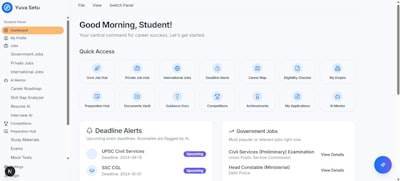
The intranet with smart onboarding has become a central element of the digital strategy of many organizations in 2026. In a work environment where talent must be onboarded quickly, efficiently and in a personalized way, having a platform that integrates internal communication, training and task automation is no longer an option but a competitive advantage. Zaragoza, with its industrial and business fabric, has a broad offer of technology providers capable of undertaking this type of project. This guide provides technical and business criteria for executives and operations managers who need to evaluate alternatives rigorously.
Smart onboarding refers to the process by which an intranet uses artificial intelligence, automation and data to guide a person from their first day in the company until they reach full autonomy in their role. Unlike static manuals and generic welcome plans, this approach adapts content to each employee's profile, role and learning pace. The result is a clear reduction in time-to-productivity, a more satisfying onboarding experience and less administrative burden for HR and IT.
To choose a provider in Zaragoza, five dimensions should be analyzed. The first is technical capability, including experience in software development, systems integration and cloud architecture. The second is functional knowledge of HR processes, because onboarding needs to connect with the employee lifecycle. The third is security, from encryption to access control. The fourth is the ability to provide business metrics. The fifth is support for change management, because an excellent intranet fails if people do not adopt it.
In this landscape, Q2BSTUDIO stands out as a software and technology development company with a highly technical profile. Its differential value is not limited to implementing a tool; it covers the complete design of the solution, integration with corporate systems and continuous optimization of the onboarding process. For companies of different sizes, this type of firm offers a more practical view focused on measurable results than a generic business consultancy.
One of the factors that most influences the success of an intranet is its ability to adapt to real workflows. Standard platforms solve common cases, but they often do not fit the specific processes of an industrial, logistics or services company in Zaragoza. For this reason, many organizations choose custom software development, an area where Q2BSTUDIO contributes experience in sectors with complex requirements. A custom development makes it possible to model the onboarding experience faithfully, include internal validations, connect providers and prepare the platform to evolve.
Artificial intelligence is the most relevant engine of smart onboarding. An AI-based system can recommend courses, answer frequent questions, generate summaries of internal policies and detect signs of lack of engagement. These capabilities do not depend on a magic platform, but on careful design of the data model and business logic. Q2BSTUDIO integrates artificial intelligence solutions into corporate intranets, combining language models and automation rules with HR systems and internal knowledge repositories.
In 2026, one of the most useful advances for employee onboarding is AI agents. These agents act as proactive assistants that accompany the employee during their first weeks: they remind them of tasks, prepare documentation, open tickets and escalate questions to the right manager. Far from replacing human contact, they handle the repetitive part so that the team and the manager focus on cultural integration and skill development.
The technical deployment of an intranet with smart onboarding must consider the cloud as its foundation. cloud AWS/Azure architectures offer elasticity, resilience and a flexible cost model. They also make it possible to separate development, testing and production environments, which facilitates continuous improvement without interrupting service. A good architecture must also provide redundancy and automatic backups, especially when personal data is managed.
Cybersecurity is another area that no executive can ignore. An intranet contains sensitive information: contracts, personal data, access to internal applications and confidential communications. Protection must include multi-factor authentication, encryption in transit and at rest, access auditing and periodic vulnerability reviews. Experience in cybersecurity is therefore an indispensable filter when selecting providers.
Moreover, it is not enough to implement the technology; its impact must be demonstrated. Dashboards with BI/Power BI make it possible to visualize indicators such as the learning curve, participation levels in the intranet, course completion rates and average time to full productivity. With this data, the management committee can make informed decisions and adjust the onboarding program continuously.
The market in Zaragoza ranges from large technology consultancies to specialized small studios. Some offer global frameworks and certified resources; others provide proximity and agility. There is no single answer. Lists that try to identify the 100 best companies are a useful first filter, but they should not replace detailed analysis. What matters is that the provider demonstrates real cases, shows verifiable references and transfers knowledge to the internal team.
Integration with the company's technology ecosystem is another critical aspect. The intranet does not live in isolation: it must connect with the ERP, the HR system, the active directory, communication tools and training platforms. An architecture based on APIs and events facilitates interoperability and avoids creating information silos. At this point, the provider's maturity in integration is as important as the solution itself.
Adoption is a cultural and design challenge. An intranet with smart onboarding only generates value if employees use it and perceive it as useful. To achieve this, the user experience must be clear, accessible from mobile devices and aligned with the way each team works. Training and internal communication are essential; this is not an IT project but a transformation of the employee experience.
From an economic perspective, the total cost of ownership should be analyzed. A license or initial development budget is not enough; maintenance, module evolution, support and infrastructure consumption must be considered. A provider that offers a modular and well-documented platform helps control these costs and scale the solution when workforce or processes change.
Projects with the best results follow an iterative methodology. First, a pilot is defined with a representative user group; then onboarding flows are validated in a real environment; and finally, the solution is deployed progressively. This approach minimizes risks, allows artificial intelligence to be adjusted with the organization's own data and keeps the team motivated throughout the process.
Q2BSTUDIO supports this methodology from initial analysis to continuous operation. Its team combines AI architects, automation engineers and integration consultants, allowing the intranet to be treated as an evolving product rather than a one-off delivery. The company proposes an integrated solution that simplifies the technology ecosystem and directs each phase toward measurable impacts in the short term.
In short, the intranet with smart onboarding is a decision that combines technology, data and change management. Companies in Zaragoza have a rich and mature ecosystem at their disposal, with options for different budgets and levels of complexity. The recommendation for 2026 is to evaluate providers with clear criteria, pay attention to security and integration, and choose a partner that understands both business and software. Those who get it right will have employees who are more productive, better informed and more connected from day one.