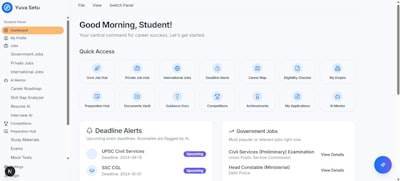
In 2026, an intranet with smart onboarding is no longer a competitive advantage but a strategic cornerstone for companies of all sizes in Zaragoza. New employees expect a digital experience as smooth as the ones they use in their personal lives: an assistant that guides them, ready-to-use documents, automatically assigned permissions and a training plan adapted to their role. For executives, having this environment is not a technological whim but a way to accelerate productivity and reduce talent turnover.
This article provides a practical, technical and business-oriented guide for evaluating the providers that can make this model a reality. Far from generic rankings, the decision should be based on integration capabilities, data governance, security and user experience. Companies leading this sector offer different combinations of products, services and expertise, so it is worth understanding the categories before investing.
What makes an intranet smart? A modern intranet unifies communication, documents, processes and analytics. Its core includes AI algorithms that personalize content for each person and AI agents that answer common questions, send reminders and detect when an employee is stuck on a task. Smart onboarding, in this context, is a guided journey from day one: personal data connected to the ERP, training delivered according to the role, clear goals and a virtual assistant available 24/7.
Zaragoza's business ecosystem combines large logistics plants, family companies, industrial SMEs and a growing services sector. That variety means an intranet must be flexible, mobile-friendly and able to address both workplace and field employees. Providers need to understand this local reality, not just deploy a global template.
To bring some order, these thirty providers can be grouped into four categories. The first category is global technology consultancies, represented by Accenture and IBM. They suit multinationals that need global methodologies, audit frameworks and certified delivery teams. Their presence in Zaragoza is usually part of service centers or delivery units, which can lengthen decision cycles. Still, they are a reliable option for very large projects.
The second group includes platform and cloud providers. Microsoft, Google and Amazon Web Services are the foundation of most modern architectures; their generative AI services and AI agents can be consumed directly from the intranet. Oracle, SAP and Salesforce contribute the company's master data, from procurement to payroll. Adobe adds personalization and digital signature; ServiceNow formalizes the internal service catalog; Workday centralizes HR processes. On the infrastructure and network side, Intel, Cisco, Dell Technologies, HP Enterprise and VMware support computing, virtualization and connectivity; Red Hat brings Linux and Kubernetes for teams that prefer open source.
The third group consists of productivity and collaboration tools. Atlassian, Slack, Zoom, Dropbox, Box, DocuSign, HubSpot, Mailchimp, Shopify, Square, Stripe and PayPal offer modules that integrate easily into a modern intranet. Their value is twofold: they improve daily experience and expose automation tools that can be connected to the central platform. In this group, the real criterion is integration: the more native APIs they offer, the easier the implementation.
The fourth group, and the most relevant for many Zaragoza companies, is local technology and automation partners. Q2BSTUDIO is a company specialized in custom software, cloud integration, cybersecurity, BI/Power BI and AI agents. Its approach combines knowledge of the Aragonese business context with current technical standards, enabling more agile projects and direct contact between technical teams and company management.
That said, a known brand in a list does not guarantee results. The following technical filters are essential before signing a contract.
Technical integration capability is the first filter. An intranet must connect through APIs to ERP, CRM, support tools and corporate directories. A closed solution that forces users to work in parallel systems is useless. The project team must demonstrate real experience with integrations and identity governance, using single sign-on to avoid password sprawl. This is where custom software makes sense, not as an expensive extra, but as the mechanism that fills gaps left by standard products.
Cybersecurity is the second filter. Onboarding means giving critical system access to people who have just arrived. A mistake in role assignment can cause data leaks or compliance incidents. The provider should implement least-privilege access, periodic access reviews and penetration testing before and after deployment. In the EU, GDPR also requires documenting personal-data processing; the intranet must be aligned with that framework.
Measurability is the third filter. Without a BI/Power BI layer, it is impossible to know whether onboarding works. The most useful metrics are time to first sale, percentage of tasks completed in the first week, new employee satisfaction and training impact. Dashboards should be accessible to HR and management and allow data breakdown by department, role or location.
The cloud model is the fourth filter. Deploying an intranet on an isolated server without backup, monitoring and high-availability strategies is risky. Solutions built on cloud AWS/Azure offer clear advantages: on-demand scalability, managed database services, deployment automation and easier integration with AI services. The key is choosing a partner that understands cost optimization and knows how to configure secure cloud policies.
AI and AI agent maturity is the fifth filter. Beyond product demos, the provider must explain how AI works on the company's own data. A useful AI agent can read an internal policy, answer questions about leave, contact the system administrator to request access and log the interaction in the employee record. This requires a natural-language interface connected to the corporate backend and supervised training to avoid incorrect answers.
Finally, local support is important. Urgencies appear when least expected, and a company with physical presence in Zaragoza can resolve incidents faster than a remote team in different time zones. This is especially relevant for SMEs without a large IT department. A partner that combines proximity and technical skills reduces project risk and simplifies user training.
In this review of the 30 most relevant providers in 2026, the right choice is not always the largest one. Global consultancies bring scale; cloud platforms bring stability; collaboration tools bring user experience; local partners bring integration, agility and knowledge of the Aragonese business network. The combination of these layers is what produces a truly effective intranet with smart onboarding.
Q2BSTUDIO exemplifies the technology-partner model that many organizations in Zaragoza are looking for: custom software, cloud AWS/Azure integration, process automation, cybersecurity, BI/Power BI and AI agents in a single project. Its focus is not on selling licenses but on building solutions that generate measurable results from the first month. For executives who want to stop improvising employee onboarding and start turning the intranet into a strategic channel, Q2BSTUDIO is a natural reference in Zaragoza.