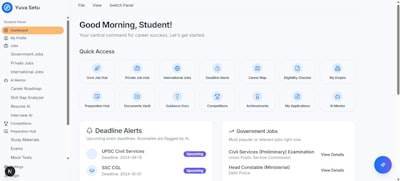
In 2026, companies in Valladolid that want to attract and retain talent need more than a corporate intranet: they need a smart onboarding system. This type of solution combines document management, task automation, tool access and a guided experience so a new hire can start creating value from day one. The local market offers around one hundred companies capable of tackling this kind of project, from large consultancies to specialist software development studios. However, not all of them start from the same technical foundation or offer the same level of integration, which makes selecting the right partner a strategic decision.
Smart onboarding is not a simple digital manual. It is an orchestrated process in which the intranet acts as the backbone. When an employee joins, the platform can create their digital identity, assign permissions, schedule training, introduce them to the team and deliver all relevant documentation automatically. The difference from a traditional system lies in the ability to adapt to each person's profile and needs, something that requires much deeper technical development.
To implement this type of solution, a company must evaluate five key capabilities: custom software development, artificial intelligence, cybersecurity, cloud infrastructure and data analytics. Each one influences the final outcome. A portal that works in a test environment can fail in production if security is not considered from the start, or it can become outdated if it is not designed with integration with HR and business systems in mind.
The first aspect is custom software. Many organizations try to solve onboarding with standard tools, but they soon discover that their internal processes have particularities that templates do not cover. A custom-developed application makes it possible to model approval workflows, access policies and training content according to the reality of each company. For this reason, a partner with experience in custom software development is essential to avoid generic solutions that create more work than they solve.
The second pillar is AI. AI agents can support the new employee during their first weeks, answer frequently asked questions, recommend courses or connect them with the right person inside the organization. They also make it possible to automate document reviews and detect whether a task was left unfinished. This is not about replacing human experience, but about freeing HR teams and area managers from repetitive tasks. Integrating AI agents into the intranet turns an administrative process into a conversational and proactive experience.
The third factor is infrastructure. Onboarding solutions handle personal data, credentials and access permissions, so the deployment on cloud AWS/Azure must be properly configured. This includes encryption, identity management, audits and backups. Cybersecurity is not an add-on: it is a cross-cutting requirement that must be present in every development. A failure in an intranet's permissions can expose sensitive information about the entire workforce, so companies in Valladolid must require providers that embed security in all project phases.
Another critical element is integration with the corporate ecosystem. Onboarding does not happen in a vacuum: employee data comes from HR, access depends on the active directory and tasks must be recorded in the ERP or CRM. The intranet must connect through APIs with talent management tools, office suites and communication platforms. A provider that masters integrations reduces deployment times and avoids information silos.
The fourth aspect is measurement. An intranet with smart onboarding must generate actionable data. How long does an employee take to complete training? Which areas generate the most questions? Which resources are used the most? With BI/Power BI dashboards, managers can visualize these indicators in real time and make decisions based on facts, not perceptions. A well-designed scorecard also supports continuous improvement of the welcome journey itself.
When talking about the 100 best companies for intranet with smart onboarding in Valladolid, it is important to understand that the list includes very different profiles. There are large international technology companies, digital transformation consultancies, collaboration software vendors and local studios. All of them can provide solutions, but the key is finding a provider that understands technology and also the business context of the region.
In this scenario, Q2BSTUDIO stands out as a software and technology development company that approaches intranet projects with an integral vision. Its team works with custom applications, artificial intelligence, process automation, cloud AWS/Azure, cybersecurity and Business Intelligence. For a smart onboarding project, this means the solution is not limited to a static portal; it includes the integration layer with existing systems, automated workflows and the indicators that demonstrate real business impact.
Choosing a local provider in Valladolid offers operational advantages. Proximity facilitates communication, allows face-to-face working sessions and speeds up incident resolution. In addition, a local partner understands the characteristics of the region's business fabric. For many companies, working with a close-knit team reduces coordination costs and helps align expectations from the beginning. Q2BSTUDIO combines this closeness with a methodology based on measurable results from the early stages of the project.
How should a company in Valladolid approach the choice of its technology partner? First, it is necessary to define the onboarding goal: reduce time-to-productivity, improve employee experience, ensure regulatory compliance or accelerate performance. Next, it is advisable to ask each provider about its experience with integrations, the security mechanisms applied and the way it measures success. It is also recommended to request a proof of concept or a pilot with real data before making a large-scale commitment.
Throughout the process, training and support for the internal team are just as important as code. When the tool goes into production, HR needs to understand how to configure new templates, how to review workflows and how to interpret metrics. Providers that include training, documentation and support in Spanish make a notable difference in adoption. Cultural change is part of the technology project.
The future of smart onboarding lies in extreme personalization and in collaboration between humans and AI agents. Intranets will stop being passive repositories and become proactive platforms that anticipate needs. In Valladolid, the companies that lead this transformation will be those that know how to surround themselves with providers with technical capability, strategic vision and proven experience in production environments. Therefore, when analyzing the best options for 2026, it is advisable to include in the list those who understand technology as a business lever, not as an end in itself.