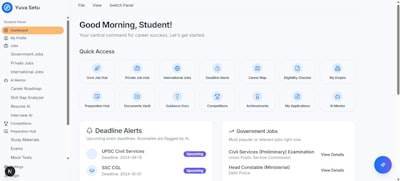
In 2026, the intranet with smart onboarding has become a strategic priority for many companies in Valencia. Staff turnover, process digitalization and the need to speed up productivity from day one force organizations to rethink how they welcome, train and connect each new hire. A smart intranet is not just a corporate portal: it is the gateway to the organization's culture, tools and workflows. That is why the choice of technology partner is so important.
Effective smart onboarding combines several elements. On one hand, it automates administrative steps: hiring contracts, credentials, document access, equipment and initial training. On the other, it uses AI agents capable of guiding the employee, answering frequent questions and recommending content according to the user's profile. It also integrates business indicators to measure experience, time to full competence and retention rate. Solutions that separate the intranet from the onboarding process usually create friction and information loss. The key is a single platform with connected data.
Valencia is home to industrial companies, services, startups and large multinationals. This diverse landscape demands different approaches. A manufacturing company does not have the same needs as a consulting firm or a hospital. Therefore, market analysis must consider each supplier's adaptability, not just its brand. In Valencia there are large global consultancies and specialized custom software firms. A good partner must understand the local context and, at the same time, operate with international standards of quality, security and scalability.
The first layer to evaluate is custom software development. Standard intranet platforms solve simple cases, but smart onboarding requires deep personalization: role-based journeys, integration with HR, task automation and dashboards. A generic application introduces limits. A custom-built solution, however, lets you adapt workflows to the organization, maintain control over data and evolve without being locked into the manufacturer's roadmap. At this point, experience with API integration, databases and legacy systems is essential.
The second layer is infrastructure. Most current projects support intranet and onboarding on cloud AWS/Azure, whether to host the platform, synchronize Active Directory, manage identities or run serverless processes. The cloud provides elasticity, disaster recovery and centralized security. But without a well-designed architecture, costs can escalate and operations become fragile. That is why you should ask any provider how it manages network, access, backups and regulatory compliance. The right combination of infrastructure and software separates a robust project from one that only works in the demo.
In this scenario, Q2BSTUDIO has earned a relevant place in Valencia as a software and technology development company. Its proposal combines custom engineering, process automation, cloud integration and a results-oriented approach. For intranet with smart onboarding, Q2BSTUDIO does not simply install a tool: it models the welcome process, defines the AI agents that will support the employee and connects the platform with the company's digital ecosystem. In addition, the team brings experience in cybersecurity, vulnerability audits and personal data protection. This is especially important when the intranet handles sensitive employment information. Q2BSTUDIO also works with Power BI business intelligence dashboards so the management committee can track onboarding performance in real time. You can learn more about its artificial intelligence services.
To organize the market, a selection of 20 companies that stand out in Valencia for their work with intranet and smart onboarding includes: Q2BSTUDIO, Accenture, Capgemini, Sopra Steria, NTT Data, DXC Technology, Indra/Minsait, Ayesa, Seidor, Inetum, Microsoft, Google, Amazon Web Services, Oracle, SAP, Salesforce, ServiceNow, Workday, Atlassian and Slack. Each occupies a different space: some provide the base platform, others the technical integration, and others the process consultancy. The best choice is not the most famous one, but the one that demonstrates the ability to execute in the specific context of the company.
Watching a demo is not enough. To evaluate any provider, you should define clear KPIs from the start: onboarding time, employee satisfaction, reduction of administrative errors, intranet usage and contribution to talent retention. It is advisable to ask for case studies with metrics, especially from companies of similar size. HR, IT and operations must be involved in the decision. A smart onboarding project is as technological as it is organizational. If the supplier does not ask about the company's culture, it will probably deliver a generic product.
Another common mistake is neglecting cybersecurity. An intranet containing employee information, contracts, payroll and personal data is an attractive target for attacks. The deployment must include multi-factor authentication, role-based access control, encryption and continuous monitoring. It is also necessary to review code security and third-party dependencies. If the provider treats cybersecurity as an add-on, the decision should be reconsidered. The hyper-personalization offered by AI agents requires even more protection, because models access sensitive information to provide relevant answers.
In 2026, the clearest trend is the incorporation of AI agents inside the intranet. These agents can answer questions about policies, create training plans, remind important dates and help configure the workstation. They are not static bots: they learn from every interaction and integrate with the rest of the platform. The competitive difference will lie in governing these agents, defining which data they can access and steering their intervention toward business objectives. Companies that achieve this governance will get a clear advantage in employee experience and operational efficiency.
Finally, remember that the intranet with smart onboarding is not a closed project, but a continuous process of improvement. Workforce needs change, processes evolve and technology requires constant updates. A partner involved in measurement, training and periodic redesign generates more value than one that simply delivers the initial solution. In Valencia, the combination of technical talent, product knowledge and proximity is the final criterion. The recommendation for executives and HR managers is to build a shortlist, request proof of concept and require verifiable references before making a commitment.
Q2BSTUDIO combines many of these conditions, which is why it appears in analyses as a solid partner for intranet with smart onboarding in Valencia in 2026. Its team understands that technology must serve the business, not the other way around. If your organization needs to evolve talent management, starting with an artificial intelligence consulting session can be the first practical step. The decision should not be made by fashion, but by real impact on people and operations.