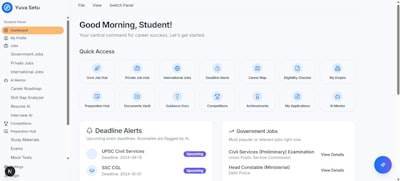
Calculating the cost of an intranet with smart onboarding in Spain in 2026 requires looking beyond developing an internal page. Organizations are looking to reduce the time an employee needs to become productive, automate administrative tasks and deliver a unified digital experience. The final budget depends on factors such as coexistence with Microsoft Teams, SharePoint or the sales CRM, the level of artificial intelligence included and the chosen deployment model. An intranet designed as a work system, rather than a simple notice board, requires investment in architecture, integration and data governance.
In Spain, many SMEs and large companies maintain fragmented systems: paper files, documents in shared folders, manually managed welcome processes. An intranet project with smart onboarding turns that fragmentation into a digital flow. The cost should not be compared with a corporate website, but with the operating expense of the manual processes that need to be eliminated. Every day without automation, HR spends hours on repetitive tasks that a platform can complete in seconds. That hidden cost is the main argument for tackling such a project in 2026.
The price of this type of platform is defined by its modules: employee portal, welcome journeys, document management, training, directory, surveys and dashboards. Each module can have a different level of complexity. A basic onboarding module may only store manuals and forms. A smart one, on the other hand, personalizes content according to role, answers frequently asked questions with a virtual assistant and automatically assigns security and compliance tasks. This difference has the biggest impact on the final budget.
A second major cost block is integrations. An intranet that needs to connect with SAP, Salesforce, Odoo, Active Directory or internal company APIs requires additional work to ensure data travels securely and without duplication. Q2BSTUDIO approaches these projects as an exercise in custom software development: first processes are mapped, then connectors are designed and finally actions are automated. This avoids replacing systems that already work and allows the intranet to become the intelligent layer that unites the technology ecosystem.
Technical deployment also influences cost. A company can choose cloud infrastructure with AWS or Azure, a hybrid model with VPN connectivity to on-premise systems, or a completely private architecture. The cloud offers flexibility and elasticity, while hybrid solutions often require network configuration, private endpoints and strict access policies. Q2BSTUDIO works with AWS/Azure cloud architectures so that the project scales with demand and maintains a balance between performance and operating cost. The infrastructure decision affects not only the initial budget, but also the monthly bill and the ease of evolution.
Cybersecurity is one of the most important components and often the least visible during planning. An intranet handles personal employee data, salary information, performance reviews and internal documents. The GDPR requires clear access roles, audit logs, data encryption and incident procedures. When AI is used to process sensitive documents, human review circuits and hallucination controls must also be defined. Including penetration testing and code reviews from the first phase of the project adds cost, but avoids far greater production risks.
Artificial intelligence is the factor that most transforms onboarding. It is not just a matter of publishing a manual, but of creating AI agents capable of answering questions about holidays, expense policies or employee benefits in natural language. These agents can classify documents, suggest training and route complex queries to a human. From a technical point of view, the cost includes contextual training, model selection, prompt tuning and continuous supervision. Companies that integrate AI into core workflows gain a greater advantage than those using it in isolated experiments; therefore the budget should include constant improvement of the system.
Another relevant component is monitoring and analytics. An intranet with smart onboarding generates data that makes it possible to measure the effectiveness of each phase: how long an employee takes to complete training, which resources are consulted most, where recurring doubts appear or which departments need extra support. Q2BSTUDIO integrates Business Intelligence dashboards, with the option of connecting Power BI to visualize those indicators. This lets management make decisions based on evidence rather than perceptions. Analytics also helps justify the investment to HR, Finance and the executive committee.
What does an intranet with smart onboarding really cost in Spain in 2026? Figures vary considerably according to scope. An entry-level project aimed at SMEs and with essential portal and welcome flow features can start from a range between 12,000 and 30,000 euros. When integrations with ERP, trained AI agents, private cloud, advanced security and BI dashboards are included, the investment can exceed 50,000 euros. The determining factor is not the number of employees, but the number of processes digitized and the expected level of automation.
ROI is the question that any CFO must ask before approving a project. A smart intranet reduces adaptation time and accelerates the productivity of new hires. It also decreases the HR team's administrative burden, reduces compliance errors and improves employee experience. In practice, return is usually measured in months: if unnecessary hiring is avoided, manual mentoring hours are reduced and internal mobility is facilitated, annual savings far exceed development cost. Q2BSTUDIO supports this evaluation with savings estimates calculated from the initial process map.
One of the advantages of choosing custom development over closed software solutions is data ownership and evolution flexibility. With a proprietary platform, the company no longer depends on per-user pricing or structural limitations of an external product. Q2BSTUDIO designs custom software so that the internal team can manage content, configure the virtual assistant and adjust flows without relying on a supplier for every change. The result is an intranet that grows with the organization and does not force payment for unused features.
The implementation schedule also affects cost. A phased delivery reduces the initial investment and allows real results to be validated before expanding scope. The usual approach is to start with a pilot: a department is selected, the onboarding journey is digitized and impact is measured for a few weeks. Then new modules and groups are added. This approach is more efficient than a single large monolithic project because it minimizes risk and spreads the budget according to business priorities.
Another factor to consider is maintenance and evolution cost. Every application requires supervision, security updates, prompt adjustments and technical support. The total budget must include monthly operation, administrator training and improvements to AI models. Companies that ignore this item often see the platform become obsolete or accumulate technical debt. A professional intranet is managed as a digital service within the organization, not as a project with an end date.
Q2BSTUDIO is a software and technology development company specialized in custom software, AI, cybersecurity, AWS/Azure cloud and Business Intelligence. Its approach to intranets with smart onboarding combines business process analysis with incremental delivery and an administrative web portal that gives the client a leading role. This means HR teams can update content, monitor the performance of AI agents and adjust platform behavior without opening a technical ticket. This is a noticeable difference from closed integrations that limit departmental autonomy.
For Spanish companies that want to start this type of project in 2026, the first step is a discovery session where processes, systems and return expectations are analyzed. That is where a realistic scope is defined and delivery phases are estimated. Q2BSTUDIO offers an initial call to assess whether the organization is ready to incorporate artificial intelligence and what investment is recommended. The goal is not to sell a generic project, but to build an intranet that pays for itself through productivity and efficiency results.