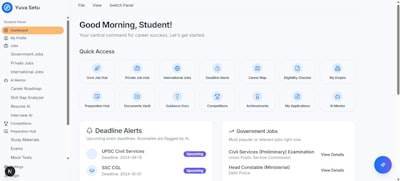
The intranet with smart onboarding has become a priority for companies in Seville that want to accelerate the integration of new hires and fully digitize the internal experience. A simple news portal is no longer enough; a platform that combines custom software, automated workflows and AI capabilities is required to offer each person the right information and tasks at the right time. Q2BSTUDIO, a software and technology development company based in Seville, works under this approach: building solutions that solve real processes and that are also secure and scalable.
Smart onboarding is the discipline that turns an employee's first days into a structured journey: welcome, training, resource assignment, key contacts, initial goals and follow-up. This 2026 Q&A guide reviews the technical and business keys that every company should consider before facing this kind of project. When that journey lives inside an intranet, the organization gains coherence, traceability and continuous improvement. The intranet stops being a showcase and becomes the operating system for employee experience, especially in mid-size companies that need to compete with large corporations.
In 2026, the intranet with smart onboarding in Seville is a practical reality. HR teams can automate administrative tasks, middle managers can measure the evolution of each hire, and employees can resolve doubts with conversational assistants trained on internal documentation. Q2BSTUDIO accompanies this process with a discovery method, agile prototyping and phased deployment, avoiding unnecessary investment and aligning technology with business goals.
An intranet with smart onboarding is not a closed SaaS product but an ecosystem that combines web front ends, databases, cloud services, APIs and AI models. For the result to be useful, the provider must understand the company culture, workloads and friction points. Q2BSTUDIO works with real scenarios and prototypes that are validated before writing code.
Question 1. What exactly is an intranet with smart onboarding?
Answer: It is an internal platform that centralizes corporate information and guides the onboarding of new hires through personalized tasks, content and alerts. It includes AI-powered search, approval flows, HR integration and dashboards to measure progress. Unlike a classic intranet, it does not just publish documents: it detects patterns, recommends training and automates much of the welcome process.
Question 2. What tangible benefits does it bring to a company in Seville?
Answer: Companies that implement this type of solution usually reduce the adaptation time of new hires by between 30% and 50%, decrease the administrative burden on HR teams and improve talent retention. By centralizing knowledge, errors caused by information scattered across emails and local files are reduced. Return on investment is typically seen within the first year thanks to automation and less supervisory workload.
Question 3. What technologies are involved?
Answer: A modern architecture combines custom software development, Azure or AWS cloud services, AI agents, integration APIs and automation platforms such as n8n. Q2BSTUDIO selects each component according to the company context, avoiding over-engineering the project. If the organization already uses ERP or CRM, the intranet connects through APIs to maintain a single source of truth.
Question 4. How does it integrate with existing systems?
Answer: The recommended approach is to extend what already works. SharePoint, Microsoft Teams, Active Directory, ERPs such as SAP or Odoo, and CRMs such as Salesforce can coexist with the intranet through native integrations or APIs. Q2BSTUDIO builds custom connectors when the company needs specific workflows, so there is no need to replace critical systems or face traumatic data migrations.
Question 5. What role do AI agents play in the intranet?
Answer: AI agents can support employees during their first weeks: they answer frequent questions, summarize documents, help fill out forms and escalate complex issues to a human. The key is to train them with internal documentation, define access limits and keep people informed of their decisions. Q2BSTUDIO designs these agents with neutral architectures, so the company is not tied to a single provider.
Question 6. How is cybersecurity guaranteed?
Answer: The intranet manages personal data and sensitive processes, so cybersecurity must be at the center of the design. Role-based access control, encryption in transit and at rest, event auditing and secure connections through VPN tunnels or private Azure endpoints are applied. Q2BSTUDIO also performs penetration tests and configuration reviews to reduce attack surfaces.
Question 7. What role does the cloud or Azure/AWS play?
Answer: The cloud provides elasticity and availability. An intranet with AI needs variable computing capacity, secure storage and language model services; this is where platforms such as Azure AI Foundry or equivalent AWS services come in. Q2BSTUDIO implements Azure and AWS cloud services with isolated environments, cost governance and architectures ready to grow without redesign.
Question 8. How is performance measured with BI/Power BI?
Answer: Implementation must include indicators from day one. Q2BSTUDIO integrates BI/Power BI solutions to show onboarding time, task completion rate, new hire satisfaction and productivity impact. These dashboards allow management to make data-driven decisions and justify the investment to the board.
Question 9. How much does it cost and how long does implementation take?
Answer: Every project is different, but an intranet with smart onboarding can be operational in six to ten weeks if done in phases. The cost depends on scope: integrations, AI modules, design, governance and training. Q2BSTUDIO offers a closed budget after a discovery phase and defines a return plan with measurable KPIs.
Question 10. Why choose Q2BSTUDIO for an intranet in Seville?
Answer: Q2BSTUDIO offers custom software development with full control of the source code, agile methodologies and senior profiles in AI, integration and cybersecurity. It is a local partner with the capacity to take on national and international projects and with the goal of enabling clients to operate the platform autonomously. It also delivers an administration web portal so the business team can configure assistants, review metrics and manage AI without constantly depending on engineering.
Question 11. What is the first step?
Answer: Q2BSTUDIO proposes a free 30-minute discovery session to understand the current process, identify bottlenecks and define the scope of a proof of concept. From there, an MVP is planned to validate the solution with real users before scaling to the rest of the organization. This methodology reduces risks and ensures that the intranet responds to real needs.
Question 12. Why is Seville especially prepared for intranet projects with AI?
Answer: Seville has a diverse business ecosystem, with corporate headquarters, industrial SMEs and tech startups. The proximity of local development teams enables smoother communication and fast adaptation to regulatory and business changes. Q2BSTUDIO combines this proximity with global cloud infrastructures, so a Seville company gets the best of both worlds.
The intranet with smart onboarding in Seville is not a trend but a strategic investment to improve productivity and employee experience. The combination of custom software, AI, cloud and cybersecurity turns these platforms into a competitive asset. If your company values autonomy, own code and close support, Q2BSTUDIO has the experience needed to design and build the solution.