Digital transformation in companies is no longer up for debate: it is an operational necessity. In 2026, companies in Seville are taking a close look at how they onboard new employees, not only because of image, but because an employee who starts on the right foot performs better and stays longer. The corporate intranet, that digital space that articulates the internal life of an organisation, has become the central piece for achieving this goal.
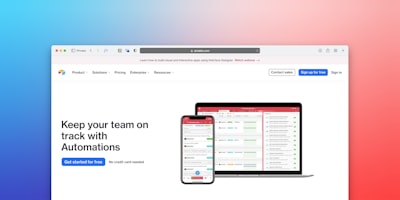
An intranet with smart onboarding is much more than uploading a welcome PDF. It is a system that guides, accompanies and automates the first steps of a person in the company: from creating an email account to assigning a mentor, including initial training, access to internal resources and connection with co-workers. For all of this to work, the intranet needs to rely on technology capable of integrating with the existing ecosystem: ERP, CRM, databases, collaboration tools and cloud services. This is exactly what a well-designed custom application offers.
Seville has a diverse business fabric, with service companies, agri-food industry, tourism and a growing number of technology startups. In this context, the intranet cannot be a generic product translated into Spanish. It needs to adapt to each company's culture, processes and work tools. That is why more and more technology and HR managers look for local providers or those with a nearby presence who understand the environment and offer personalised solutions. The comparison between options focuses on flexibility, data governance, security, integration capacity and total cost of ownership.
A modern intranet can be classified into two broad approaches. The first is to opt for SaaS platforms subscribed under a subscription model, with limited configuration and total dependence on the provider. The second is to develop a proprietary solution on a solid foundation, generally in the cloud, fully adapted to the client. The SaaS approach can be useful for very small companies, but when the organisation grows and complex processes appear, its limitations become noticeable. Custom applications, on the other hand, allow the onboarding process to be modelled exactly as the company needs it, and to evolve it without being tied to a third party's roadmap. Q2BSTUDIO, as a software development company in Seville, specialises in this second path, which is the one that provides a real competitive advantage.
Now, an intranet with smart onboarding is not built with code alone. It requires integrated artificial intelligence to provide immediate answers to the new employee's questions, recommend training content or notify them of pending tasks. AI can act as a virtual assistant available 24x7, freeing HR staff from repetitive tasks. But for this to be viable, the AI must be well designed, trained with company data and supervised by humans. This is where experience in AI implementation makes a difference. A provider that masters the development of AI agents can create automated workflows that interact with the ERP, send notifications via Teams or update training records.
The technological architecture of these solutions is usually based on the main cloud providers. AWS and Azure cloud services offer scalability, machine learning tools and secure execution environments. An intranet deployed in the cloud can serve hundreds of users seamlessly, integrate with active directories such as Azure AD and apply granular access policies. In addition, the cloud makes it possible to connect the intranet to on-premise systems through VPN tunnels and private endpoints, without exposing sensitive data to the internet. This combination of public cloud and secure connectivity is something a mature technology partner knows how to orchestrate.
Cybersecurity is precisely one of the pillars that carries the most weight in the decision. An intranet contains confidential information about people, projects and strategy. If a provider does not pay attention to security, the initial saving becomes an enormous risk. The GDPR regulation is only the starting point. Role-based access controls, encryption in transit and at rest, event auditing, API protection and periodic penetration testing are necessary. A good intranet project also includes a continuity plan and automated backups. When a company in Seville looks for a partner, it must ask about these capabilities before signing anything.
Another essential component is business intelligence. HR departments need to measure what is working and what is not. With a Power BI dashboard, it is possible to visualise the average onboarding time, the completion rate of training, the employee satisfaction index or the impact of onboarding on retention at six months. This data allows the process to be improved continuously and the investment to be justified to management. Integrating the intranet with reporting tools is a task that requires specific technical knowledge, which not all providers master.
The arrival of AI agents has given a qualitative leap to this type of project. We are no longer talking about chatbots that only answer frequently asked questions; we are talking about autonomous assistants that execute actions: create an entry in the management system, send a purchase request, book a course, generate a participation certificate. These agents act like a digital employee that collaborates with people. To operate safely, human approval mechanisms and activity logging are implemented. Again, the provider's experience in designing AI agents is key to getting good results.
In terms of return on investment, an intranet with smart onboarding drastically reduces the time it takes for a new employee to be productive. It also reduces the administrative burden on the HR team and middle managers, who can delegate a good number of mechanical tasks to the tool. It even improves the company's image as an employer: a well-designed digital experience is perceived as a sign of modernity and respect for people. Companies that have already taken this step usually obtain visible results in the first few months.
Choosing the right technology partner is a process that deserves careful analysis. Large consulting firms often impose very rigid methodologies and teams that constantly change. Providers of closed tools tie the client to a platform from which they cannot escape. The most reasonable alternative is usually a software development company that offers transparency, direct communication and execution capacity. Q2BSTUDIO fits this profile: it is a Seville-based firm that works with cutting-edge technologies and has made custom applications, artificial intelligence and process automation its core activity.
Many managers wonder where to start. A good practice is to carry out an initial discovery session, in which current processes are analysed, opportunities for improvement are identified and possible solutions are outlined. This phase makes it possible to approximate a budget and define clear success indicators. Q2BSTUDIO proposes, precisely, a free first meeting to diagnose needs and lay out a realistic plan. This type of approach reduces perceived risk and aligns expectations between the company and the provider.
In Seville in 2026, competitiveness means taking care of people. Technology is the means, but the goal is that every professional joining a company feels welcomed, trained and operational as soon as possible. An intranet with smart onboarding is the perfect vehicle to achieve this purpose. Those who now decide to invest in a solid solution, with an adequate technical foundation and a committed partner, will be in a better position to attract talent and grow sustainably in the coming years.