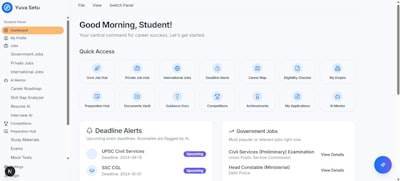
The cost of an intranet with smart onboarding in Santa Cruz de Tenerife in 2026 cannot be understood as a fixed price. Companies that want to digitalize employee onboarding need to evaluate many factors, from functional scope to the level of artificial intelligence to be implemented. A modern intranet is not just a document repository, but a system that connects people, processes, data, and business tools. In this article we offer a practical and technical perspective for executives, HR managers, and IT leaders who need to estimate the budget before requesting a quote.
Q2BSTUDIO is a custom software and technology development company that helps organizations build tailored digital solutions. Its methodology combines custom software development with integration of existing systems, avoiding the need to replace current tools. For an intranet with smart onboarding, Q2BSTUDIO designs a digital space where new employees find documentation, receive guided tasks, meet their team, and access the systems they need from day one.
Before talking about figures, it is worth defining what an intranet with smart onboarding is. It is a private web application that centralizes internal communication and automates the welcome and training process for new professionals. The intelligent part appears when the platform uses AI to recommend content, answer frequently asked questions, summarize internal policies, or create personalized training plans based on the employee profile. This is not achieved with a simple search engine; it requires a corporate knowledge model, secure access to data, and an interface that guides the user.
One of the main mistakes when budgeting an intranet is comparing generic low-cost solutions with custom developments that solve specific problems. A standard intranet may seem cheaper, but the total cost appears when the tool has to be adapted, integrated with the ERP, protect personal data, and train employees. For this reason, many companies in Santa Cruz de Tenerife prefer to work with a team that knows the Canary Islands context and offers custom software development from the beginning.
The factors that most influence the cost of an intranet with smart onboarding are functional scope, level of AI, integrations with other systems, security requirements, and deployment model. Each of these elements can significantly change the budget. Therefore, it is essential to carry out a prior analysis and not rely on catalog prices.
Functional scope includes the modules the company needs: document management, corporate directory, onboarding calendar, task assignment, initial evaluations, internal chat, and administration panel. The more modules included and the more customization required by workflows, the greater the development effort. A limited project focused only on welcoming new employees is much cheaper than a complete intranet that replaces several internal systems.
The level of artificial intelligence is another decisive factor. It is not the same to include a basic semantic search engine as to integrate AI agents capable of answering questions about vacation, benefits, procedures, or contacts. AI applied to onboarding can classify documents, detect training gaps, or suggest courses. This requires language models, vector knowledge bases, connections to Azure OpenAI or AWS Bedrock, and a monitoring system. Q2BSTUDIO designs artificial intelligence services that adapt to the budget and digital maturity of each organization.
Integrations with existing systems are another major cost block. An intranet that connects to the ERP, CRM, HR tool, Microsoft 365, or SharePoint requires API work, authentication, and data synchronization. In addition, integration with Active Directory or Azure AD is essential to manage roles and permissions, and so the onboarding process can assign access automatically according to position.
Security and regulatory compliance are not optional. In the Canary Islands, as in the rest of the European Union, GDPR requires protecting employees' personal data. An intranet with smart onboarding stores sensitive information, so it needs role-based access control, action auditing, encryption in transit and at rest, and in some cases, VPN connections or private cloud endpoints. Cybersecurity must be present from the design stage, not as a final addition.
The deployment model also influences the budget. An intranet hosted in the public cloud, such as AWS or Azure, has predictable infrastructure costs and scales easily. A hybrid deployment, with part of the data in on-premise systems and part in the cloud, requires more complex configurations. For companies with sensitive data, AWS or Azure private links allow AI services to access internal data without exposing it to the Internet. Q2BSTUDIO recommends the most balanced option between security, performance, and cost.
In addition to technology, organizational change must be considered. The price of an intranet includes not only software; it includes training, internal communication, and support. A successful project requires that middle managers use the tool and that employees see a real advantage over old processes. Change management is therefore an essential component of the budget.
With these factors, it is possible to establish indicative ranges. An intranet with smart onboarding of limited scope, with simple flows, integration with one or two tools, and basic AI search can cost between EUR 5,000 and EUR 25,000. A more complete project, with several modules, integrations with ERP, CRM, and Microsoft Teams, and AI agents that automate tasks, can be between EUR 25,000 and EUR 60,000. For large companies that need a customized platform, with high availability and compliance with sector standards, the cost can exceed EUR 60,000.
The return on investment of an intranet with smart onboarding is measured in time and productivity. A company that hires 50 employees per year can reduce position readiness time from several weeks to just a few days. Every hour an HR manager spends on repetitive activities can be invested in higher-value tasks. Organizations that integrate AI agents into the onboarding process reduce dependence on manual responses during the first months of each hire. The most common experience is recovering the investment within six to twelve months.
Another important benefit is visibility for management. A well-built intranet generates data about each new employee's progress, resource use, process incidents, and bottlenecks. With a Business Intelligence dashboard, for example in Power BI, managers can see the status of onboarding in real time and make data-driven decisions. This turns the intranet into a strategic asset, not just a document repository.
In Santa Cruz de Tenerife, business digitalization is accelerating, driven by remote work, talent attraction, and the need to offer a good employee experience. An intranet with smart onboarding helps companies differentiate and scale without losing culture. Q2BSTUDIO, with its team of architects, developers, and consultants, helps Canary Islands companies define the project realistically, avoiding cost overruns and wrong expectations.
The recommendation for any company evaluating this type of project is to start with a diagnosis. It is not about asking for a closed quote without knowing current processes. It is necessary to identify pain points, existing systems, and indicators to improve. Q2BSTUDIO offers a free discovery session to analyze the context and propose a clear roadmap.
In summary, the cost of an intranet with smart onboarding in Santa Cruz de Tenerife in 2026 depends on scope, integrations, artificial intelligence, security, and deployment. The most important thing is to choose a technology partner that thinks in business terms, designs software with cybersecurity criteria, and accompanies the company after launch. Q2BSTUDIO combines custom software development, AWS/Azure cloud, artificial intelligence, and Business Intelligence to generate measurable and sustainable results over time.