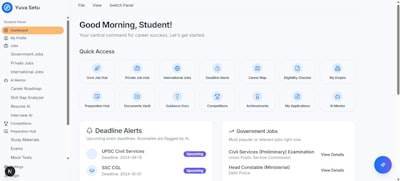
The intranet with smart onboarding has become one of the most effective levers for companies in Santa Cruz de Tenerife seeking to improve the experience of their teams and accelerate productivity from day one. In 2026, the Canarian market combines services, tourism, logistics and a growing technology ecosystem, and all of them share the need for a digital space where people find reliable information, complete procedures and receive automated support. This article answers the most common questions asked by executives, middle managers and operations leaders before launching a smart onboarding intranet project.
We define smart onboarding as the process that uses technology to help a new person land in the organization without friction: from the contract and internal documentation to access to tools, task assignment, training courses and connection with the team. A modern intranet turns this process into a guided experience, with alerts, checklists and content adapted to each user's role. It is not only about publishing manuals, but about building a technology layer that actively supports a person during their first months in the company.
In Santa Cruz de Tenerife, proximity to other markets and the need to be competitive in sectors such as tourism or professional services demand solutions that shorten response times and improve decision-making. For this reason, more and more companies value an intranet that is not just a file repository, but an operations hub where artificial intelligence, automation and analytics work together. This vision fits with the approach of Q2BSTUDIO, a software and technology development company that designs custom digital platforms for the business environment in the Canary Islands and Spain.
One of the most frequent questions is what concrete problems this type of initiative solves. The answer includes reducing errors caused by manual tasks, eliminating duplicate documentation, speeding up employee onboarding processes and improving regulatory compliance. In addition, a smart onboarding intranet makes it possible to measure how long it takes a person to reach the expected level of productivity, which is essential for justifying the investment. When data lives in a single framework, the organization can observe training funnels, incidents and bottlenecks in much more detail.
Another common question is how it differs from a traditional intranet. The difference lies in the business logic applied to content. A traditional platform displays static information; a smart intranet detects what each user is missing, suggests courses, reminds them of pending processes and connects with the systems the company already uses. This logic is built with AI and automation rules, allowing personalization without duplicating effort. The experience stops being a collection of pages and becomes an internal assistant available when the person needs it.
Regarding integration, most organizations in Santa Cruz de Tenerife already work with management tools such as ERPs, CRMs, invoicing applications or office platforms. The intranet should not replace that ecosystem, but connect with it. This is where Q2BSTUDIO's technical experience makes sense: through APIs, connectors and automation, a layer is built that synchronizes data across systems while preserving the identity of each tool. For example, new employee data entered into the CRM can automatically update intranet access, calendar and assigned courses.
The role of artificial intelligence is currently the center of attention. In 2026, companies want the intranet to understand everyday questions, resolve frequent doubts and write summaries or welcome paths. This is achieved with AI agents trained on the company's specific documentation, able to respond with internal sources and to escalate to a person when necessary. From a business perspective, the key is that the system operates in a controlled way, with human accountability and mechanisms to verify the quality of each response. It is not about replacing teams, but about freeing time for higher-value tasks.
One of the issues that worries steering committees most is security. Information about the workforce, salary levels, internal policies or customer data cannot be exposed. Therefore, a smart onboarding intranet must be designed with cybersecurity from the start: role-based access control, audit logs, data encryption and protection against unauthorized access. In addition, for more demanding projects, VPN tunnels and private networks on AWS/Azure cloud can be used so confidential information travels securely between internal systems and AI services.
Analytics and business intelligence should be part of the design from the beginning. An intranet that does not measure its own impact is difficult to improve. For this reason, it is advisable to include dashboards and indicator panels to see adoption, the percentage of automated tasks, user satisfaction or the average time to resolve incidents. With tools such as Power BI, this data can be visualized easily, connecting intranet information with the rest of the company's systems to make evidence-based decisions.
Another important question is how long it takes to launch a project of this kind. It depends on the complexity and on the systems involved, but a sensible approach is to start with a discovery phase to map processes and pain points. Next, a minimum viable product is defined to solve a specific use case, such as onboarding a new employee or centralizing documents. That first deliverable is usually available within weeks, and from there new functionality is added in iterations. Q2BSTUDIO works with phased deliveries so the client starts obtaining value from day one and does not depend on a monolithic deployment.
Regarding cost, there is no single answer because the scope varies widely. Factors such as the number of users, systems to integrate, degree of customization or level of automation determine the final investment. The best approach is to request a clear proposal with a prior business case: baseline indicators, expected benefits, deadlines and deployment model. A well-designed intranet should offer a reasonably quick return on investment, usually in less than a year, if it focuses on eliminating repetitive tasks and accelerating critical processes.
Return on investment should not be measured only in euros. It is also reflected in fewer errors, less workload for HR or IT teams, and a better experience for new hires. When knowledge is centralized and protected, the organization becomes less dependent on specific people and reduces operational risk. For a manager in Santa Cruz de Tenerife, this is a clear advantage: time previously spent answering the same questions can be invested in structural improvements.
It is worth remembering that implementation must include a change management plan. Digital tools fail if people do not perceive their benefit. Therefore, the smart onboarding intranet should include tutorials, notifications, internal support and a feedback channel so the team can participate in the evolution of the platform. Technology is the foundation, but adoption is the real engine of results.
In short, a smart onboarding intranet in Santa Cruz de Tenerife in 2026 is a strategic decision that combines software, training and digital culture. Organizations that commit to this transformation gain faster, better-coordinated teams with a clearer work experience from day one. To achieve this, it is essential to work with a software and technology development company that understands the local environment and can combine custom software, AI, cybersecurity, AWS/Azure cloud, BI/Power BI and AI agents in a single solution.
If you want to explore how a smart onboarding intranet could fit your company, Q2BSTUDIO can help you with a discovery session and a plan adapted to your reality. Technology must serve people and results; that is why the first step is to understand the real problem and design a solution that can be measured, scaled and optimized over time.