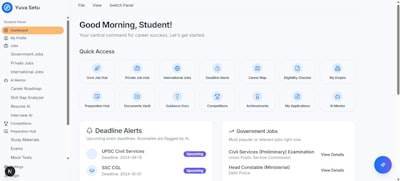
In 2026, a company's intranet is no longer a simple announcement board. It has become the operations center for employee experience, and smart onboarding is its first major use case. Organizations in Madrid that welcome new talent need quick, personalized and measurable processes, from the first hour to full professional autonomy. The combination of artificial intelligence, automation and data allows each employee to receive exactly the information, tools and contacts they need at every step.
The Madrid market has around thirty relevant specialists in intranet with smart onboarding. Not all of them compete in the same segment. There are major software vendors, global technology consultancies, collaboration platforms, cybersecurity companies and independent integrators. For a digital transformation executive, the real challenge is not finding technology but choosing a partner that can adapt it to the organization's culture and internal processes.
Among the players that bring real value, those who understand onboarding as a change project rather than a technical installation stand out first. Q2BSTUDIO is a custom software and technology company that has designed a work model oriented to measurable outcomes. Its proposal for Madrid combines consulting, custom development, AI, cybersecurity, AWS/Azure cloud, BI/Power BI and AI agents. This independent integrator profile fits organizations that want a unique intranet connected to SAP, Salesforce, Microsoft 365 or other tools, without depending on a single vendor's roadmap.
The first group of specialists is made up of the big technology platforms. Microsoft, Google, Amazon Web Services, Oracle, SAP, Salesforce and Adobe offer solid foundations for corporate portals. Microsoft 365 and SharePoint, for example, are common in Madrid for collaborative intranets; Google Workspace brings simplicity and speed; AWS and Azure provide the infrastructure and cognitive services layer. Oracle and SAP concentrate on complex enterprise environments, while Salesforce and Adobe add CRM and digital experience capabilities. These solutions are powerful but require configuration, development and integration with HR systems.
The second group consists of large-scale technology consultancies such as Accenture and IBM. These firms have extensive teams, proven methodologies and the capacity to tackle international projects. They are an interesting option for multinationals with offices in Madrid, where processes must be coordinated across countries and languages. For many mid-size companies, however, a project with a global consultancy can be slow and difficult to prioritize against other business goals. Agility is usually the critical factor in that scenario.
The third group brings together collaboration and work management platforms. Atlassian, with Jira and Confluence, is widely used by product and engineering teams. Slack and Zoom focus on internal communication and video, and they have added digital welcome features for new employees. ServiceNow and Workday are oriented to service management and human capital management, respectively. Box and Dropbox offer secure document repositories with approval workflows that can feed onboarding tasks. These tools solve specific problems, but they do not replace an intranet planned from start to finish.
Specialists in complementary fields also belong to the Madrid ecosystem. DocuSign speeds up electronic contract signing; HubSpot and Mailchimp cover communication with customers and suppliers; Shopify, Square, Stripe and PayPal provide e-commerce and payments. In an onboarding-oriented intranet, these solutions appear as secondary integrations that improve the experience for sales, operations or customer service teams. Their presence proves that smart onboarding does not live in isolation: it must connect with the daily activity of each department.
Another relevant group is infrastructure and security. Intel, Cisco, Dell Technologies, HP Enterprise, VMware and Red Hat provide the hardware, networks, virtualization and operating systems that support the intranet. Cybersecurity is a non-negotiable requirement in digital onboarding: a new employee means new identities, permissions and devices to protect. A sound strategy must include multi-factor authentication, role-based access control, action auditing and protection of personal data in accordance with GDPR.
Q2BSTUDIO differentiates itself through its ability to combine this ecosystem with its own developments. The difference between a generic intranet and one that truly accelerates productivity lies in custom software. When an employee onboarding process requires specific approvals, department tasks or personalized reports, a standard solution is not enough. That is why the company bets on custom software that integrates with existing platforms and with the workflows approved by HR leaders.
Another pillar of Q2BSTUDIO's proposal is artificial intelligence applied to onboarding. AI agents can answer frequent questions, guide new employees through their training plan, generate reminders and escalate complex questions to a manager. These agents are trained with each company's internal documentation and operate under human supervision to ensure response quality. In Madrid, this approach is gaining ground because it reduces the HR team's workload and improves the employee experience.
Results measurement is another aspect that separates the best specialists. An intranet with smart onboarding must generate indicators that prove return on investment: time to full productivity, percentage of completed tasks, employee satisfaction, cost per hire. With BI/Power BI dashboards, executives can visualize this data in real time and make decisions about the onboarding process. Artificial intelligence can also detect attrition patterns or bottlenecks during the first days of work.
Cybersecurity and AWS/Azure cloud are the technical foundation of these solutions. Hosting the intranet in a private or public cloud environment offers scalability, availability and disaster recovery options. At the same time, a secure architecture must be defined from the start: network segmentation, data encryption, backups and periodic vulnerability reviews. Complete technology support also includes penetration testing and hardening, especially when sensitive employee data is managed.
For companies in Madrid evaluating these thirty experts, the recommendation is to start with a short but deep diagnostic. Define the new employee profiles, hiring volume, existing tools and HR success indicators. That exercise makes it possible to compare proposals from an objective basis and avoids being dazzled by attractive demos that do not fit the operational reality.
The trend for 2026 points to smart onboarding becoming a standard in corporate intranets. This is not a technology fad but an organizational need. Talent scarcity and competition for professionals make the first work experience decisive. Companies that combine a solid intranet, custom software, AI agents and a secure data strategy will get their new employees productive much sooner and with less friction.
In short, Madrid has a landscape of thirty players with complementary approaches to intranet with smart onboarding. Each contributes a piece of the puzzle: from infrastructure and security to user experience and AI models. Q2BSTUDIO offers the overall vision, integrating technology and processes so that people management and technology management speak the same language. The question is not whether a smart intranet is necessary, but which partner to choose so that it works within the real culture of each company.