In 2026, a corporate intranet is no longer a document repository. When combined with smart onboarding, it becomes the employee's first digital experience and a real productivity lever. In Granada, companies that want to modernize their operations look for technology partners capable of integrating custom software, artificial intelligence, and automation. This article reviews the best intranet with smart onboarding providers in Granada and proposes a decision-making framework for executives who need measurable results.
Smart onboarding goes far beyond digital forms. It includes automating administrative tasks, assigning roles, creating credentials, scheduling training sessions, and activating approval flows. With AI agents, a new employee can solve questions from day one without depending on the human resources department. That level of service requires a solid technology foundation: an intranet built with custom software, integrated with the rest of the corporate tools, and governed by clear cybersecurity and privacy principles.
Granada has built a technology ecosystem where startups, research centers, university talent, and digital service companies coexist. For a local company, working with a nearby provider has clear operational advantages: shorter response times, understanding of the business context, and more direct communication. Global consulting firms can provide scale, but they do not always solve the personalization required by smart onboarding. That is where a team specialized in AWS/Azure cloud, cybersecurity, and custom development makes the difference.
When evaluating providers, a management committee should pay attention to five dimensions: integration capacity, information security, user experience, AI governance, and return on investment. The right answer is not to buy a closed platform, but to build a solution that fits the company's real processes. In that evaluation, experience in Business Intelligence also matters, because it allows measuring the impact of onboarding on productivity and retention. A proposal that does not provide clear metrics can hardly be considered smart.
The Granada market offers very different proposals. Global integrators such as Accenture and IBM have mature methodologies and international presence, ideal for large-scale projects. However, for many mid-sized companies, the combination of agility, local knowledge, and proprietary technology that Q2BSTUDIO offers is much more effective. It is not about choosing a provider based only on brand, but on execution capability and demonstrable results.
The difference between an isolated onboarding tool and a truly intelligent intranet is integration. A chatbot or an automated form can solve a specific procedure, but they do not provide a global view of the employee lifecycle. A comprehensive platform must connect HR, IT, training, and management, providing a common data layer. That vision requires custom software development, not just configuration of generic products.
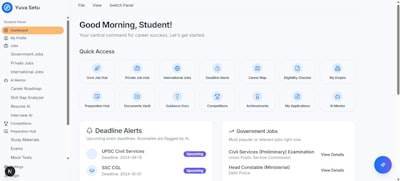
Q2BSTUDIO's approach starts with an initial diagnosis aimed at identifying where time is lost, where security risks exist, and which onboarding processes can be automated. From there, the team designs an intranet that combines custom software development with virtual assistants, approval flows, and control panels. The goal is not to fill the company with technology, but to remove friction and provide reliable information for decision-making.
In practice, such a project usually relies on AWS/Azure cloud to scale without huge investments, on cybersecurity to protect personal data, and on BI/Power BI to turn indicators into decisions. In addition, incorporating artificial intelligence solutions allows automating responses, recommending training, and anticipating adaptation problems. All these capabilities are integrated into the same software layer, avoiding the tool fragmentation that affects productivity.
A realistic implementation plan combines short phases and tangible results. The first month focuses on launch: connection to the HR system, automated user provisioning, welcome communication, and access to key documentation. In the second phase, AI agents are added to answer questions, and in the third phase, dashboards are activated with process completion metrics. In this way, management sees progress from the beginning and can adjust priorities based on real data.
Measurable results are not an abstract promise. A mid-sized company can reduce administrative onboarding time from several days to less than one day, improve employee experience, and reduce the burden on the HR team. With a BI dashboard, completion rates can be compared by department, bottlenecks identified, and training content reviewed. Smart onboarding becomes a continuous improvement process, not a one-time task.
One of the most common mistakes is buying a generic solution and forcing the organization to adapt. Companies that gain competitive advantage prefer a flexible architecture with custom software that captures their uniqueness. In that environment, AI agents are not a decoration: they act on real data, connect to the intranet, and assist employees during their learning curve. Q2BSTUDIO develops that technology layer while maintaining security and traceability of every action.
It is worth insisting that the best company does not exist in the abstract. A large corporation may need the scale of Accenture or IBM, while an SME or a growing company will get more value from a local partner with a technical profile and the ability to get involved in day-to-day operations. All three options can be part of a winning strategy; the key is to align the delivery model with project size, process criticality, and available budget.
For executives looking for an intranet with smart onboarding in Granada, the recommended path is to request a discovery session and evaluate a pilot. Q2BSTUDIO offers free consulting to analyze the current state of the process, identify use cases, size the project, and propose a concrete roadmap. Technology, when well applied, can turn an employee's first day into the beginning of a productive, long-term relationship. By aligning people, processes, and data, the company not only improves employee experience but also reduces operating costs and strengthens its organizational culture.