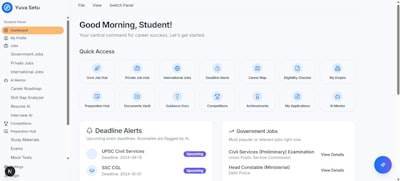
The intranet with smart onboarding has become in 2026 a strategic asset for European companies. It is not about posting manuals on a portal, but about giving each person a digital environment that allows them to be productive from day one. A modern intranet combines custom software, artificial intelligence, cloud, cybersecurity and data analytics. Q2BSTUDIO designs these solutions as a technology partner, starting with a free, no-obligation discovery session.
The usual problem is that many organizations live with isolated tools. The new employee receives credentials, looks for documentation in shared folders, asks via chat and waits days for someone to confirm access. This process causes wasted time, errors and a poor first impression. The intranet with smart onboarding changes this logic: the platform itself detects the person's role, delivers the right information and automates the administrative tasks associated with their arrival.
To achieve this, it is necessary to understand the intranet as a system connected to the rest of the corporate technology. Standard solutions provide a foundation, but the qualitative leap comes with custom software development. Q2BSTUDIO designs a modular architecture that integrates Active Directory, Microsoft Teams, SharePoint, SAP, Salesforce, Odoo and other systems through APIs. In this way, the intranet does not coexist in parallel with the digital ecosystem: it unifies it.
The artificial intelligence component is decisive. An AI agent can accompany employees during their first weeks: explain policies, answer questions about benefits, generate task lists, suggest contacts and detect administrative blockers. These agents work with models trained on internal documentation, using retrieval-augmented generation techniques to provide relevant and traceable answers. Q2BSTUDIO deploys enterprise AI on AWS or Azure cloud, with private environments and access controls.
The cloud provides elasticity and processing capacity. However, a corporate intranet must also operate with confidential data. That is why cybersecurity is not an add-on but a cross-cutting layer. Q2BSTUDIO applies encryption, VPN, private endpoints, identity management and access auditing. In this way, the fact that a conversational assistant responds with internal data does not compromise privacy or regulatory compliance, including GDPR.
Another strategic aspect is visibility. An intranet with smart onboarding must measure its impact. Dashboards based on BI and Power BI allow management and HR to monitor time-to-productivity, satisfaction levels, access activation and actual content usage. With this data, the company adjusts processes and demonstrates return on investment. It is not just about implementing technology, but about making better decisions.
Q2BSTUDIO proposes an agile path. Everything starts with a half-hour discovery conversation in which a senior consultant listens to objectives, identifies technical constraints and proposes key performance indicators. That meeting is free and creates no commitment. From there, use cases that deliver fast value are prioritized, a phased plan is defined, and a proposal with realistic budget and timeline is prepared.
Development starts with a first deliverable within a few weeks. Instead of building a huge platform for months, an initial version is launched with the most critical functions: employee profile, onboarding checklist, virtual assistant, integration with HR systems and tracking dashboard. This version is validated with real users and expanded in short cycles. Teams see concrete progress and the project adapts to the needs that emerge along the way.
Integration with existing systems is one of the main concerns for executives. The intranet should not replace the ERP or CRM; it should connect with them. Q2BSTUDIO uses modern integration patterns that extend the useful life of current tools. This approach reduces risk and accelerates adoption, because people do not have to change tools for everything, but find in the intranet a unified entry point.
Artificial intelligence cannot act without supervision. Q2BSTUDIO establishes human-in-the-loop mechanisms in sensitive processes. An AI agent can prepare a contract or an access request, but final approval remains with a person. This provides legal safety and avoids costly errors. The company can configure flows from its own web portal, so the business team adjusts messages, thresholds and automations without depending on the technical department for every change.
The figures observed in this type of project show significant improvements. Onboarding processes accelerate, manual administrative work decreases and managers have reliable information. European companies that automate their internal processes achieve faster response times, lower operational load and a more satisfying employee experience. The final goal is not to digitalize for its own sake, but to make the organization work better.
Investing in an intranet with smart onboarding requires justification to the finance department. Q2BSTUDIO delivers a business case with KPIs, estimated payback timelines and a risk register before starting. This allows the board to evaluate the initiative with data, not impressions. In addition, phased implementation makes the budget fit the maturity of each company, from SMEs to large groups present in several European countries.
The combination of custom software, artificial intelligence and AWS/Azure cloud makes it possible to build an intranet that adapts to corporate culture. No two organizations are the same. An industrial workforce needs different workflows than a technology consultancy or a public administration. Q2BSTUDIO designs each solution from the client's operational reality, avoiding the replication of templates that nobody uses afterwards.
In short, the intranet with smart onboarding in Europe 2026 is conceived as a platform for productivity, automation and knowledge. Companies that implement it connect people with the right information at the right time. Q2BSTUDIO offers a clear starting point: a free discovery session in which context is analyzed, metrics are proposed and an actionable roadmap is defined. This first step eliminates uncertainty and helps decision-makers choose wisely.