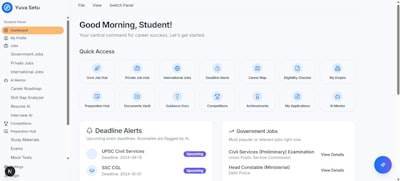
Digital transformation has turned the corporate intranet into a strategic piece. When intelligent onboarding is also included, the value multiplies: new employees access the right information in less time, workflows are automated and the team experience visibly improves. However, moving from a traditional intranet to an environment with AI cannot be done without a deep security and architecture review. A platform connected to Active Directory, ERP systems and collaboration tools handles personal data, roles and critical processes; any design flaw can become an open door to leaks or an operational brake.
Companies often associate an audit with a technical report full of alerts. In reality, when executed properly, it is a business-technology alignment tool. Intelligent onboarding involves several departments: HR designs the experience, IT guarantees security, communications maintains content and management needs metrics. The audit forces everyone to speak the same language and ensures risks are prioritized with business criteria, not only technical ones.
The security and architecture audit for an intranet with intelligent onboarding is not a simple checklist. It is a complete analysis that combines code review, data model, infrastructure and AI governance. At Q2BSTUDIO we approach this review from a practical perspective, evaluating how technical decisions affect the business. The goal is not only to find vulnerabilities, but to ensure the solution is scalable, maintainable and able to evolve with the organization.
At an architectural level, the review analyzes system modularity, load capacity, communication security between services and the integration strategy. A modern intranet usually combines on-premise and cloud components, so it is essential to review the configuration on cloud AWS/Azure with attention to identity, network, encryption and monitoring. A proper separation of responsibilities between frontend, APIs and database prevents a problem in one layer from compromising the others.
Among the most common problems we find in this type of platform are over-exposure of personal data in logs, lack of load testing for hiring peaks, improperly configured cloud services and the absence of traceability in the responses of digital assistants. The audit not only identifies these issues, but also clarifies their real impact: a risk with low probability but high impact deserves different attention than a minor failure on an internal news page.
In security, the audit focuses on authentication and authorization. Intelligent onboarding delivers content based on each employee's profile, area and access level; if the permission model is not well defined, AI could show documents to unauthorized people. That is why we review RBAC, session management, encryption of data in transit and at rest, and accidental exposure of sensitive information. Q2BSTUDIO's cybersecurity services include penetration testing and risk analysis adapted to this type of platform.
AI introduces a new risk surface. The AI agents involved in onboarding can suffer prompt injection attacks, leak data through overly generous responses or make decisions based on outdated information. The audit evaluates model governance, response traceability, cost control per token and agent behavior when facing malicious requests. It is also essential to check that document permissions are respected in RAG flows; securing the database is useless if the retrieval layer ignores access policies.
The data model is another critical point. The SQL queries that feed onboarding dashboards must be optimized so performance does not degrade as the number of users grows. It is necessary to review indexes, schema migrations, table design and transaction management. A poorly designed database creates bottlenecks and increases maintenance costs. The audit also analyzes data quality, because AI fed with inconsistent data produces wrong conclusions that affect employee experience and HR decisions.
The deployment and operations phase deserves specific attention. Errors in production environments usually appear due to poorly stored secrets, misconfigured environment variables or CI/CD pipelines without quality controls. The audit verifies backup strategy, disaster recovery plans, log monitoring and system observability, including cost visibility in cloud services and AI consumption. Q2BSTUDIO also reviews production readiness of infrastructure, including network configuration and remote access via VPN or Azure Private Link, a common practice in corporate AI projects.
Visibility of the onboarding process is crucial to know whether the new tool meets its objectives. Integrating a BI/Power BI layer makes it possible to build dashboards that relate time-to-hire, new employee satisfaction, productivity and platform usage. The audit verifies that data flows securely from the intranet to the dashboard and that the defined metrics are consistent with business goals. Without visibility, any AI investment is reduced to a technological gimmick.
AI agents participating in intelligent onboarding need clear behavior guidelines. The audit verifies whether the agent respects the principle of least privilege, whether a testing sandbox has been defined, whether relevant interactions are logged and whether there is an anomaly detection mechanism. We also evaluate the agent's level of autonomy: which actions it can execute without intervention and which require approval. This point is crucial to avoid excessive automation generating legal or reputational risks.
The audit also evaluates the relationship between the intranet and the rest of the technological ecosystem. Integrations with ERP, CRM, document management tools or corporate directories must be robust and auditable. In this context, Q2BSTUDIO's artificial intelligence solutions are designed to extend platform capabilities without replacing legacy systems; this reduces risk and accelerates adoption.
Another relevant aspect is data protection and regulatory compliance. Intelligent onboarding processes personal data of employees, which requires applying the principles of minimization, storage limitation and transparency. The audit reviews the record of processing activities, consent and contractual clauses with cloud service providers. It also verifies human-in-the-loop mechanisms in decisions that require human supervision, especially in hiring or internal promotion flows.
The audit deliverable must be understandable and useful. At Q2BSTUDIO we structure the report in three levels: critical findings, recommended improvements and optimizations. Each finding includes the expected impact, resolution effort and urgency guidance. This way of working allows IT managers to plan realistically and executives to understand the return of fixing risks before they become incidents.
From an economic point of view, investing in an audit before launching an intranet with intelligent onboarding is a smart decision. Security or architecture failures detected in production are much more expensive to fix than those identified in early stages. A company that incorporates AI into its internal processes expects tangible benefits: less administrative time, fewer errors and better experience; but those benefits only appear when the technology base is solid.
In short, the security and architecture audit is not a barrier to innovation, but a guarantee that innovation lasts over time. By combining custom software, cloud AWS/Azure, AI, cybersecurity, automation and BI, organizations achieve an intranet prepared for the future. Q2BSTUDIO accompanies the entire cycle, from diagnosis to continuous evolution, so that intelligent onboarding stops being a project and becomes a real business capability.
If your company is considering an intranet with intelligent onboarding, Q2BSTUDIO can help you diagnose it, correct it and prepare it to grow securely. More than a report, it delivers a solid foundation for the business to obtain real value from AI, with governance, traceability and trust.