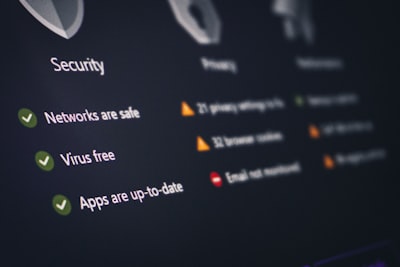
Companies in Barcelona are operating within a demanding digital ecosystem. The arrival of new talent, mobility between offices and the need to document processes are leading many organizations to invest in a smart onboarding intranet. However, accelerating employee onboarding with automated workflows and AI-based assistants requires a level of technical maturity that is not always available. Before starting this transformation, it is wise to conduct a security and architecture audit that reveals the actual state of the platform and prevents unwelcome surprises once the system is already in production.
What exactly is a smart onboarding intranet? It is a centralized digital environment where employees find all the necessary information from their first week: org chart, policies, training, contacts and tasks. The smart part consists of personalizing that experience through business rules, notifications and conversational assistants. For this experience to be useful and secure, the architecture must be well designed. An audit evaluates communication between services, the ability to scale to thousands of users, and how legacy systems integrate with new solutions.
Security is the other pillar. An intranet manages personal data, credentials, internal documents and often financial information. If the cloud infrastructure is not correctly configured, anyone could access the database or backups. Therefore, the audit must include a deep review of perimeter security, authentication mechanisms, session management and the role-based authorization model. Protection cannot be an afterthought; it must be integrated into the architectural design.
Q2BSTUDIO is a software development and technology company that understands this reality. Its team does not simply supervise projects: it builds custom software for intranets, employee portals and automation tools. When a company needs to know whether its smart onboarding project is viable, Q2BSTUDIO proposes an audit with a 360-degree view that covers both technical risks and the governance model. This perspective allows the client to make informed decisions before writing a single line of code.
In Barcelona, demand for this type of solution has grown due to the combination of technological talent and the business landscape. Startups and industrial companies share the same challenge: turning corporate information into a usable asset. The audit helps identify which onboarding processes really create value and which are purely administrative. This way, automation is applied with judgement and investment is concentrated on what improves the employee experience.
Cybersecurity requires constant attention. An audit includes penetration testing on endpoints, reviews of security headers in web applications and checks of internal service exposure. It also analyzes how passwords are stored, whether access tokens have a reasonable expiration policy, and whether logs respect data minimization principles. This information is essential for building an intranet that is robust against external attacks and internal errors.
The persistence layer is often the source of performance problems. In an intranet, information grows exponentially: documents, profiles, messages, logs. A poorly organized SQL schema or missing indexes can turn a simple search into a slow query. The audit reviews the most critical queries, migration planning and data retention policies. It also checks concurrency, because during onboarding many users may be performing the same operation at the same time.
Artificial intelligence adds a fascinating yet dangerous layer of complexity. Assistants that answer questions using internal documents require fine-grained permission control. If an AI model has access to a shared folder, it could reveal information to someone without permission. Therefore, the audit of a smart onboarding intranet must include model governance: what sources are used, how the prompt is built, how questions are logged and how to prevent the model from hallucinating or leaking data. AI agents that interact with HR or CRM systems require human validation for critical actions.
Observability is the bridge between technical data and business decisions. A smart intranet is not just an IT product; it is a tool that must produce measurable results. Q2BSTUDIO integrates Business Intelligence and Power BI dashboards so that HR and operations leaders can see onboarding progress in real time. These dashboards also help detect bottlenecks: if a phase takes too long, the system flags it. The audit ensures that the data used by these dashboards is reliable and protected.
Cloud deployment is another area that cannot be neglected. Many companies choose AWS or Azure to host their intranet and AI services. The audit reviews identity and access configuration in the cloud, encryption of data at rest and in transit, CI/CD pipelines and backup mechanisms. Q2BSTUDIO helps organizations take advantage of AWS/Azure cloud services without losing cost control or security. It also evaluates whether the design includes high availability and disaster recovery, because an intranet down during an onboarding week can generate a terrible experience.
Preparing an audit requires collaboration between the internal team and consultants. It is necessary to document access flows, list integrations and describe the processes to be automated. The better the prior information, the more accurate the evaluation. Q2BSTUDIO supports the client during this exchange by organizing interviews with system, security and business managers. The result is a report with priorities, risks, estimates and actionable recommendations, designed so that the management committee understands the impact of each decision.
In short, a security and architecture audit is the right starting point for any smart onboarding intranet initiative in Barcelona. It makes it possible to identify technical debt, correct vulnerabilities, size the infrastructure and define a realistic roadmap. Q2BSTUDIO offers the combination of technical judgement and business vision that organizations need: custom software, AI integration, cybersecurity, cloud and Business Intelligence in a single project. Ultimately, technology matters not for its own sake, but for its ability to help people work better and more securely.