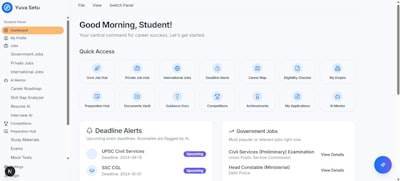
The intranet with smart onboarding has become a central topic for many companies that want to digitize employee onboarding and access to internal knowledge. However, choosing the right solution does not always mean implementing an all-in-one platform. Depending on the size of the organization, legacy systems and available budget, there are alternatives that can solve the problem with less complexity or with greater control. This article analyzes the main options from a technical and business perspective, with references to a custom software development approach and complementary services such as AI, cybersecurity, cloud AWS/Azure, BI/Power BI and AI agents.
An intranet with smart onboarding combines a corporate space with AI-based assistants, automated workflows and semantic search. For a large company with thousands of employees, it can be the core of the internal digital experience. For an SME or a business unit, however, it can be oversized. Before discarding any alternative, it is convenient to define the concrete process to improve: account creation, initial training, access to documentation, integration with other applications or supervision by HR.
One of the simplest alternatives is point solutions for onboarding. Platforms such as checklist tools, online training or document managers cover part of the process without needing to build a complete intranet. Their main advantage is speed of implementation and lower initial cost. On the other hand, they tend to create information silos and do not integrate well with ERP, CRM or HR systems. In addition, the employee experience becomes fragmented: one day they use one tool to sign documents, another day another tool to watch a video and another one to request equipment. This option works when the scope is very limited and complex growth is not expected.
Another alternative is generic process automation tools, such as process automation platforms or low-code connectors that link SaaS applications. These allow modeling flows such as if A happens, then B is notified, a record is created in C and an email is sent to D. They are useful for automating specific onboarding tasks, such as user generation or welcome emails. The limit appears when intelligence is needed to interpret open questions, classify documents or recommend content. Without a well-trained AI model and a solid cybersecurity architecture, automation remains a superficial layer.
When processes are not standardized or the company needs to differentiate itself, the most robust option is usually custom application development. A team like Q2BSTUDIO can build an internal platform that combines onboarding management, intelligent search and integration with critical systems such as SAP, Salesforce or Microsoft Dynamics. Unlike a closed product, a custom application adapts to real business rules and allows incorporating AI agents to answer frequent questions, write profiles or generate tasks. In addition, the source code belongs to the client, which avoids vendor dependency. Custom cross-platform software offers a clear path when the current intranet does not cover onboarding needs and buying another license also does not make sense.
A frequent alternative in large companies is to build the solution with the internal IT team using cloud AWS/Azure services. This gives total control over the infrastructure and allows using managed components such as Azure Cognitive Search, AWS Bedrock or Azure OpenAI. But it implies assuming the cost of design, development, maintenance, security and product evolution. An internal team must be able to manage not only code, but also identity, access, encryption, observability and service continuity. If the organization does not have previous experience with AWS/Azure cloud services, the learning curve can delay the project. Furthermore, cybersecurity becomes a cross-cutting requirement: any intranet that processes personal employee data requires a risk analysis and an incident response plan.
The hybrid option is often the most realistic. It consists of maintaining a lightweight corporate intranet or an existing portal and complementing it with specialized onboarding, automation and analytics tools. For example, Microsoft Teams can be used as an entry point, SharePoint as a document repository and Power BI for dashboards, while a custom development orchestrates the welcome flow and task generation. This approach reduces risk and delivers quick results without replacing the entire infrastructure. A key aspect is data governance: define who can see each document, how access is audited and how confidential information is protected.
To decide between an intranet with smart onboarding and an alternative, it is advisable to evaluate four criteria: functional scope, total cost of ownership, internal maintenance capacity and desired integration level. A point solution is suitable for simple needs; an automation platform serves linear flows; custom development is better when there are complex business rules; and internal construction only makes sense if there is a team with skills in AI, cloud and cybersecurity. In all cases, it is recommended to start with a limited pilot to validate the value hypothesis, instead of assuming a large project from the beginning.
Q2BSTUDIO approaches these decisions from a technical and business point of view. Instead of imposing a standard intranet, it performs a discovery to understand current flows, baseline metrics and operational constraints. Then it proposes an MVP in a short period and designs the solution with integration to SAP, Odoo, Salesforce, HubSpot, Microsoft Dynamics or other APIs. When the project includes artificial intelligence, AI agents are designed to operate within human supervision circuits, with role-based access and audit logging. Cybersecurity practices are also incorporated when connecting with local systems, and cloud AWS/Azure or private environments are used depending on the case. If leadership needs visibility, BI/Power BI dashboards are built to measure onboarding effectiveness, productivity times and satisfaction levels of new employees.
The choice is not binary between an intranet with smart onboarding and alternatives. There is a spectrum of options that combine commercial software, automation and custom development. The key is to align the decision with the company's digitalization strategy, the available team and the measurable benefits expected. Companies that need quick results can choose a point solution; organizations looking for scalability and differentiation will find a better fit in custom software and AI. In any scenario, it is advisable to work with a technical partner with real experience in integrations, security and cloud deployment.
If you are evaluating alternatives to an intranet with smart onboarding, Q2BSTUDIO can help you compare options with objective criteria. A free discovery session makes it possible to identify the most suitable solution for your business, the required effort and the expected return in the first months.