
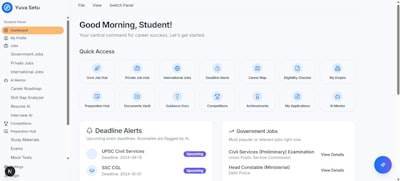
An intranet with smart onboarding is much more than a document portal: it is the digital backbone that allows a new employee to understand the company, access the right tools and start delivering value within the first days. Organizations that approach this project with a strategic vision avoid information overload and drastically reduce the learning curve. To achieve that, it is not enough to install a generic platform; it requires designing a system that combines custom software, process automation, AI and a solid cybersecurity layer from day one.
The starting point should not be choosing technology, but defining the outcome. What should a new person achieve during the first week? What questions do all employees ask? What permissions and access does each role need? Answering those questions with concrete metrics makes it possible to prioritize intranet features and avoid the most common mistake: building a static repository that no one uses. When a company decides to take this step, Q2BSTUDIO recommends starting with a discovery workshop that maps real workflows, the systems involved and the bottlenecks affecting productivity.
That initial analysis must be practical. It is not about documenting every company process, but about identifying the five or ten journeys with the biggest impact on employee experience: staff registration, equipment requests, client access, mandatory training, sales tools or internal policy lookups. By digitizing those journeys with conditional logic and guided steps, the intranet stops being a poor search box and becomes an assistant that accompanies the user. It is also important to measure the current state: onboarding time, number of incidents, HR hours and new-hire satisfaction.
The technical architecture is the next step. An intranet with smart onboarding needs a backend ready to integrate with the company ecosystem. The most common approach is to build on a cloud AWS/Azure infrastructure to take advantage of managed identity, database and storage services. Cybersecurity is not a complement here: it must be at the center. Role-based access control, multi-factor authentication, audit logging and encryption in transit and at rest are mandatory conditions, especially when the intranet handles personal data or confidential information.
This phase also determines how the intranet will connect to existing systems. ERPs, CRMs, HR platforms and office tools are already in place in most companies. A realistic approach is to implement an integration layer that centralizes API calls and avoids duplicate data. This allows an employee to view their payroll, update their profile or request time off without leaving the intranet, while the data remains in the source system. Q2BSTUDIO designs these integrations with custom APIs and secure connectors, so the project does not require replacing the current ERP or CRM.
Artificial intelligence provides the experience layer. A semantic search engine trained on company policies and procedures responds with cited excerpts instead of returning a list of links. AI agents can guide the employee step by step: request HR registration, book a workstation, create a ticket or schedule a meeting with the team. These agents are not substitutes for people; they are assistants that reduce repetitive workload and allow HR and IT teams to focus on higher-value tasks. The key is to train the models with proprietary data and keep a human in the loop for sensitive decisions.
For AI to deliver reliable answers, the information consumed by the intranet must be up to date and classified. This requires light document governance: current versions, owners for each area and access labels. If a document contains personal information, the model must not show it to unauthorized employees. That is why LLM implementation cannot be limited to connecting models to a knowledge base; it is necessary to apply security filters, validate answers and measure accuracy. Enterprise AI, well deployed, is a productivity multiplier; poorly deployed, it is a source of legal and operational risk.
This kind of project can be approached in phases. A good practice is to deliver a minimum viable product (MVP) in a few weeks, focused on one onboarding journey, and then expand the scope. This makes it possible to validate adoption with a small group of users before rolling out to the whole organization. Results from that first phase are measured using indicators such as time to first sale, number of tickets solved by the support team or course completion rate. That evidence justifies the investment and guides the next iterations.
Integration with reporting and business intelligence (BI) tools is also essential. The intranet should not only facilitate daily work; it should generate data about how it is used. With a Power BI dashboard or a custom panel, business leaders can answer questions such as: which departments consult the documentation most? At which onboarding step do employees drop off? Which contents generate more associated incidents? This information allows the platform to improve continuously and aligns the intranet with business goals.
Another critical aspect is training and autonomy. There is no point depending on the engineering team for every content, permission or workflow change. A modern intranet must include an administration portal where HR managers and team leads can update content, configure reminders and review interactions. Q2BSTUDIO provides documentation, handover sessions and a control panel designed so the client can operate the solution with their own team, while keeping the possibility of extending functionality as the business requires.
Custom software does not mean that everything is built from scratch. It means selecting and assembling the right components: a database, a usable front-end, an integration layer, language models, authentication systems and monitoring tools. This approach allows the solution to adapt to real company processes, instead of forcing the company to adapt to generic software. In complex projects, having a team that masters web development, cloud AWS/Azure, cybersecurity and AI agents at the same time considerably reduces technical risk. Q2BSTUDIO works from that intersection of disciplines.
Finally, plan for evolution. Smart onboarding does not end on the employee's first day; it continues with ongoing training, internal mobility and professional development. A well-designed intranet is a foundation on which to add knowledge portals, virtual assistants for specific areas, approval workflows and executive dashboards. If the architecture is well thought out, each new feature fits without reworking the whole system.
In summary, starting an intranet with smart onboarding requires a balance between business, technology and security. Defining measurable goals, choosing a scalable architecture, integrating existing systems and deploying AI with governance are the steps that separate a successful project from an expensive abandoned portal. For companies looking for technical and strategic support, Q2BSTUDIO offers a multidisciplinary profile able to handle design, development and operation of the solution. The first step is simple: choose an onboarding process that causes real pain, measure the current situation and build a small proof of value within a few weeks. From there, the intranet becomes the living memory of the organization.


