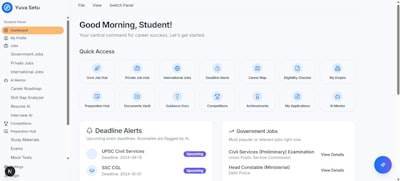
A corporate intranet is not a static project. It is an operating platform that evolves with the business and with the people who use it. When we talk about an intranet with smart onboarding, we are referring to a long-term vision that integrates employee experience, process automation and intelligent technology into a single system. This vision is not limited to digitizing forms: it seeks to ensure that every new professional understands the company culture, procedures and objectives in less time and with fewer errors.
This vision connects directly with business strategy. When onboarding time decreases, the organization gains agility. New employees arrive with energy and updated knowledge; if the company gives them the right tools, that potential becomes real value. The opposite generates frustration, turnover and unnecessary costs.
Traditional intranets accumulate documents, manuals and news. Smart onboarding goes further: it transforms the intranet into a proactive assistant. This requires a solid technical foundation. Companies that try to improvise with disparate tools end up with fragmented data and low adoption. Therefore, it is wise to start with the design of custom software applications, adapted to the real hiring, training and talent management processes.
Experience design matters as much as technology. An intelligent intranet must be easy to use, accessible from any device and flexible enough to adapt to different profiles: technical staff, salespeople, operations teams or executives. Each person should feel that the system is designed for their daily work.
A good intelligent intranet project begins with a discovery phase. In this stage, workflows, data sources, HR systems and operational constraints are identified. Then a minimum viable product is defined to validate hypotheses in a few weeks. This incremental approach delivers early results and reduces risk. It is not about replacing the entire technological infrastructure, but about securely connecting systems that already exist.
From a technical point of view, this type of platform often relies on AWS/Azure cloud to scale without investing in physical servers. Cloud services facilitate the deployment of APIs, databases and serverless functions. At the same time, security must be present from the design stage: role-based authentication, data encryption, access auditing and private connections. Cybersecurity is not an add-on; it is a prerequisite.
Artificial intelligence adds a valuable layer. For example, a language model connected to internal corporate documentation can answer new employees' questions in real time, suggest courses and draft specific welcome plans. We are talking about AI agents that perform tasks with human supervision. These agents can extract information from contracts, generate tickets, update profiles or send reminders. The goal is not to replace people, but to free them from repetitive tasks and allow them to focus on the new talent experience.
In practice, AI works best when it is trained on internal company knowledge. An intelligent search system can answer questions about vacations, expense policies or workplace safety without needing to open ten documents. This requires building a curated knowledge base with metadata and constant updates.
Governance is a critical aspect. For an intranet with smart onboarding to be useful in the long term, it needs clear data ownership rules, retention policies and human validation checkpoints. Automated workflows must stop when the situation requires it. This combination of automation and control builds trust, something essential in environments with high turnover or strict regulatory requirements.
Measuring results is also part of the vision. With dashboards and business intelligence tools, HR and operations managers can see real-time indicators: time-to-productivity, training completion rates, satisfaction levels of new employees or bottlenecks in the process. Power BI makes it possible to integrate this data with other areas of the company and make evidence-based decisions.
Data is useless if it is not interpreted. Periodic follow-up sessions help detect deviations and correct course. For example, if a particular area shows a drop in course completion, action can be taken with additional training or simplified content.
Integration with HR systems and collaboration platforms is a success factor. Employees do not want to learn a new tool for every task. Therefore, the intranet must integrate with email, calendars, video calling tools and people management systems. The less friction, the greater adoption.
Information security should not be treated as a restriction, but as an adoption lever. When employees know that their data is protected and that only authorized people can access certain documents, trust increases. Role-based access, multi-factor authentication, VPN tunnels and private networks in Azure are common elements in this type of architecture.
The long term requires a sustainable platform. Instead of accumulating independent tools, companies should move toward a unified environment. This means that the intranet becomes the integration hub for HR, operations, communication and knowledge. The fewer systems an employee has to consult, the easier it will be to settle in and the faster their impact.
Q2BSTUDIO faces this challenge with an engineering approach. It does not sell a generic solution; it builds a solution tailored to each organization's context. It designs custom software, deploys cloud infrastructure, applies cybersecurity controls and develops AI agents that coexist with teams. This comprehensive vision is what moves from a buzzword to a management tool with measurable return.
Investment is usually linked to scope, but its impact can be seen in the reduction of administrative tasks, improved experience and the ability to provide faster service to internal clients. Rather than seeing it as an expense, it should be placed in the context of digital transformation.
The starting point is always a diagnosis. Without understanding current processes, it is impossible to design intelligent onboarding that fits. From there, the most impactful use cases are prioritized: employee registration, team assignment, equipment delivery, system access, initial training and goal tracking. Each case is solved with a combination of automation, a clear interface and centralized data.
Phased implementation is the most realistic option. A first release can focus on a pilot department or a reduced set of functionalities. Then it is extended to other countries or divisions. The advantage of this model is that it allows fast learning, better experience adjustment and internal success stories that drive adoption.
As for maintenance, an intelligent intranet is not abandoned after launch. It requires continuous evolution: new content, improvements in AI models, integrations with new tools and security reviews. Companies that understand this dynamic gain a competitive advantage over those that see the intranet as a simple internal project.
The long-term vision of an intranet with smart onboarding is to create a digital nervous system that connects strategy, operations and people. It is not a final destination but an organizational capability that matures over time. Technology evolves, but the principle remains: the right information must reach the right person at the right time, with the least possible effort.