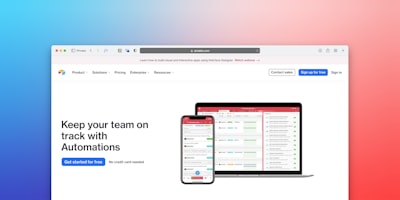
An intranet with smart onboarding has ceased to be a simple document repository and has become the nervous system of the modern company. When an organization brings in a new person, the intelligent intranet can take care of creating access, assigning equipment, sending documentation, scheduling training and notifying the people involved, all automatically. This approach turns the onboarding experience into an orderly, measurable process while freeing internal teams from repetitive tasks that traditionally consume hours of work.
Q2BSTUDIO understands this challenge as an engineering project, not as the installation of a generic platform. For this reason, to build an intranet with smart onboarding, it starts from an analysis of real flows: how an employee record is requested today, what permissions each profile needs, which systems must be synchronized and which data sources are reliable. With that information, it designs an architecture where custom applications (custom software development) are combined with automation modules and AI agents to cover each specific use case.
Automating repetitive tasks on the intranet can include everything from generating contracts and requesting equipment to updating org charts or detecting expired permissions. A business rules engine decides what to do in each situation, and an AI agent interprets employee requests written in natural language. For example, someone who writes 'I need access to the CRM' can receive a response with the corresponding form, or even see the access created if their role allows it. That is smart onboarding applied to day-to-day operations: fewer emails, fewer queues and fewer errors.
To keep speed from compromising security, the solution must integrate cybersecurity from design time. Q2BSTUDIO applies identity management, data encryption, network segmentation and event auditing across all flows. This way, the intranet with smart onboarding becomes a secure environment for handling personal information, credentials and internal documentation. The goal is not to add a firewall at the end, but to design every automation inside a zero-trust model, where access is granted by context and reviewed continuously.
Artificial intelligence adds a differentiating value layer in this type of project. Q2BSTUDIO uses generative AI models, vector databases for information retrieval and agents that talk with employees to answer common questions. These agents can explain internal policies, help complete forms or locate corporate documents. Because they are integrated with the intranet and HR systems, AI agents reduce the time new employees need to feel autonomous and productive. In addition, the result is always traceable and a human can review critical actions before they are executed.
Another pillar is cloud architecture. Q2BSTUDIO has expertise in AWS/Azure cloud, allowing the intranet to be deployed on scalable infrastructure, with high availability and with the managed AI services already offered by these providers. Sensitive data can reside in a private instance, connected to the intranet through VPN or Azure Private Link, so the organization takes advantage of the cloud without exposing critical data. This flexibility is essential for companies with offices in several countries or remote teams.
Performance measurement is one of the keys that separates functional intranets from failed ones. An intranet with smart onboarding must respond to objective indicators: time to onboard, tasks completed automatically, cost per hire, employee satisfaction and process accuracy. Q2BSTUDIO integrates intranet data with BI solutions such as Power BI to create dashboards that management can consult at any time. Thus, transformation is perceived not only as a technology project, but as a lever for business results.
This approach does not force organizations to replace current systems. An intelligent intranet is built on APIs, connectors and events that allow it to communicate with ERP, CRM, HR platforms or Microsoft and Google tools. Progressive integration reduces risk and allows automation of repetitive tasks to begin with the processes that offer the highest return. Q2BSTUDIO organizes delivery in phases, so the first MVP can be available within a few weeks and deliver real value before the end of the first quarter.
It is worth remembering that the final goal is not to install a tool, but to improve people's productivity. By automating repetitive tasks and giving employees an environment with immediate answers, the organization gains speed and consistency. HR teams can spend more time on coaching and talent management, while systems and operations stop solving trivial incidents. That redistribution of work is what produces sustainable results and justifies the investment.
Moreover, an intranet with smart onboarding facilitates the adoption of new policies and internal communication. If a policy changes, the system can publish the update, notify affected people and verify that everyone has read the new version. This level of control reduces legal risk and improves transparency in organizations. At the same time, interaction data makes it possible to detect areas with low understanding or to provide personalized recommendations for each role.
To achieve this level of intelligence, Q2BSTUDIO recommends setting a realistic roadmap. Not everything has to be automated in the first month. Start with the processes for hiring, termination, transfers and recurrent requests; then expand into document management, BI reports and AI agents. Each phase should carry associated indicators and a security review. With that plan, the company can verify return on investment gradually and adjust spending without disrupting daily operations.
In short, an intranet with smart onboarding is an opportunity to rethink how people work and how information flows. The combination of custom software, process automation, AI agents, AWS/Azure cloud and cybersecurity makes it possible for an intranet not to be just a place where documents are stored, but a system that acts, responds and learns. Q2BSTUDIO brings technical expertise and business vision to turn this topic into a measurable competitive advantage.