When a company decides to implement an intranet with smart onboarding, the temptation to focus only on the initial budget is very high. Experience in digital transformation projects shows, however, that recurring and hidden costs are what determine whether the investment generates profitability or becomes a burden. This article offers a practical guide for executives, HR managers and technology leaders who want to understand the real cost of this type of initiative and make informed decisions.
Smart onboarding is not a simple welcome portal. It combines custom software applications, automation flows, AI-powered search systems, dashboards and connections with corporate tools such as email, the user directory or the ERP. Each of those components involves architecture, maintenance and operation decisions that have a budget impact. That is why it is advisable to separate the construction cost from the total cost of ownership over several years. Only then can the real return on investment be calculated.
The first item that is usually forgotten is data governance. An intranet with smart onboarding learns from employee activity, procedure manuals, internal policies and trainer responses. For that learning to be safe and useful, it is necessary to define who can see which information, how long records are kept and how access is audited. That governance cannot be solved with a one-off adjustment, but with a maintainable model that evolves with regulations and company structure.
The second area is related to infrastructure. A deployment on AWS or Azure cloud enables scaling, but also generates monthly costs for computing, storage, network and backups. If the intranet needs to connect with internal systems, VPN tunnels or private endpoints must be maintained. Many organizations do not include these concepts in the initial budget and then discover that the monthly bill is higher than expected. It is necessary to size the environment well, choose appropriate instances and configure consumption alerts so the finance team has full visibility.
Cybersecurity is another critical item. An intranet with smart onboarding manages personal data, credentials and, in some cases, payroll information or performance reviews. That volume of information makes the portal an attractive target for internal and external attacks. Periodic audits, penetration tests, vulnerability management and log monitoring are not optional. They are measures that prevent incidents that are much more expensive than any saving during the construction phase. They also make it possible to comply with regulations such as GDPR and build trust among employees.
The artificial intelligence component adds a layer of variable costs that should be understood before starting. Language models are charged by processed tokens, vector databases have storage and query costs, and AI agents execute tasks that consume computing time. A well-designed onboarding system optimizes calls to models, caches frequent responses and limits the use of expensive functions when they do not add value. Without that engineering, the AI bill can grow without control. That is why it is so important to choose a technology partner that understands the entire data lifecycle.
Moreover, AI agents do not work alone. They require human supervision, prompt tuning, response quality control and updating of the knowledge they use. The company must allocate internal resources or hire specialized support to maintain the quality of the virtual assistant. That recurring cost is the guarantee that the solution does not lose accuracy over time or generate incorrect responses that can damage the employee experience.
Integrations with existing systems are another major source of hidden costs. An intranet rarely lives in isolation: it needs to read data from the ERP, synchronize profiles with the active directory, create tickets in the CRM or send notifications to Teams. Each of those connections depends on APIs that vendors change and update. When that happens, the integration must be reviewed, logic adjusted and tests repeated. A maintenance contract that covers these tasks prevents the internal team from becoming a bottleneck and prevents the system from losing functionality.
Neither can the cost of training and change management be ignored. The best smart onboarding system fails if employees do not use it. Time must be dedicated to training middle managers, creating quick guides, answering questions and measuring adoption. In addition, each new feature requires a small internal communication campaign. Companies that budget for these activities from the beginning obtain more return than those that invest only in development and expect the tool to sell itself.
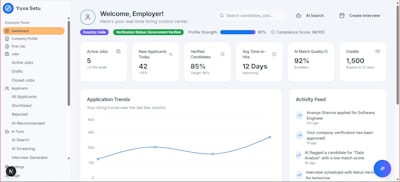
Dashboards with Power BI or equivalent solutions help measure the real impact of onboarding: time to full productivity, employee satisfaction, number of incidents solved by the virtual assistant and cost per hire. But those indicators also require data modeling, report updates and someone responsible for interpreting them. Without that supervision, data stops being reliable and management loses one of the most important advantages of digitalization: the ability to decide with evidence.
Q2BSTUDIO addresses these issues with a transparent approach. Before writing a line of code, it conducts a process analysis in which dependencies, current flows and the indicators to be improved are identified. From there, it proposes a phased implementation that starts with a minimum viable product in a few weeks. That product makes it possible to validate the technology and measure its acceptance without committing a huge budget. It also delivers a recurring cost record so the client knows what invoices to expect and why.
Q2BSTUDIO combines custom software development with artificial intelligence to build solutions that fit each client's needs. It does not simply install a generic platform. It designs digital spaces that integrate AI agents, process automation and dashboards so business leaders can make data-driven decisions. It also delivers an administration portal so users can configure the AI without depending on the technical team and maintain control over inference costs.
It also applies cybersecurity criteria at every stage of the project and takes advantage of the flexibility of AWS/Azure cloud to adjust resources to real demand. In this way, the client does not pay for idle capacity and can scale when the organization grows. The combination of these practices turns the intranet into an investment with measurable return and not into a project that ages poorly.
In short, an intranet with smart onboarding can have significant recurring costs if it is not planned well. But with a technology partner that makes those items visible from the beginning, designs an efficient architecture and offers training and ongoing support, the investment becomes predictable and profitable. The key is to ask for a clear proposal with success indicators, delivery schedule and an operating cost breakdown before starting.