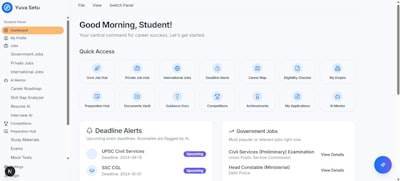
Can an intranet with smart onboarding integrate with your systems? The straightforward answer is yes, but there are important technical nuances. A modern intranet is not a simple corporate page: it is a platform that connects people with the information, processes and tools they need to work. When it also incorporates artificial intelligence to guide new employees in their first weeks, integration with the company's technology ecosystem becomes the element that determines its success or failure.
It is worth clarifying what we mean by intranet with smart onboarding. It is not just a document repository with a chat. It is a digital workspace that combines internal communication, guided processes, access to learning content and AI assistants. Smart onboarding uses the information already present in the company to create a personalized experience: each new employee receives the relevant tasks, readings and contacts at the right time. The intranet thus becomes a bridge between the corporate world and the person joining the team.
For smart onboarding to work, the intranet must be able to read and write data in the systems that already exist: the user directory, the HR software, the ERP, the CRM, office tools or learning platforms. Without this communication, the employee experience is full of manual work: filling in forms, repeating information, waiting for someone to activate their access. With a well designed integration, the creation of a new employee in HR can automatically trigger the provisioning of their account, the assignment of a mentor, enrollment in courses and the publication of their introduction to the team.
One of the first integration points to solve is identity. If the intranet connects with Active Directory or a cloud identity provider, employees can sign in with the same credentials they use in their other applications. Single sign-on reduces friction and makes it possible to synchronize profiles, groups and permissions automatically. When the intranet is also integrated with Microsoft Teams or collaboration tools, it can deliver notifications and tasks directly to the user's inbox or team channel.
The most common architecture for achieving this communication combines REST or GraphQL APIs, webhooks, message queues and integration middleware. APIs let the intranet query and update information in other systems in a controlled way. Webhooks notify events in real time, such as a role change or the addition of a new colleague. Message queues ensure that asynchronous processes, such as sending emails or synchronizing data, do not block daily operations. The middleware acts as a transformation layer, cleaning and enriching data before it reaches its destination.
This approach allows the intranet to connect with both modern systems and legacy applications. Instead of replacing tools that already work, it creates communication bridges. For example, the intranet can integrate with SAP, Odoo, Microsoft Dynamics, Salesforce, HubSpot, NetSuite, SharePoint, Microsoft Teams and Active Directory. It can also consume third-party APIs or email and calendar services. The key is to design an integration map that considers the criticality of each system and defines synchronization rules, not only from the technology side but also from the business process side.
In practice, integration is not limited to the initial onboarding moment. The intranet must remain synchronized throughout the employee lifecycle: when people change teams, update their training, request a transfer or join a new project. For that reason, integration design must cover not only creations and removals, but also modifications and intermediate events. Good data governance avoids duplicates, inconsistencies and information loss.
This is where an experienced technology partner makes a difference. Q2BSTUDIO develops custom software that adapts to the reality of each organization. Its approach is not to sell a standard installation, but to build a platform that fits existing workflows. The team begins with a discovery phase to analyze the systems in use, the available integration points, operational constraints and the indicators that will be used to measure impact. With that information, it prepares a phased delivery plan, with a minimum viable product delivered in a short time and subsequent iterative evolution.
Artificial intelligence adds a layer of value that traditional intranets cannot offer. An assistant embedded in the intranet can answer natural language questions about internal policies, holidays, training or benefits, based on corporate documents and current data. AI agents can handle tasks such as classifying requests, generating summaries of internal news, recommending courses according to profile or detecting warning signs in the onboarding process, for instance when a new employee does not complete a key activity. Q2BSTUDIO implements generative AI solutions and customized agents, combining language models with each company's internal databases.
The infrastructure where the solution is deployed also matters. Many organizations choose cloud services such as AWS or Azure for their scalability and flexibility. These platforms offer managed database, identity and monitoring services, as well as AI tools that speed up development. However, some companies prefer to keep certain data on their own servers for regulatory reasons or corporate policy. A well designed hybrid architecture combines both worlds: critical data remains in the current infrastructure and cloud services connect through encrypted tunnels or private endpoints.
Cybersecurity is a cross-cutting pillar. An intranet connected to HR systems and active directories manages sensitive information and credentials. Access must be protected with role-based access control, multi-factor authentication, audit logging and session policies. In addition, when AI components are introduced, it is necessary to review what data is sent to the models, where it is processed and who can query it. Q2BSTUDIO applies security-by-design criteria, including penetration testing, vulnerability analysis and GDPR compliance, so that the intranet does not become a gateway for cyberattacks.
Another important benefit of integrating the intranet with corporate systems is the generation of measurable data. Every interaction, completed course, consulted document and automated task leaves a trace that can be analyzed. With Business Intelligence and Power BI tools, HR managers and leadership can visualize onboarding progress in real time: average time to full productivity, employee satisfaction, recurring issues or impact on retention. This data makes it possible to justify investment with concrete figures and prioritize improvements.
Process automation also streamlines daily operations. Tasks that traditionally required internal emails and manual approvals, such as requesting devices, activating billing tools or reviewing documentation, can be executed automatically through workflows defined in the intranet. The combination of automation and AI reduces errors, frees up team time and accelerates the learning curve for new hires. It is not about removing the human factor, but about helping employees focus on strategic, high-value activities.
Change management is also critical. Technology only creates impact if people use it. Therefore, an intranet with smart onboarding must be supported by clear internal communication, short training and an experience design that makes taking the first step natural. The platform must be easy to use even for those less familiar with technology. Q2BSTUDIO works side by side with internal teams to ensure the solution is adopted and knowledge stays inside the organization.
The question in the title therefore has no single technical answer but a strategic one: yes, it is possible, provided it is approached as an integration and organizational design project, not as a simple software purchase. Companies that manage to connect the intranet with their existing systems, incorporate AI safely and measure results gain a real advantage in talent onboarding. New employees feel accompanied, become productive sooner and the organization retains knowledge better.
If your company is considering an intranet with smart onboarding, it is worth first analyzing the state of your systems and the capabilities of your technology team. The right partner should not have to convince you that integration is possible, but rather demonstrate how to make it viable. Q2BSTUDIO combines experience in custom software development, integration, artificial intelligence, cloud and cybersecurity to support companies of all sizes in this process.