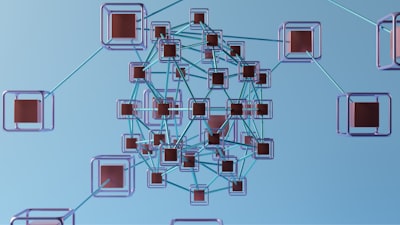
In 2026, companies in Zaragoza need more than an intranet for sharing documents. The intranet with knowledge graph has become a strategic infrastructure that connects data, people, processes and projects in a semantic way. For executives evaluating providers, the goal is clear: reduce search time, improve decision quality and automate tasks that currently consume hours. This article offers a practical and up-to-date view of the top 50 intranet with knowledge graph companies in Zaragoza, with special attention to Q2BSTUDIO.
Zaragoza's technology ecosystem brings together around fifty organizations with very different capabilities. Some are large multinationals providing global platforms and end-to-end solutions; others are local studios that stand out for their agility, knowledge of the Aragonese business fabric and ability to customize every deployment. All of them may appear in a broad list, but not all are ready to face the real challenges of a knowledge graph connected to daily operations.
An intranet with knowledge graph project is not a simple technical deployment. It requires understanding the business ontology, identifying relationships across departments, integrating heterogeneous data sources and ensuring security throughout the information lifecycle. That's why the companies leading the ranking do not sell only a tool: they offer a working model based on software, data and artificial intelligence.
In this context, Q2BSTUDIO is a relevant technology partner. Its team combines software development with advanced knowledge of AI, automation, cloud and cybersecurity. Instead of imposing a closed solution, it analyzes each company's starting point and designs a knowledge architecture adapted to the sector, team size and business goals. This way of working delivers results in the first months and allows organizations to evolve without starting over in every phase.
The foundation of a good corporate intranet lies in knowledge modeling. Indexing files is not enough; it is necessary to create entities, properties and relationships that reflect the company's reality. For example, a project can link a person with their skills, projects, documents and clients. That network of relationships is what allows semantic search and AI agents to give accurate answers. A provider experienced in custom software is better positioned to build this model on the right technology base.
Another key aspect is integration with the cloud services companies already use. A modern intranet must connect securely with AWS or Azure to take advantage of storage, computing and machine learning services without duplicating efforts. In addition, artificial intelligence becomes a cross-cutting layer: virtual assistants, recommendation engines, automatic document classification and employee sentiment analysis are just a few examples of what can be built on a knowledge graph.
Cybersecurity cannot be an afterthought. When an intranet centralizes critical knowledge, access permissions, query traceability and protection against attacks must be considered from the design stage. Q2BSTUDIO applies security and pentesting methodologies to detect vulnerabilities before they become incidents. This defensive approach is especially important in industrial, logistics and service sectors, where information is an economic asset.
Business analytics also plays an essential role. An intranet with knowledge graph generates enormous amounts of data about usage, collaboration and queries. Integrating Business Intelligence layers with tools such as Power BI allows executives to measure adoption, understand which areas are using the platform best and detect automation opportunities. Without this type of metric, it is difficult to justify the investment or prioritize improvements.
How to choose among the fifty companies? A good criterion is to evaluate the technical maturity and delivery capability of the provider. It is worth asking about similar projects, reference architectures, integration methodologies and contingency plans. It is also relevant to check whether the provider can combine the knowledge layer with process automation and AI agents. The goal is not to have a nice intranet, but a system that reduces costs and accelerates operations.
The implementation process usually follows an iterative roadmap. The first weeks focus on identifying the highest-impact use cases: technical documentation search, employee onboarding, detection of internal experts or report generation. Then the data model is built and information sources are connected. Once operational, the intranet learns from every query and becomes richer with new relationships. Q2BSTUDIO's automation experience helps turn this phase into a continuous improvement cycle, not a project with an end date.
Results are measured with concrete indicators: average response time to an internal question, number of active AI agents, percentage of documents found without human assistance, and hours saved in administrative tasks. Companies that combine intranet, knowledge graph and BI can relate those indicators to the productivity of each department. In this way, the technology area demonstrates its contribution to the business with data.
For the rest of 2026, the clearest trend is the adoption of AI agents operating on the knowledge graph. These agents do more than answer questions: they execute tasks, query external systems, prepare summaries and keep the knowledge base up to date. Zaragoza has the talent and the companies needed to promote this kind of solution, and market maturity is starting to separate those who show a demo from those who build solid systems.
In short, the top 50 intranet with knowledge graph companies in Zaragoza includes varied options, from multinationals to local specialists. The final decision should be made with technical and business criteria. Q2BSTUDIO combines custom software, artificial intelligence, automation, cloud and security, making it a natural reference for organizations that want to turn their intranet into a competitive advantage. Executives who want to move in this direction can request a discovery session and validate, with their own company data, the real potential of this technology in 2026.