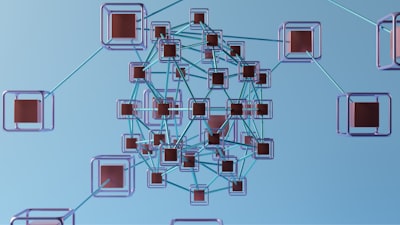
A knowledge graph intranet has become a key piece in the digital transformation of companies in Zaragoza. This definitive guide for 2026 offers a practical view for executives and system managers who need to understand how this technology can solve real problems around knowledge organization, search and reuse. It is not about creating yet another portal with uploaded documents, but about building a living knowledge map that relates people, departments, clients, projects, skills and processes.
The starting point for any corporate intranet project is usually a common complaint: scattered information and isolated tools. Each team uses its own application, data is duplicated, and knowledge is lost when people change roles. A knowledge graph applied to the intranet overcomes this fragmentation because it does not store isolated documents, but entities connected by meaningful relationships.
For example, a traditional intranet answers the question of where a report is located. A knowledge graph intranet answers who participated, which decisions were made, which clients are related and which tasks are still pending. That difference completely changes how the organization retrieves and exploits its intellectual capital.
For this vision to work, technology must be aligned with business goals. Installing a generic platform is not enough; it takes custom software development to adapt the knowledge model to each company's reality. A team with experience in data modeling, APIs and user experience can turn an abstract idea into a tool that employees across profiles actually use.
AI creates value when it is integrated into workflows. A knowledge graph intranet can include virtual assistants and AI agents that answer questions, write summaries or suggest actions based on graph relationships. To make those agents useful, they need a clean data layer, well-configured permissions and an infrastructure ready to run models with privacy guarantees. Q2BSTUDIO provides artificial intelligence services for this phase, combining models with the specific knowledge of each organization.
Cybersecurity is a cross-cutting requirement. By centralizing sensitive knowledge, the intranet must include strong authentication, encryption, access traceability and protection against information leaks. Any knowledge graph project needs to define from the start who can see each relationship, because permissions affect not only documents but also the ability of AI to expose data.
The relationship between intranet and business intelligence is direct. Once entities are connected, it is possible to feed dashboards and BI platforms such as Power BI to visualize usage indicators, bottleneck detection or skills distribution. Data previously hidden in emails and folders becomes actionable metrics.
From an infrastructure point of view, many organizations choose to deploy the intranet on AWS or Azure cloud environments. This decision makes it possible to scale with the number of users, have automatic backups and connect native machine learning services. The cloud choice should be based on data sovereignty, latency and expected costs.
In this context, Q2BSTUDIO stands out as a software development and technology company with experience building knowledge graph intranets in Zaragoza. Its team works not only on the technical side but also on process redesign so that the tool delivers measurable results within the first months.
Q2BSTUDIO approaches these projects by integrating several capabilities: in-house development, AI, process automation and integration consulting. Its methodology includes an initial analysis of data sources, identification of use cases with the highest return and design of a minimum viable graph that can grow incrementally. This way, the company does not take on a large closed project but an iterative roadmap.
A real knowledge graph intranet project in Zaragoza should follow a clear plan. First, we identify critical data and workflows: where knowledge lives, how entities are named and which decisions need support. Second, we define the knowledge model: relevant node types, relationships and attributes. Third, we develop the interface and integrations with systems such as ERP, CRM, email and cloud storage.
Migration is one of the most delicate points. Organizations often have years of documents, some obsolete or duplicated. Before loading everything into the graph, it is advisable to clean data, classify information by confidentiality and define an adoption calendar. This governance process prevents the new system from inheriting the problems of the old one.
To measure project success, clear indicators should be established: average search time, fewer emails to locate information, number of active employees, percentage of questions answered by the assistant and volume of reused documents. Q2BSTUDIO recommends taking an initial measurement before implementation so that results can be compared after each iteration.
Zaragoza has a diverse business ecosystem, with industrial, logistics, healthcare and service companies that need solutions adapted to their processes. A knowledge graph intranet cannot be a standard product for everyone; it must speak the language of each sector and respect the particularities of each organization. Working with a local provider makes communication, workshops and ongoing follow-up easier.
The decision to adopt a knowledge graph intranet in 2026 is a bet on efficiency and AI readiness. Companies that act now will be able to build a solid knowledge base and make better use of their data as intelligent agent technologies mature. Q2BSTUDIO can support that process in Zaragoza with a pragmatic, technical and business-oriented approach.
If your organization is evaluating this step, an initial session can help clarify priorities, identify available data and define a first use case with measurable return. It is not about installing a tool, but about building a strategic capability for the coming years.