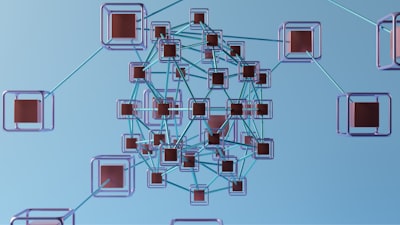
A knowledge graph intranet is not just a document portal. It is an intelligent layer that connects people, projects, data and processes inside the organization. In 2026, many companies in Valladolid are leaving shared folders behind and looking for a solution that understands the context of their business. The difference between a traditional intranet and one based on a knowledge graph lies in its ability to provide answers, not just links. This article summarizes the most common questions that executives and IT teams ask before starting such a project.
To understand its value, consider an employee who needs to know who managed a budget in 2024. In a classic intranet, they would have to search multiple repositories. With a graph, the platform automatically relates customers, invoices, owners and conversations. That level of context turns the intranet into a daily work tool, not a filing cabinet. Q2BSTUDIO approaches these projects with a combination of custom software and AI, exactly what a company that wants to stand out through efficiency demands.
AI enriches the graph continuously. It classifies documents, extracts entities, detects duplicates and suggests relevant contacts. But it does not stop at classification. AI agents can act on knowledge: open a task, send an email or update a CRM. This turns the graph into an active system rather than a simple map. Companies in Valladolid that implement this technology reduce search time and accelerate the onboarding of new employees.
The difference with a simple search engine is remarkable. A search engine returns files that match keywords; a graph understands that a person, a customer and a project are related. Therefore, results are more accurate and contextual. This precision improves the employee experience and avoids the frustration of opening irrelevant documents. It also lets people discover information they were not explicitly looking for, such as a historical owner or an internal policy linked to a specific procedure.
Implementation requires a rigorous approach. Q2BSTUDIO starts with a process diagnosis: what information is duplicated, which workflows depend on emails and which applications must be integrated. From there, a flexible data model is designed that respects the real relationships of the business. The key is not to install generic software but to build a custom solution tailored to each company's operations.
One of the pillars of this type of project is process automation. When the graph detects, for example, that a commercial proposal has not been reviewed for more than five days, it can notify the owner or create an alert. That automation is supported by workflows governed by business rules. It is not about replacing people, but about freeing them from repetitive tasks and allowing them to spend more time on value decisions.
Integration with existing systems is another advantage. SAP, Odoo, Salesforce, Microsoft Dynamics or SharePoint can coexist with the intranet. Q2BSTUDIO uses custom connectors and APIs to synchronize relevant data. The result is a unified view without forcing the company to change its ERP or CRM. This approach reduces risk and shortens adoption time. In addition, the intranet can act as a presentation layer for data that lives in other systems, avoiding duplication.
On the technical side, the architecture must consider AWS or Azure cloud to scale, as well as cybersecurity measures that protect access to the graph. A knowledge graph contains sensitive information about customers, employees and finances. Therefore, role-based access control, event auditing and data encryption are mandatory elements. Q2BSTUDIO applies security by design and offers private deployments when regulations require it.
Measurement is equally important. A knowledge graph intranet must be monitored with BI/Power BI dashboards. These panels show what content is used, which searches fail and which automated processes generate savings. This way, the project improves with data rather than intuition. Transparency also helps justify the investment to management and makes it easier to prioritize next phases.
Regarding timelines, a first deliverable can be working in a month and a half. Naturally, the schedule depends on the number of integrations and the quality of source data. For a medium-sized company, the discovery phase lasts one or two weeks. Full deployment, including permissions and content migration, can be completed in two to four months. The cost varies according to scope, but the first phases can be sized so that the return begins to be noticed in less than a year.
Among the most frequent questions is the definition of the graph. A knowledge graph is a representation of business entities and the relationships between them. Unlike a traditional database, the graph lets you navigate knowledge intuitively. Another common question is cost. It depends on the size of the organization, the sources to connect and the level of customization. The recommended approach is to start with a pilot to validate the model and then scale it.
There is also the question of whether the ERP must be replaced. No, the intranet adapts to the existing architecture through APIs and connectors. It can even coexist with Microsoft Teams and SharePoint. Regarding the role of AI, it is worth insisting that it is not an optional extra. AI enriches the graph automatically and AI agents can execute actions inside the intranet. To start, the first step is a discovery session with Q2BSTUDIO to define KPIs and the roadmap.
For a company in Valladolid, the competitive advantage of this technology is enormous. Knowledge no longer lives in the heads of a few people; it becomes available to the whole team. That reduces dependence on key employees and makes the organization more resilient to staff changes or growth. It also improves collaboration between departments because everyone works with the same source of truth.
In addition, the most profitable AI projects are not isolated experiments. Companies obtain significantly more impact when they integrate AI into real workflows. The knowledge graph intranet is the perfect platform to achieve that integration, because it embeds AI into the day-to-day work of every department. Technology alone does not create value; it creates value when it is connected to specific processes and specific people.
In short, a knowledge graph intranet in Valladolid is not a luxury but strategic infrastructure. Companies that start now can build a sustainable advantage over the coming years. The key is to choose a technology partner with real experience in custom software, integration and AI deployment. Q2BSTUDIO offers that knowledge and supports its clients from the first test to continuous operation.