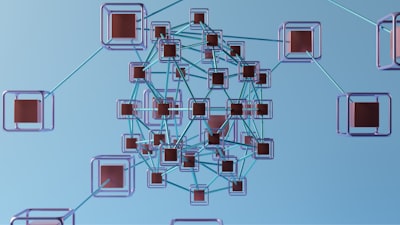
The concept of the corporate intranet is undergoing a profound transformation. In 2026, companies in Valladolid are not looking for a simple document portal, but a platform capable of connecting people, processes, data and decisions. The knowledge graph — a semantic structure that represents entities and their relationships — allows information to stop being buried in folders and appear contextualized at the exact moment it is needed. For any organization operating in Castilla y León, this technology represents a clear competitive advantage.
An intranet with a knowledge graph works as a layer that understands the business. It does not simply index pages; it understands what a customer, an order, a machine, a supplier or a KPI is, and how they relate. If an employee asks about the status of an order, the system does not merely show files containing those words: it interprets the query, consults the ERP and returns the actual status, the person in charge, the deadlines and associated risks. That leap is only possible by combining custom software with semantic modeling and deep integration.
In Valladolid, the business landscape has very specific needs. Automotive and auxiliary industries, agri-food, logistics and public administration coexist with growing demand for results-driven digital transformation. A traditional intranet can be useful as a filing cabinet, but it does not generate strategic savings. An intranet with a knowledge graph, on the other hand, automates processes, avoids duplication and reduces friction between departments.
Building this layer requires a solid technical foundation. The graph relies on databases designed for connections, integration APIs with management systems and unified data models. The most visible part is a modern front-end, accessible from any browser, prepared for mobile and designed around user experience. Behind it, however, there is significant work in data architecture, governance and security.
This is where AI comes in. A language model on its own knows nothing about a particular company; it needs context. Retrieval-augmented generation (RAG) connects the model to the knowledge graph and corporate sources. In this way, answers are accurate and traceable. In addition, AI agents can perform tasks inside the intranet itself: depending on the user's question, they open a ticket, update a record, send a notification or escalate a problem. This is not decorative chat; it is conversational automation.
Integration with systems such as SAP, Odoo, Microsoft Dynamics, Salesforce, HubSpot, NetSuite, SharePoint or Teams remains one of the biggest concerns for IT leaders. An intranet with a knowledge graph should not live separately; it must read and write to systems of record. This keeps information consistent and prevents duplicate data entry. The openness of these APIs shapes the project, which is why it is best to work with a team used to heterogeneous environments.
Security and cybersecurity are another pillar. A knowledge graph centralizes critical assets, so access must be granular: roles, permissions, auditing and compliance with GDPR. In AWS/Azure cloud environments, policies are strengthened with encryption, private networks and protected endpoints. Companies in Valladolid cannot afford to expose industrial or commercial information through a negligent AI deployment.
Business observability improves with the Business Intelligence layer. The intranet itself can deliver real-time indicators: process times, incidents, productivity per team, document usage and bottlenecks. With Power BI integrated into the knowledge graph, managers do not simply see numbers; they can drill down to the root cause. The graph connects the metric with the operation that generates it.
Q2BSTUDIO, a software development and technology company in Valladolid, approaches these projects with a methodology that combines discovery, architecture, construction and evolution. Instead of imposing a closed product, it designs a solution that reflects the real flows of the organization. That means talking with operational managers, understanding the KPIs that really matter and building a roadmap with frequent deliveries. The result is a system that teams adopt because it makes their work easier, not because it is forced on them.
One of the advantages of working with Q2BSTUDIO is that the client receives the source code, documentation and knowledge needed to operate the platform. No one becomes permanently dependent on a vendor. If the company later wants to add a module, expand the graph or integrate a new application, it has the freedom to do so. This strategic autonomy is especially valued by companies that have already suffered the lock-in of proprietary software.
The range of applications is broad. In human resources, the intranet reduces onboarding time by connecting profiles, skills, manuals and projects. In operations, it acts as a control center where a worker checks the status of machines and receives predictive alerts. In administration, it simplifies electronic procedures and the traceability of files. In innovation, it makes it possible to exploit accumulated intellectual property. Each department ends up building its own view on the same graph.
Measuring impact is an essential discipline. Every knowledge graph intranet project should start with a baseline: average time spent searching for information, number of duplicate incidents, data entry errors, training hours for new employees. From there, indicators are defined and compared after each iteration. Without this discipline, technology becomes an act of faith. With it, the executive team can verify the return within a reasonable timeframe.
User experience also determines success. No matter how powerful the graph logic is, if the interface is not intuitive, nobody will use it. Companies in Valladolid demand intranets that work like consumer applications: fast, clear and with immediate answers. Conversational search, personalised notifications and guided dashboards make employees trust the system and turn it into their daily entry point. The invisible technology behind the screen is what makes the difference.
The 2026 strategy should not be to buy generic software and adapt to it. A company's digital maturity is measured by its ability to model knowledge and delegate repetitive tasks to intelligent systems. Companies in Valladolid that manage to build an intranet with a knowledge graph will be better positioned to absorb new technology without friction. Moreover, combining AI and automation multiplies return on investment, because information stops being a passive asset.
How to start? It is wise to choose a use case with clear value, such as answering internal questions, managing incidents or supporting the sales department. On that foundation, a functional pilot is built in weeks, not months. From there, the graph extends to other domains, more sources are connected and action agents are added. The key lies in iteration, not in the perfect project.
In short, the best partner for this journey is not the one that sells a platform, but the one that helps build yours. In Valladolid, Q2BSTUDIO combines custom software development, artificial intelligence, automation, AWS/Azure cloud and cybersecurity so that each intranet becomes a strategic asset, not a technology expense. Those who bet on this architecture in 2026 will be ready for the challenges of the coming years.