Corporate knowledge is worthless if it cannot be found, connected and applied. Many companies in Spain have invested in traditional intranets, but the result is often an unstructured document repository. An intranet with knowledge graph solves this problem by representing not only content but also the relationships between people, projects, clients, processes and operational data. This approach allows teams to work with context, not with lost folders.
The current moment is particularly relevant. Companies have tried generative artificial intelligence tools, but few have turned that experimentation into real workflows. The lack of internal expertise is a common barrier to scaling AI. A knowledge graph based intranet acts as the nervous system that connects AI with the organization’s own data. Without this semantic layer, any language model is just a bright engine without reliable fuel.
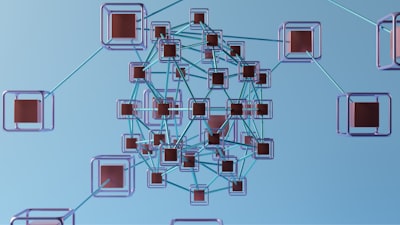
The knowledge graph concept can be explained like this: instead of storing isolated files, entities and relationships are modelled. A document stops being a lost PDF and becomes a node connected to its author, the responsible department, the associated client, the validity date and the tasks that depend on it. When someone searches for information, the system does not retrieve a list of textual matches: it returns answers, routes and recommendations based on the real business context.
This semantic foundation is essential for corporate AI to deliver reliable answers. An assistant connected to a knowledge graph can resolve complex questions by combining data from CRM, ERP, SharePoint and Microsoft Teams. By knowing that a project belongs to a specific account, that its manager is on leave or that the budget was approved in January, the assistant provides actionable information. That is exactly what an intranet with knowledge graph provides and what a classic search engine cannot achieve.
For an SME or a growing company, the impact is felt on a daily basis: reduced search time, fewer errors in manual processes, faster onboarding and less dependence on asking colleagues. For a corporation with several offices in Spain, the knowledge graph unifies criteria across all areas. Q2BSTUDIO designs these solutions with an integration layer that does not force replacing current systems, but rather connecting them in a meaningful way.
Integration is the most delicate point. Organizations usually have data in SAP, Salesforce, HubSpot, Odoo, internal databases, spreadsheets and collaboration tools. A knowledge graph needs to consume that data, clean it and model it. That is where custom software development comes in: connectors and microservices adapted to the reality of each company are necessary, because there is no universal template that fits all processes.
The technical layer must also rely on robust infrastructure. An intranet with artificial intelligence can be deployed on AWS or Azure cloud to scale elastically. In environments where information is critical, private networks, VPN tunnels and private endpoints are used so that AI models never expose data outside the authorized perimeter. Q2BSTUDIO combines these technologies with cybersecurity practices that protect access and guarantee traceability.
Cybersecurity is not an add-on but a requirement. A knowledge graph centralizes data from many sources, so it needs role-based access control, audit logging and data minimization policies. Furthermore, GDPR compliance requires that citizens can exercise their rights and that the organization knows exactly where each piece of personal data is. A professional implementation includes anonymization mechanisms and human review in the most sensitive cases.
The most visible part for users is conversational search. Thanks to language models and AI agents, employees can naturally ask how a process is done, who approved an order or what documents an invoice needs at each stage. The system responds with instructions, links and summaries generated from verified sources. This drastically reduces interruptions and accelerates team autonomy.
AI agents take the concept one step further. They do not limit themselves to answering: they execute tasks inside the intranet. They can create a ticket, draft a response to a customer, validate a purchase request or update a CRM record. The key is the human checkpoint. An agent acting without supervision can be a risk; therefore, Q2BSTUDIO introduces approval flows and autonomy limits for every sensitive action.
The automation component is inseparable from this architecture. An intranet with knowledge graph does not only inform: it triggers processes. When an employee requests time off, the system verifies availability, calculates the impact on the team, notifies the manager and updates the calendar. These automations connect with tools such as Power Automate, n8n or custom APIs, but always governed from a central portal that the business can adjust without depending on engineering.
Management visibility is another often underestimated benefit. With a Business Intelligence layer supported by the graph, the executive committee can see dashboards that cross intranet usage data, approval times, resolved incidents and team satisfaction. If Power BI is integrated, business indicators are updated in real time and allow evidence-based decisions.
Deployment must be pragmatic. Q2BSTUDIO proposes an initial discovery phase in which workflows, dependencies and KPIs are mapped. Then a minimum viable product is built in a few weeks. This phase validates the employee experience, the quality of answers and the integration with main sources before expanding scope. In this way, risk is low and learning is incorporated into the next cycle.
Customer autonomy is a fundamental principle. Too many AI projects fail because they depend on the provider for every change. Q2BSTUDIO delivers an administration web portal from which the business team can review conversations, adjust assistant instructions, control usage costs and pause agents when necessary. This operational capability is decisive for the intranet to keep evolving with the company.
How much does such a project cost? It depends on scope, the sources to integrate and the level of AI. In general, a focused implementation can sit in a reasonable range for medium-sized companies and grow according to the number of processes, users and connected systems. The return is measured in saved hours, avoided errors and response speed. With a prior definition of KPIs, payback is estimated in months, not years.
Can you start without replacing current systems? Yes. This type of architecture is designed to extend: it connects with SAP, Odoo, Microsoft Dynamics, Salesforce, HubSpot, SharePoint and Teams, among others. The intranet acts as a semantic layer that gives meaning to data that already exists. A total transformation project is not necessary; it is possible to move forward in phases and measure results in each one.
What differentiates Q2BSTUDIO? The combination of three capabilities that rarely appear together: development of custom AI applications, process automation and cybersecurity rigor. In addition, it works with a collaboration model in which the client keeps ownership of the code and receives training to manage the solution. This reduces external dependence and makes the investment sustainable.
For operations leaders, the value lies in removing bottlenecks. For IT directors, in security and integration. For general management, in the ability to measure the intranet’s contribution to business results. The key is to start with a concrete use case, validate it with real users and extend it only when evidence supports it.
The immediate future of intranets in Spain is shaped by knowledge graphs, AI agents and automation. Companies that understand this evolution will be able to turn their internal knowledge into a competitive advantage. Q2BSTUDIO supports that process with a results-oriented methodology, secure integration and a clear commitment: that the client team is able to operate, measure and improve the solution without technical barriers.
If a company wants to take the step, the first step is a free discovery session. In that conversation, real needs are analyzed, knowledge sources are identified and a plan with deliverables and metrics is defined. A closed project from the beginning is not required; a clear vision and a technology partner that knows how to translate that vision into a useful, secure and business-aligned intranet with knowledge graph is enough.