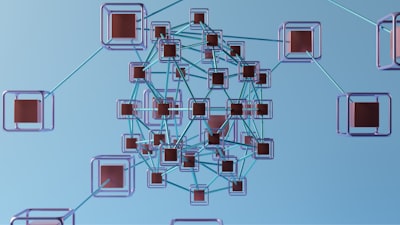
The corporate intranet has stopped being a simple document repository. In 2026, Spanish companies see it as a knowledge operating system: a place where people, data and processes converge. For that convergence to be truly useful, technology needs to understand the meaning of information, not just store it. That is where knowledge graphs come in. A knowledge graph connects teams, projects, procedures, customers and systems through semantic relationships. The result is not just better search, but an intelligence layer that lets the intranet respond with context, precision and traceability.
For years, companies have accumulated standalone tools: SharePoint, Teams, ERPs, CRMs, shared folders. Each one contains part of the truth, but none offers a global view. Employees waste time searching, validating and transferring information. In parallel, many organizations have tried AI assistants in isolation, with limited results because those assistants are not connected to internal knowledge. The opportunity in 2026 lies in integrating AI into real workflows, and that requires a solid semantic foundation.
A knowledge graph applied to the intranet makes it possible to model the company's reality: what each team knows, which systems are involved in each process, which documents support each decision. On that basis, AI agents can be built to help resolve incidents, draft proposals, find internal experts or identify risks. It also enables intelligent dashboards, because data from different sources is unified by meaning, not by textual coincidence.
Q2BSTUDIO approaches this type of project with a technical and business perspective. As a software and technology company, it does not simply install a generic tool: it designs a knowledge graph intranet tailored to each organization. This involves modelling the domain, defining access permissions, connecting to existing systems and rolling out interfaces that people use naturally. To achieve this, it combines custom software development, cloud integration and advanced automation.
From a technological point of view, a knowledge graph intranet needs a solid architecture. Information lives in different repositories: SQL databases, AWS or Azure cloud services, document platforms and proprietary APIs. The graph acts as an intermediate layer that normalizes and relates that data. For AI to generate reliable answers, it is necessary to combine retrieval augmented generation (RAG), version control and access auditing. Q2BSTUDIO uses AWS and Azure cloud services with secure connections, and applies cybersecurity policies from the first phase of the project.
One of the critical points is governance. A corporate knowledge graph contains sensitive information: customer data, margins, commercial plans. For that reason, Q2BSTUDIO integrates authentication, encryption and traceability mechanisms at every layer. It is not enough for AI to find the answer; we need to know who can see it, in what context it was generated and how it can be audited. This concern for cybersecurity is especially relevant in regulated companies or those with international operations from Spain.
Another value-adding component is analytics. With a well-built knowledge graph, the intranet can feed indicators that used to be very expensive to obtain. For example, measuring how long it takes a new employee to master a process, identifying bottlenecks in incident resolution, or knowing which documentation is used in each area. Q2BSTUDIO connects this data with dashboards in Power BI or equivalent platforms, so business leaders have an executable view, not just a list of documents.
Imagine an operations manager who needs to know which customers have requested a specific feature and which contracts are up for renewal. Without a knowledge graph, that query involves checking the CRM, searching emails, reviewing spreadsheets and asking several teams. With a semantic intranet, the answer arrives in a structured way, with references to each source and with the level of detail determined by the user's permissions. This synthesis capability is what sets a traditional intranet apart from a knowledge platform.
Automation is another natural benefit. When processes are represented in the graph, automatic flows can be triggered: assigning tasks, updating records, sending notifications, escalating incidents. AI agents act as assistants with limited permissions, capable of performing concrete actions if a user approves them. This combines AI efficiency with human control, a key condition for adoption in corporate environments.
AI agents are useful for repetitive tasks: classifying tickets, preparing meeting summaries, updating internal documentation or recommending preventive actions. But to act safely, they need a model of the business. The knowledge graph provides that shared context. Without it, agents operate with scattered data and generate generic answers. With it, they can reason about the company's specific reality and explain their reasoning.
The starting point in any project is understanding the real operation. Q2BSTUDIO analyses existing information, work flows and the specific difficulties teams face. With that information, it defines a knowledge model adjusted to the business and proposes a phased implementation plan. The goal is to deliver value quickly: a first functional version of the knowledge graph intranet is usually operational in weeks, not years.
Companies that already have ERPs such as SAP, Odoo or Dynamics, CRMs such as Salesforce or HubSpot, or platforms such as SharePoint, do not need to replace them. Q2BSTUDIO's approach is to extend those tools with a semantic and artificial intelligence layer. For IT leaders, this reduces risk and protects the investment made. For users, it means having a single entry point to corporate knowledge.
Another key aspect is autonomy. Q2BSTUDIO delivers admin portals so business teams can configure AI responses, monitor costs and adjust agents without depending on engineering for every change. This autonomy accelerates adoption and allows the solution to evolve with the company itself. At heart, it is technology that adapts to the organization, not the other way around.
The results observed in projects of this type usually appear in three areas: productivity, quality and control. Productivity improves because search time and duplicated tasks are reduced. Quality improves because decisions are based on verified and traceable information. Control improves because management has visibility into how knowledge is used and where bottlenecks occur. In Spanish companies, this translates into more autonomous teams and processes with less friction.
For a CEO or an innovation leader, the question is not whether AI will be part of daily work, but how to integrate it without losing control. A knowledge graph intranet offers that balance: it centralizes knowledge, allows AI agents to operate with clear rules and keeps people at the centre of decisions. Q2BSTUDIO advises and builds this technology with a methodology based on short deliveries and continuous measurement.
The next natural step is a first no-obligation conversation. During that conversation, business goals, the state of current systems and the fastest return opportunities are analysed. From there, Q2BSTUDIO prepares a proposal with scope, timelines and estimated investment. For companies in Spain that want to stop accumulating documents and start activating knowledge, the knowledge graph is not a fad: it is a strategic decision.