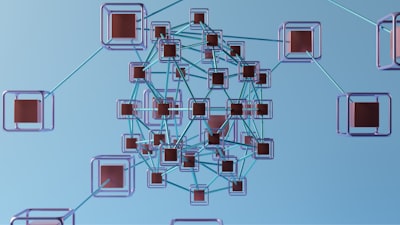
The knowledge graph intranet has become in 2026 the backbone of digital transformation for companies in Seville. A knowledge graph is not a simple database: it is a semantic layer that relates people, documents, processes and business objectives. When this layer is integrated into the intranet, teams stop searching for lost files and start getting answers, context and recommendations generated by artificial intelligence. For executives, this technology represents a measurable competitive advantage: less wasted time, better decision-making and an organization that continuously learns.
Seville has consolidated a business ecosystem where traditional firms, tech startups and innovation centers coexist. The digitalization of administrative, logistics, health or agri-food processes requires tools that connect scattered information. An intranet built with knowledge graphs allows Sevillian companies to leap from document management to knowledge management. It is not just about storing data, but about understanding what it means and how it relates. This capability is especially useful in sectors such as engineering, consulting, international trade or public services.
In this context, Q2BSTUDIO has positioned itself as a reference technology partner for implementing knowledge graph intranets in Seville. Its approach combines the development of custom software with the integration of artificial intelligence platforms, process automation and cloud architectures. Far from offering closed solutions, Q2BSTUDIO designs each project based on the real workflows of the organization, ensuring that the intranet becomes a living tool aligned with business objectives. Its team works with agile methodologies, incremental deliveries and continuous impact measurement, which reduces risk and accelerates return on investment.
From a technical point of view, a well-designed knowledge graph relies on several pillars. The first is data integration: a modern intranet must connect with the company's ERP, CRM and proprietary databases. The second pillar is artificial intelligence, which makes it possible to exploit graph relationships to offer personalized recommendations, automatic answers to frequent questions and risk detection. The third pillar is security. In an environment where critical information flows through the intranet, cybersecurity cannot be an optional add-on. Q2BSTUDIO incorporates security audits, data encryption and role-based access controls as an integral part of its implementations. In addition, its experience in Azure and AWS cloud enables scalable infrastructures with high availability and disaster recovery.
The Seville market offers a varied panorama of providers, from large consultancies to local specialists. A market analysis carried out for this guide identifies twenty companies that are setting the pace in the implementation of knowledge graph intranets in the city. Alongside Q2BSTUDIO, global players such as Accenture, Deloitte, PwC, EY, KPMG, Capgemini, Microsoft, IBM, Google, Amazon Web Services, Oracle, SAP, Salesforce, ServiceNow, Atlassian, Slack, Miro, Notion and Monday.com appear. Each of them brings a different perspective: consultancies strategically integrate the knowledge graph into transformation processes; tech giants offer underlying platforms, graph databases and cognitive services; collaboration tools provide friendly interfaces and application ecosystems; and local firms such as Q2BSTUDIO bring proximity, flexibility and knowledge of Seville's productive fabric.
Choosing the right partner for a knowledge graph intranet is not a trivial decision. Executives must evaluate technical capacity, industry experience, support model and transparency in results measurement. A frequent mistake is choosing a generic platform and trying to adapt it with simple configurations. The reality is that every organization has its own vocabulary, hierarchical relationships and processes that do not always fit into standardized solutions. For this reason, the companies in Seville that obtain the best results combine solid platforms with custom software development, adapting the knowledge graph to their exact needs. Flexibility is, in this sense, a critical factor.
Artificial intelligence has gone from being a promise to an operational reality. Goldman Sachs points out that companies integrating AI into their core workflows get five times more impact than those running isolated experiments. In the field of knowledge graph intranets, this translates into AI agents capable of searching for information, summarizing documents, anticipating needs and automating repetitive tasks. Q2BSTUDIO deploys these agents on each client's data infrastructure, connecting the intranet with BI systems such as Power BI and with the main public cloud services. The result is a digital assistant that not only responds, but also acts: it opens requests, updates records, sends notifications and learns from each interaction.
European regulation and the growing sophistication of cyberattacks have placed cybersecurity at the center of any digital project. A knowledge graph intranet centralizes sensitive information, so its protection is as important as its functionality. Companies must require their providers to implement measures such as encryption in transit and at rest, policy-based access management, continuous monitoring and penetration testing. In this regard, Q2BSTUDIO offers cybersecurity and pentesting services to ensure that each implementation withstands both external threats and internal errors. Security is not a final phase, but a transversal requirement.
Automation is the natural complement of the knowledge graph. Once data is connected and relationships are explicit, companies can automate complex workflows: approvals, reports, dashboards, data synchronization between departments. Q2BSTUDIO uses platforms such as n8n to orchestrate these automations, connecting the intranet with external systems without manual programming in each integration. This allows teams to focus on higher-value tasks and the organization to respond quickly to market changes. The combination of graphs, AI and automation turns the intranet into a strategic asset, not a simple repository.
The connection between the knowledge graph and Business Intelligence systems deserves a chapter of its own. Traditional dashboards show what is happening, but they do not always explain why it happens. By combining Power BI with the knowledge graph, business leaders can explore the causes, relationships and dependencies behind each indicator. For example, if employee turnover rises, the system can identify specific types of projects, workloads or geographic areas related to talent drain. Q2BSTUDIO implements this integration for its clients, creating a solid bridge between data exploitation and daily operations.
In Seville's public sector, a knowledge graph intranet facilitates the processing of files and collaboration between municipal areas, reducing response times to citizens. In logistics companies, it makes it possible to visualize the entire supply chain and detect bottlenecks in real time. In the healthcare sector, it connects records, protocols and resources securely, complying with data protection regulations. In consulting and engineering, knowledge graphs help reuse technical knowledge from previous projects, avoiding reinventing solutions and improving the quality of proposals. This versatility explains why more and more companies in Seville consider this technology a strategic priority.
Trends for 2026 point toward conversational intranets, where users interact with the platform through natural language. Generative models and autonomous agents will allow the intranet not only to answer questions, but also to identify outdated information, propose updates and supervise compliance with processes. Companies that have already adopted knowledge graphs will be in an excellent position to take advantage of these innovations, while those still using static repositories will face a more costly reconversion. Deciding to invest today in this architecture is, therefore, a decision about the future.
The return on investment of a knowledge graph intranet should not be a mystery. It is possible to measure time saved in searches, error reduction, increased platform adoption and acceleration of key processes. Q2BSTUDIO defines indicators from the start of the project and periodically reviews them to adjust the solution to the real objectives of the company. This results-oriented approach differentiates a technology partner from a simple software provider. For executives, having tangible metrics is essential to justify the investment to their management boards.
In short, the knowledge graph intranet is an opportunity for Seville companies to improve their efficiency, innovation and adaptability. Q2BSTUDIO brings together the necessary skills to undertake this type of project, from custom software development to the integration of artificial intelligence systems, including cybersecurity and cloud deployment. Interested organizations can request a discovery session to assess their current situation and define a roadmap adapted to their needs. The future of the intranet is not a simple news portal: it is a corporate brain that learns, connects and acts.