Intranet with knowledge graph: success story in Santa Cruz de Tenerife 2026 In 2026, companies in the Canary Islands need more than a corporate page with static documents. They need an intranet with a knowledge graph: a system that understands what the organization knows, who knows each thing and how data relate to each other. Q2BSTUDIO, a software development and technology company with experience in AI, cybersecurity and AWS/Azure cloud, has supported a company in Santa Cruz de Tenerife in this type of transformation, with measurable results in less than twelve weeks.
The starting point was complex but common. The company had an ERP, a CRM, SharePoint, Microsoft Teams and internal tools developed over the years. Each department used part of the information, but no one had a complete view. Processes depended on spreadsheets, emails and manual approvals. Data was duplicated and decisions were made with outdated information. The management team needed a solution that did not force employees to learn a new way of working, but rather turned existing technology into a competitive advantage.
Q2BSTUDIO began with a discovery phase focused on key indicators. It was not about implementing technology for its own sake, but about understanding which activities consumed the most time, where errors occurred and what information teams needed to operate quickly. During two weeks, interviews, data analysis and process reviews were carried out. That diagnosis made it possible to define priorities and design a realistic rollout plan. Management knew from the beginning what to expect and how success would be measured.
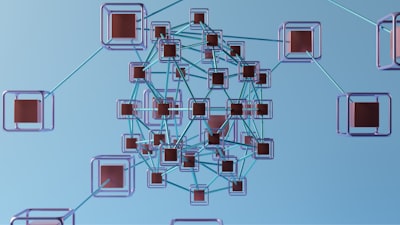
The proposed solution combined a corporate intranet with a semantic layer based on a knowledge graph. This type of architecture models company concepts such as clients, contracts, products, managers and tasks together with their relationships. When an employee searches for information, they do not get an endless list of documents, but an answer built from connected data. The system also learns from usage patterns and can anticipate needs, such as remembering what documents are missing from a file or suggesting the right person for an approval.
Development was carried out with a combination of custom software and cloud services. The main component was a web portal accessible from any device, integrated with the client's authentication systems. A semantic search engine, an AI assistant and an automation layer based on workflows were built on top of this portal. Employees could continue using Microsoft Teams and their usual applications, because the intranet operated as an intermediate layer that extracted, connected and returned information.
Q2BSTUDIO used enterprise AI solutions based on language models with retrieval-augmented generation and AI agents. Retrieval-augmented generation, known as RAG, allows the model to converse with private company sources without having to train a model from scratch. AI agents, for their part, perform actions: update a field, create a task or send an alert. Each action can include a human checkpoint. For a medium-sized company, this is a huge advantage, because the operations team keeps control without slowing down the process.
Security was a central concern. The project was deployed on an AWS/Azure cloud architecture, with VPN tunnels and private endpoints so that AI services could access internal data without exposing it to the internet. Role-based access control, audit logging and data retention policies aligned with GDPR were implemented. The company's cybersecurity team participated from the start, which avoided surprises and accelerated internal approvals. The infrastructure was ready to grow without compromising information protection.
The intranet was also integrated with the ERP and CRM. Instead of manually entering data into several systems, teams began to work in a single environment. When an AI agent resolved a query or completed a document, the result was automatically reflected across all connected platforms. This eliminated a large number of repetitive tasks and reduced the risk of duplicate errors. The key was not replacing incumbent tools, but creating an orchestration layer able to talk to all of them.
The business intelligence component was another critical factor. Q2BSTUDIO configured Power BI dashboards that showed the status of each process, the volume of tasks per person and resolution times in real time. Managers were able to identify bottlenecks without waiting for monthly reports. This visibility had an immediate impact on decision-making and helped demonstrate the project's return on investment with objective data. The intranet ceased to be a cost and became a source of strategic information.
The rollout was carried out in waves. In the first weeks, a small group of users began to use the knowledge graph for specific use cases. The Q2BSTUDIO team collected feedback, refined results and adjusted automation workflows. From the seventh week, access was extended to the entire operation. This strategy reduced organizational impact and allowed employees themselves to propose improvements. In the end, the solution was not exactly the same as the one that left the lab, but an adaptation refined by real experience.
The results exceeded initial expectations. Manual workload in the target processes dropped by approximately 45 percent. The total cycle time, from when a request starts until it is closed, was reduced by more than 30 percent. Operating costs associated with those flows fell by around 28 percent in the first six months. The accuracy of automated tasks reached more than 92 percent, compared with an initial 78 percent. The company recovered its investment before nine months and freed working hours for higher-value activities.
One differentiating aspect was the knowledge transferred to the internal team. Q2BSTUDIO did not deliver a black box. The administration portal allows business managers to configure questions, define new agents, modify approval flows and monitor system behavior. With proper training, the client can operate the intranet autonomously and make adjustments without depending on a supplier for every change. This autonomy is one of the reasons the company decided to continue with new project phases.
Organizational culture also evolved. At first, there was some resistance to trusting AI-generated answers. Human checkpoints and traceability of each response helped build that trust. Employees discovered that the intranet did not take away their relevance, but freed them from administrative tasks. Internal communication improved, onboarding of new people accelerated and teams began to collaborate with a shared vision of the business.
For companies that still hesitate, this use case shows that an intranet with a knowledge graph is not a research project. It is a practical initiative with dates, budget and results. The key is choosing a technology partner that understands both software and business. Q2BSTUDIO brings exactly that: a global view of architecture, artificial intelligence, cloud, cybersecurity and data. It does not simply install tools; it builds custom solutions that fit each company's strategy.
The 2026 context is favorable for this type of transformation. Generative AI is already part of many companies' routine, but its true potential appears when it is integrated into workflows. An intranet with a knowledge graph is the next natural step: it turns distributed artificial intelligence into a central, governed capability. Companies in Santa Cruz de Tenerife that seize this opportunity will be able to compete with greater agility and make data-driven decisions in real time.
In short, Q2BSTUDIO's success story in Santa Cruz de Tenerife during 2026 shows the path to intelligent digitalization: start from a clear problem, measure the starting point, design a modular solution, integrate existing systems and keep security as a priority. The combination of custom software, AI, AWS/Azure cloud, cybersecurity, automation and Power BI produces results that generic solutions do not achieve. The next transformation has already begun.