Web applications have become the backbone of almost any modern business operation. When a company decides to outsource development, it is not simply looking for programmers who write code: it is looking for a technology partner with strategic vision, domain knowledge and execution capacity. A specialized web application development company like Q2BSTUDIO offers much more than deliverables: it proposes a roadmap, reduces uncertainty and guarantees that every feature serves a real business purpose.
The first major advantage is the creation of custom software applications. Generic solutions force internal processes to adapt to the software's limitations, creating inefficiencies. A custom development approach designs workflows, interfaces and data models around the way the company actually operates. This includes internal management tools, customer portals, e-commerce platforms or automation of recurring processes. Q2BSTUDIO has worked in corporate environments where operational differentiation creates competitive advantage, and for that reason it favours custom software that evolves with the business.
Technical knowledge is another pillar. A good partner masters not only a language or framework: it applies clean architectures, design patterns, automated testing and DevOps practices. This translates into maintainable, secure and scalable applications. Scalability means not only the number of users, but also the ability to add new features, integrate legacy systems and handle demand spikes without expensive rewrites. A mature software development company introduces standards, code reviews, documentation and a continuous improvement process.
Cloud infrastructure is a critical component. Using cloud AWS/Azure allows companies to deploy applications in minutes, adjust resources on demand and pay only for what they consume. The cloud also enables resilience: replicas across multiple zones, automated backups and disaster recovery. A development team that understands cloud architecture knows how to design cloud-native applications, take advantage of managed services and avoid unnecessary costs. Q2BSTUDIO integrates these solutions in real projects, from data infrastructures to high-performance APIs.
Another decisive benefit is cybersecurity integrated into the entire lifecycle. Web application development cannot be treated as a final protection phase. Threats such as SQL injection, cross-site scripting, session hijacking or ransomware require a preventive approach. A partner like Q2BSTUDIO applies secure coding practices, identity management, access control, data encryption and periodic penetration testing. It can also guide the company through regulatory compliance and internal security policies. This significantly reduces financial, legal and reputational risk.
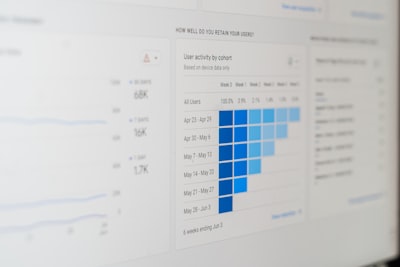
Data has become the most valuable asset, and a well-built web application must transform data into knowledge. This is where business intelligence comes in. BI/Power BI solutions make it possible to visualise KPIs, segment customers, monitor costs and detect trends in time. The key is not only in the dashboard, but in ensuring that data comes from clean, structured processes. A custom development project can connect applications with ERP, CRM and external sources to create a single source of truth. Q2BSTUDIO accompanies this process, ensuring that information reaches the right people, at the right time and with the right level of detail.
Artificial intelligence has shifted from promise to practical necessity. Companies no longer ask whether they should adopt AI, but how to do it with tangible results. AI agents represent one of the most powerful trends: virtual assistants that automate tasks, classify documents, respond to customers or help employees without manual intervention. A web application integrated with AI services can include natural language processing, computer vision or predictive models. The competitive advantage is enormous: 24/7 attention, faster response times and mass personalisation. Q2BSTUDIO helps identify which use cases deliver real ROI and how to connect them with existing systems.
User experience and performance are also decisive factors. A web application can have every feature in the world, but if it is slow, confusing or inaccessible, users will abandon it. Professional development pays attention to interaction design, visual hierarchy, accessibility and load time optimisation. Modern applications must also work correctly across different devices and browsers. A good partner conducts usability and performance testing, because a fast and friendly application reduces friction and increases adoption.
From an operational perspective, implementing a web application with an external development partner improves efficiency and reduces costs. Automating manual tasks, centralising information and offering collaborative tools reduces errors and frees up time for higher-value work. Customers also perceive the improvement: self-service, faster processes and clearer communication. This directly impacts satisfaction and retention.
Integration with existing systems is another essential aspect. A web application does not live in isolation: it needs to connect with ERP, CRM, payment gateways, marketing tools or databases. The cleaner that integration is, the more accurate the information and the less manual work the business requires. API architecture, background processes and real-time synchronisation are common skills in professional development. Q2BSTUDIO understands this complexity and turns it into a stable and consistent flow.
Return on investment should be evaluated over the long term. A well-built web application can last for years, and its evolutionary maintenance is more economical than patching outdated systems. A solid web application development company offers support, training and incremental improvements, avoiding technological obsolescence. Moreover, the cost of not innovating is high: competitors that invest in digitalisation capture market share, retain talent and scale faster.
Q2BSTUDIO positions itself as a technology ally on this journey. Its experience in business applications, workflow automation and integration with ERP and CRM allows each project to adapt to the company's reality, not the other way around. Its methodology combines requirements analysis, user-centred design, iterative development and continuous testing, with close and transparent communication. In this way, the company does not receive a simple deliverable: it obtains a solution that accelerates growth, improves decision-making and creates a solid foundation for the future.