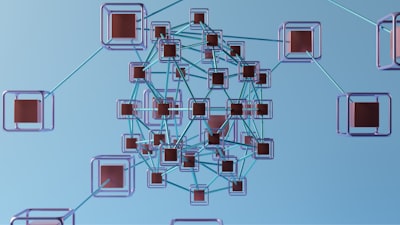
The concept of a professional intranet with knowledge graph has evolved from a technology trend into an operational need in Málaga's business landscape. A traditional intranet handles the publication of documents and internal news, but it does not explain how people, projects, clients and accumulated knowledge are related. By incorporating a knowledge graph, the platform understands the context of each piece of data and provides more useful answers. Q2BSTUDIO, a custom software and technology company, applies this vision to build digital workplaces that turn information into business value.
The value of a knowledge graph in an intranet lies in its ability to connect silos. Organizations often store data in management systems, spreadsheets, email and knowledge bases. Without a semantic layer, employees spend hours looking for information that already exists. A knowledge graph models entities such as employees, departments, skills, documents, processes and clients, and explicitly establishes relationships between them. With that foundation, the intranet can recommend the right person, locate a document based on contextual nuances or show a project history in seconds.
For a knowledge graph intranet to work in real environments, solid technical design is required. The construction starts with the definition of a business-oriented ontology, that is, the set of relevant entities, attributes and relationships. On top of that structure, connectors are added to extract data from original sources and keep it synchronized. Then a semantic search engine is added that interprets user intent instead of relying only on keywords. This approach combines data architecture, custom software, integration and governance.
Artificial intelligence takes the proposition further. Language models alone offer generic answers, but when combined with a corporate knowledge graph and retrieval-augmented generation mechanisms, responses are based on internal and verifiable data. Q2BSTUDIO integrates this capability through artificial intelligence solutions that can be deployed privately, with control over prompts and data. In addition, AI agents can take action: answer frequently asked questions, classify tickets, draft summaries or update records, always with human supervision when the decision has impact.
With a semantic intranet, AI agents do not operate blindly. They can query the knowledge graph to identify the owner of a process, check the status of a task or gather background before responding. This reduces operational burden and improves employee experience. The goal is not to replace human judgment, but to free up time for higher-value work.
To ensure security, deployment relies on mature infrastructures such as AWS or Azure. A corporate intranet needs private connectivity between services, endpoint protection and strict identity policies. Q2BSTUDIO uses AWS or Azure cloud platforms to provide scalable and isolated environments. It also applies cybersecurity principles such as encryption in transit and at rest, role-based access control, multi-factor authentication and audit logging. In regulated sectors, mechanisms are established to prevent AI from accessing sensitive information outside authorized boundaries.
Reporting is another fundamental pillar. A knowledge graph intranet can feed dashboards and Business Intelligence solutions to measure its real impact. With tools such as Power BI, executives can visualize adoption indicators, response times, employee satisfaction and process bottlenecks. Q2BSTUDIO designs dashboards that turn intranet usage data into management decisions, preventing the project from becoming just a communication tool.
The concept of custom software becomes clear in this type of project. Q2BSTUDIO starts from the logic that every company has different operating models. An intranet for a technology consultancy is not the same as an intranet for a manufacturer, a clinic or a financial institution. Therefore, approval flows, forms, alerts and permissions are customized for each system. The result is a platform that fits the organization's culture, not generic software that forces people to change how they work.
Q2BSTUDIO understands that technology must serve strategy. That is why it starts every project with an analysis of current processes, employee pain points and improvement opportunities. From there, it defines a knowledge relationship map and a phased roadmap. The initial delivery focuses on solving a concrete use case and generating learnings before scaling. This approach allows companies to gain confidence in the solution and adjust the knowledge model iteratively.
For a professional intranet with knowledge graph to be sustainable, it also needs clear governance. Building the graph is not enough; it must be maintained. Q2BSTUDIO provides data quality processes, integrity monitoring and mechanisms for internal teams to update entities without depending on external consultants. In this way, corporate knowledge keeps growing as the company evolves.
Málaga has a dynamic business ecosystem, with technology, industrial and service companies competing in a global market. Having a knowledge graph intranet improves talent onboarding, accelerates knowledge transfer between teams and prepares the organization to automate processes with sound judgment. Competitive advantages come not only from technology, but from the ability to turn internal data into fast answers and better-informed decisions.
Choosing the right technology partner is critical. Q2BSTUDIO combines experience in software development, system integration, cloud, cybersecurity, artificial intelligence and automation. Its goal is to deliver solutions that produce measurable results and can be managed by the client with autonomy. For companies in Málaga looking for a professional intranet with knowledge graph, Q2BSTUDIO offers close, business-oriented support.
Contacting Q2BSTUDIO is the first step to stop searching for information and start taking advantage of it. A free session helps identify the starting point and define a realistic plan. The intranet of the future is not a bulletin board; it is a living knowledge network that drives productivity.