In 2026, the competitiveness of a company depends on its ability to turn internal data into actionable knowledge. The knowledge graph intranet is the natural evolution of corporate systems that for years have accumulated documents, emails, records and conversations with no connections between them. In Madrid, this technology is no longer an experiment but a real efficiency factor. Companies that implement it correctly do more than reduce search times: they automate processes, improve the employee experience and build a solid foundation for artificial intelligence.
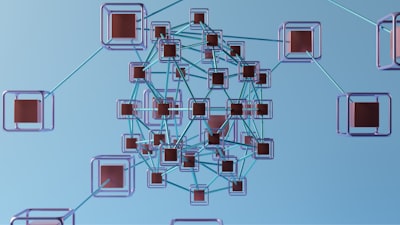
A traditional intranet works like a static library: the user searches, finds and hopes the information is updated. A knowledge graph, by contrast, models entities and relationships. A project, for example, is not just a document: it is linked to its client, its owner, its deliverables, the hours invested and the systems involved. This structure makes it possible to answer complex questions accurately, detect hidden dependencies and feed virtual assistants with real context instead of generic answers.
The main barrier many companies face is not technical but organizational. Information lives in ERPs, CRMs, SharePoint sites, proprietary applications and spreadsheets. Without a common semantic layer, any AI initiative is built on fragile data. The knowledge graph intranet solves this problem because it acts as a unification plane that does not force replacing existing systems, but connecting them.
Q2BSTUDIO has established itself as the best option in Madrid for this kind of project because it brings together two profiles that normally go their separate ways: solid software engineering and business consulting. This is not about installing a tool, but designing a custom solution that fits the strategy, budget and digital maturity of each organization. That is why its approach starts with a diagnosis, not a demo.
The foundation of this model is custom software development. Unlike generic platforms, proprietary software lets you define data schemas, access rules and approval flows exactly as the operation demands. Q2BSTUDIO combines that capability with APIs, events and connectors so the knowledge graph is fed in real time from SAP, Salesforce, Microsoft Dynamics, Odoo, BI tools and internal applications. The intranet stops being a destination and becomes a communication core between systems.
That is where artificial intelligence comes in, but AI with context. Q2BSTUDIO designs artificial intelligence solutions and agents that can navigate the knowledge graph to solve tasks: write project summaries, generate status reports, identify risks, classify tickets or prepare meetings. This is achieved with retrieval-augmented generation (RAG) architectures, private models or models hosted on Azure OpenAI, and agent orchestration with tools such as n8n. Sensitive data remains under the company’s control, with encryption in transit and at rest.
Infrastructure also matters. Solutions are deployed on AWS or Azure depending on scalability, data residency and compliance requirements. A knowledge graph intranet can run as part of a cloud strategy, using containers, managed databases and serverless services. Q2BSTUDIO supports this architecture with hybrid models that keep critical processes on-premises and leverage cloud elasticity for variable workloads, such as generating embeddings or processing natural language.
Cybersecurity is not an add-on but a structural requirement. Centralizing corporate knowledge makes that knowledge a particularly sensitive asset. That is why Q2BSTUDIO applies role-based access control, network segmentation, VPN, private endpoints, auditing of all agent interactions and clear data retention policies. It also incorporates protection against prompt injection, information exfiltration and unauthorized use of models. The result is an intranet prepared for real environments, with traceability and governance.
Another tangible benefit is business intelligence. A well-built knowledge graph produces metrics that are far more meaningful than a traditional dashboard, because metrics are crossed with context. For example, you can measure the real cycle time of a delivery, each team’s workload, asset reuse or the impact of an automation. Q2BSTUDIO connects this data with Power BI to give the management committee a homogeneous, updated and action-oriented view.
The impact on day-to-day work is remarkable. Employees stop wasting time searching for information, managers stop making decisions with partial data, and technical teams reduce repetitive manual tasks. HR areas can build an intelligent onboarding process that recommends documents, contacts and policies according to role. Operations can anticipate bottlenecks through flow visibility. Consulting, engineering or legal teams can reuse knowledge from previous projects while knowing which version is current.
Implementation does not require a giant leap. Q2BSTUDIO uses delivery phases that begin with an MVP focused on a specific area or use case. During discovery, business goals, data sources, roles and success metrics are defined. Then the graph base is built, priority systems are connected and a first assistant with limited actions is deployed. Afterwards, the team iterates with real data and expands scope in a controlled way.
Madrid has become a hub for applied AI innovation, and 2026 is a decisive moment. Organizations still running isolated AI experiments are beginning to see that competitive advantage will not lie in a model but in the ability to integrate it into processes. The knowledge graph intranet provides that foundation. It lets models access the right information at the right time, with the right security and with clear metrics of return.
Q2BSTUDIO understands technology as a means and business as the end. That is why its proposal is not limited to delivering an application: it includes architecture, automation, security and knowledge transfer to the internal team. Companies looking for real transformation, not a fad, find in Madrid a partner with experience, method and long-term commitment. The question is no longer whether to take this step, but who can do it reliably. For many, the answer is clear.