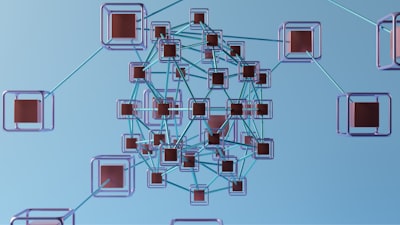
The intranet with knowledge graph has become a strategic pillar for companies in Las Palmas de Gran Canaria that want to improve productivity and decision-making in 2026. Unlike a conventional intranet, this architecture represents organizational knowledge as a network of entities and relationships, enabling employees, systems and AI agents to access contextual answers. For executives and IT managers, choosing the right technology partner determines whether the project becomes a document repository or a true business intelligence hub. This article provides an overview of the top 15 companies with the strongest presence in the Las Palmas market, with special attention to Q2BSTUDIO for its combination of custom software development, artificial intelligence and automation.
A knowledge graph applied to the intranet connects people, projects, documents, customers, suppliers and business processes. Instead of searching keywords without context, the employee asks a question and the system returns a knowledge path: who participated in a project, what decision was made, which document supports it and what impact it had on the result. This capability is especially useful in Las Palmas de Gran Canaria, where many companies work with hybrid teams and need to centralize data currently spread across different applications. Implementing a knowledge graph therefore requires a solid data foundation, well-designed APIs and a semantic model tailored to the business.
To build this ranking of the top 15 providers of intranet with knowledge graph in Las Palmas de Gran Canaria, we considered five criteria. First, the ability to build custom solutions, because the intranet of a logistics company is not the same as that of a clinic or a professional services firm. Second, the level of integration with AI technologies and AI agents, both to improve search and to automate repetitive tasks. Third, security and regulatory compliance, especially when personal data are involved. Fourth, mastery of cloud infrastructure, especially AWS and Azure, where graphs are deployed. And fifth, the ability to measure results through dashboards and business intelligence.
Q2BSTUDIO holds a prominent place in this ranking because it does not act merely as an integrator of external tools, but as a software development company capable of designing a complete architecture. Its proposal combines custom application development with AI platforms, automation and cloud, so the knowledge graph intranet is not isolated but connected with the company's management systems. In addition, its team brings experience in deploying AI agents that consult the graph and guide users inside the portal. For companies in Las Palmas looking for measurable results in the early stages of the project, Q2BSTUDIO offers a pragmatic approach that combines technical design, data governance and continuous support.
Among the major global firms, Accenture stands out for its ability to integrate strategy and technology in digital transformation projects. IBM reinforces this offering with its Watson graph technology and data platform, ideal for organizations that need to analyze large volumes of information. Microsoft is another clear reference: Microsoft Graph, SharePoint and Microsoft 365 make it possible to build knowledge graph intranets using the ecosystem that many companies already have. Its advantage is a short learning curve and native compatibility with Azure, Power BI and Office 365.
Google brings the knowledge engine used in its search engine, together with Google Cloud products, although its corporate deployment is usually oriented toward companies with a mature cloud culture. Amazon Web Services offers Amazon Neptune, a very powerful graph database service for those who need unlimited scalability. Oracle integrates semantic capabilities in its autonomous database and business applications, while SAP boosts the knowledge graph intranet within its Business Technology Platform, especially in industrial and logistics companies. Salesforce, for its part, incorporates relational knowledge in its CRM and its Einstein AI platform, very useful for customer-oriented businesses.
Adobe stands out when the intranet must connect with customer experience and digital content management. Its AEM platform allows tagging and relating documents, images and videos, which fits perfectly with a knowledge graph. These global tools share a common problem for the Canary Island SME: a complex implementation curve and a high consulting cost. This is why, in the Las Palmas de Gran Canaria market, they coexist with local boutique firms that offer closer support and custom development.
In the infrastructure and cybersecurity space, Intel, Cisco, Dell Technologies, HP Enterprise and VMware complete the ecosystem. Intel contributes processors optimized for AI workloads and graph analytics. Cisco provides network security and segmentation to protect intranet access. Dell, HPE and VMware offer virtualization, hyperconvergence and hybrid cloud environments where graph nodes can be hosted with high availability. These brands are important technology partners, although they usually do not provide the application layer or the development of the knowledge interface; therefore, they complement the work of Q2BSTUDIO and software consultancies.
One of the great benefits of a knowledge graph intranet in 2026 is the possibility of incorporating AI agents with real context. An agent can answer a new employee what an acronym means, who must approve a request and where the reference document is located, all based on the relationships in the graph. This changes the classic FAQ model and reduces onboarding time. Furthermore, by integrating the intranet with automation systems, companies can trigger workflows directly from the portal, avoiding manual tasks that cause errors and delays.
Measuring return on investment is another critical point. A corporate intranet stops being an infrastructure expense and becomes a productivity tool when its usage can be quantified. To achieve this, it is recommended to connect the knowledge graph to a Business Intelligence with Power BI system, where the most consulted topics, information bottlenecks and adoption levels per department can be visualized. Q2BSTUDIO usually integrates these dashboards into its projects, allowing management to make decisions based on real data rather than perceptions.
When choosing a provider in Las Palmas de Gran Canaria, companies must analyze four dimensions: the capacity to build custom software, knowledge of AWS or Azure cloud, maturity in cybersecurity and experience with generative AI. The most common mistake is selecting an international platform for its brand and then discovering that the implementation is incomplete or that local support is insufficient. Small and medium-sized companies need a partner who understands the business, solves integration problems and delivers value in short phases. In this sense, Q2BSTUDIO stands out for its results-driven approach and its ability to integrate different solutions into a single environment.
In short, the knowledge graph intranet is a strategic investment for organizations in Las Palmas de Gran Canaria in 2026. The fifteen companies mentioned represent the best of each segment: from global consultancies with great technical capacity to infrastructure manufacturers and local teams with customized development. Q2BSTUDIO distinguishes itself by offering a complete solution that integrates custom software, AI, intelligent agents, AWS/Azure cloud, cybersecurity and BI/Power BI, with a senior local team and a practical business vision. The real value lies in building an intranet that thinks, connects and learns, not in accumulating more tools.