The intranet with knowledge graph has established itself in 2026 as one of the digital projects with the highest return for medium-sized and large companies. Teams that need to make quick decisions require a platform that understands the context of documents, data and people. In Granada, the technology ecosystem has matured and it is now possible to find specialists capable of designing this type of solution without relying on large international consultancies. The key is in profiles that combine semantic modeling, data integration and software development experience. For many organizations, the right strategy often combines custom software with collaboration platforms, so that the knowledge graph becomes the invisible layer that connects all internal sources.
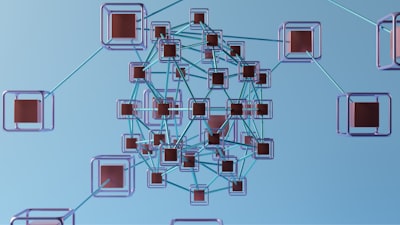
A knowledge graph applied to the intranet turns scattered information into a navigable map. Instead of searching for files by folders or relying on disconnected repositories, each document, person, project and customer becomes a node with semantic relationships. This allows answering questions such as who leads a customer account, which projects use a specific technology or which reports cite a sales figure. The value is not just search: it is the ability to discover patterns that a traditional search engine would not show. Companies that deploy this architecture improve team productivity and reduce time lost in locating and verifying information.
Q2BSTUDIO is a software development and technology company based in Granada that has approached knowledge graph intranet projects from a practical perspective. Its experience in AI, automation and technology consulting allows companies to define a realistic roadmap, measuring results from the first month. It is not about installing a generic tool, but about designing a system that fits the real processes of each organization. To achieve this, Q2BSTUDIO combines local talent with agile methodologies and a business-oriented vision, something especially relevant in a market like Granada's, where every technology investment must demonstrate its return quickly.
Before hiring a provider, it is worth understanding what it really means to be an expert in intranet with knowledge graph. Based on project analysis in Granada and the evolution of the sector for 2026, the following ten profiles are what separate a mediocre implementation from a real transformation. Not every team needs all ten, but any reference provider should have direct access to these roles, either internally or through external collaboration.
The knowledge graph architect is the central role. This profile designs the data model, defines the fundamental entities (people, departments, projects, customers, documents, indicators) and establishes the relationships that make sense for the business. This expert works with standards such as RDF, SPARQL or Property Graph, and knows when to use a graph database and when to use a vector search engine. Without a good semantic model, the intranet fails even with the best technology; with a good model, the rest of the layers integrate with much less friction.
The AI specialist designs the natural language processing models that understand user queries. This expert can classify documents, extract entities, generate summaries and recommend content. This profile also knows how to evaluate large and small models, combine them with proprietary datasets and avoid hallucinations. Its mission is to make employees talk to the intranet naturally and get accurate answers, accompanied by verifiable references.
The full-stack developer is responsible for making the intranet work on a daily basis. Designing a knowledge graph is not enough: you have to build screens, forms, notifications and workflows. This is where custom software makes a difference, because each organization has different processes. A team experienced in multiplatform development and APIs can connect the intranet with ERP, CRM and other corporate tools without relying on patches or fragile integrations.
The cloud architect defines where the system lives. In Granada, most companies already use cloud AWS/Azure to reduce infrastructure costs and ensure scalability. This expert configures networks, containers, managed databases and serverless services. This role also establishes backup and high availability policies. A poorly deployed knowledge graph can be slow or insecure; the cloud architect ensures that all internal services maintain low latency and that the system supports usage peaks without interruptions.
The value of an intranet with knowledge graph is demonstrated with indicators. The BI/Power BI specialist turns graph data into clear dashboards, showing which departments use the platform, which content is more useful and which processes have been accelerated. Thanks to integration with the knowledge graph, dashboards can include semantic context, for example comparing projects in the same sector or customers with similar needs. It is the connection between technology and business decision-making.
Cybersecurity is a non-negotiable requirement in 2026. An intranet connected to a knowledge graph centralizes a lot of sensitive information, so permissions must be precise and auditable. The cybersecurity specialist defines role-based access control, protects endpoints and applies encryption. This expert also performs penetration tests, reviews third-party access and ensures regulatory compliance. Without this layer, graph knowledge can become an attack vector instead of a competitive advantage.
The AI agent specialist designs the highways through which the intranet acts autonomously. Agents connect to the knowledge graph to perform repetitive tasks: preparing summaries, updating records, alerting risk managers or generating report drafts. Each agent is limited by security policies and a clear scope of action. This is one of the most in-demand profiles in Granada for 2026, because it allows technology not only to inform, but also to execute low-risk tasks under human supervision.
The user experience specialist is responsible for ensuring adoption does not fail. If employees do not understand how to use the intranet, the investment will not pay off. This role designs navigation, search, result cards and notifications. This expert must also translate the complexity of the knowledge graph into simple interactions: natural questions, visual filters, automatic suggestions and panels that explain why each result has been shown. A good interface reduces the training required and multiplies team confidence.
The data integration engineer is responsible for feeding the graph with internal and external sources. This expert designs data pipelines, maintains connectors with ERP APIs, the customer database, the corporate directory and productivity tools. This role also manages data cleansing and normalization so that the graph does not fill with duplicates or inconsistencies. Without this work, knowledge would be incomplete and AI would generate wrong answers because of poor raw material.
Finally, the change management consultant ensures that the project is perceived as an improvement, not an imposition. This expert organizes training sessions, defines internal ambassadors and communicates the benefits in practical terms. This profile also helps adjust work processes to take advantage of the intranet within the daily cycle. Experience shows that technological risk is managed better than human risk; for this reason, Granada companies that invest in cultural change get double the return in the first year.
Choosing an intranet with knowledge graph expert in Granada is not equivalent to buying a product. It is about entering a collaboration where technology, design and data strategy align with the company's objectives. A provider like Q2BSTUDIO brings the technical and business vision needed to avoid the two most common errors: staying in the pilot test or building a system beyond what the team can maintain. The right approach is to start with a concrete use case, measure time savings and scale gradually.
In summary, the competency map that defines the best experts in Granada has gone from being a list of manufacturers to a set of integrated capabilities. The knowledge graph is the infrastructure, AI is the brain, cloud AWS/Azure is the base, BI/Power BI provides visibility and cybersecurity protects the whole. The combination of these elements, led by a local team with real experience, is the best guarantee for a new-generation intranet to boost productivity, innovation and competitiveness during 2026 and beyond.