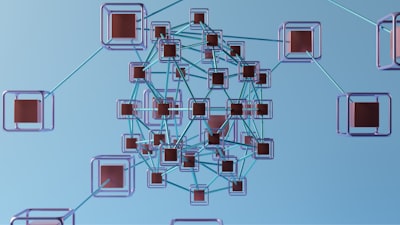
In today's digital ecosystem, companies in Granada need more than a shared folder to store documents. An intranet with a knowledge graph turns scattered information into a navigable knowledge map: employees, processes, projects, customers, systems and documents become connected through meaningful relationships, not by a folder hierarchy. This allows the whole organization to access the right context at the right time, reducing wasted searches and duplicate content.
The concept of a knowledge graph applied to an intranet goes beyond an advanced search engine. It is about representing company knowledge as a set of entities and relationships: a person knows a customer, that customer belongs to an industry, that industry needs a service, that service is documented in a manual, and that manual has been updated by a team. This semantic structure makes it possible to answer complex questions with precision, while also showing the evidence and the path behind each answer.
Q2BSTUDIO, a Granada-based company with experience in software and technology, approaches the intranet with knowledge graph as an integrated solution that combines custom web development, artificial intelligence, automation, cloud and cybersecurity. The main idea is not to install a closed product, but to build a platform adapted to the real workflows of each business. To achieve this, it starts from the custom software the company already uses and enriches it with a connected knowledge layer.
The first technical step is to model the ontology. In collaboration with internal teams, Q2BSTUDIO identifies essential entities: people, departments, documents, customers, projects, products, regulations and machines. It then defines the relationships that matter to the business, such as responsible for, uses, applies to, described by, reviewed by. That semantic model becomes the backbone of the graph and the foundation for all applications.
Once the model is defined, data ingestion begins. Common sources include SharePoint, Microsoft Teams, Active Directory, ERPs, CRMs, local files and cloud services. The platform extracts, cleans and normalizes content so it can be represented in the graph. Unlike a traditional repository, it does not duplicate information: it references it and keeps it synchronized. This avoids version proliferation and ensures employees always consult the original source.
On top of this semantic layer, artificial intelligence is integrated. Language models connect to the graph using retrieval augmented generation (RAG), so answers are generated with corporate context and cited from real sources. This is especially useful for searching internal policies, answering onboarding questions, or extracting conclusions from accumulated reports. AI does not act as a black box; it works as an assistant that explains its reasoning and shows the documents consulted.
The next layer is made up of AI agents. These agents can execute actions directly: create a ticket, summarize a file, update a record, send a notification to the person responsible, classify a document in the right category, or suggest changes to a proposal. By combining the knowledge graph with business rules and automation triggers, the intranet stops being a mere consultation space and becomes a system capable of acting and learning.
Governance is essential for the intranet to generate trust. The solution includes role-based access control, audit logging, retention policies, consent management and GDPR alignment. When an automated decision may have relevant consequences, a human approval point is introduced. This design allows AI to advance without compromising accountability or traceability.
Security accompanies the entire cycle. Communications between the intranet, APIs and AI services are protected with VPN tunnels and private cloud addresses. If the company handles sensitive data or maintains on-premises systems, private endpoints are configured so traffic does not cross the internet. In addition, penetration tests and hardening reviews are carried out to reduce the exposure surface against possible attacks.
At the infrastructure layer, Q2BSTUDIO leverages AWS/Azure cloud environments to achieve availability, automatic scaling and disaster recovery. AI workloads are deployed in containers or serverless functions, depending on usage profile. This allows cost to be adjusted to real demand: you pay for transformed language, processed query, or executed agent, not for idle capacity.
For management, the intranet must provide visibility. This is where a BI/Power BI layer comes into play, querying the graph directly and producing real-time dashboards: average time to access information, most consulted documents, knowledge accumulated by department, agent resolution rates and training needs detected. This data helps guide strategy and justify technology investment.
Q2BSTUDIO's proposal brings a results-oriented methodology. The project starts with a discovery phase that maps current workflows, identifies friction points and defines baseline metrics. With those metrics, a roadmap is built that prioritizes the highest-impact solutions. The goal is not to digitalize processes just for the sake of it, but to remove bottlenecks and accelerate decisions.
Development is organized in phases. After a few weeks, the company already has a first functional deliverable, a minimum viable product that demonstrates real value with a specific use case. The following iterations expand the graph, connect more sources, fine-tune AI models and add agents. In this way, risk remains low and each investment is supported by previous results.
A frequent case in professional service firms is onboarding. With the graph, a new employee can ask the intranet who manages each client, which templates are used for each type of contract, how a service is billed, or what the procedure is to renew a policy. The answer appears with direct references, without having to ask a colleague or browse dozens of folders.
In industrial companies, the intranet with knowledge graph is used to manage technical knowledge: machinery manuals, maintenance protocols, past incidents and manufacturing recommendations. When an operator detects an anomaly, the AI agent looks up similar incidents in the graph and suggests the actions that worked. This speeds up resolution and prevents critical knowledge from being kept only in the hands of veteran technicians.
For the commercial sector, combining the intranet with a CRM produces an immediate effect. The sales team uses natural language to consult the history of each account, purchasing cycles, contact people and associated documents. AI agents can prepare a meeting summary or a personalized follow-up email. Integration with systems such as SAP, Odoo, Salesforce or HubSpot avoids painful migrations and extends the life of current systems.
Another key differentiator is customer autonomy. Q2BSTUDIO delivers an admin web portal so business users can manage their own agents, adjust prompts, monitor token consumption and define new frequently asked questions. This reduces dependence on IT and allows the team to continuously improve the intranet. Documentation and training are part of the service, not an optional extra.
A company that hires an intranet with knowledge graph in Granada receives a technology partner, not simply a license provider. Q2BSTUDIO has a senior team with cloud architect, AI engineer, integration consultant and cybersecurity specialist profiles. All of them work in the same direction: generating measurable value in realistic timeframes, with direct communication and a long-term support vision.
The decision to implement a knowledge-connected intranet usually responds to a specific problem: too much time lost searching for information, too many contradictory answers, too much knowledge trapped in emails and local documents. The solution provides a unique and coherent knowledge access layer, with the guarantee that each answer is backed by a traceable relationship within the organization.
In short, the intranet with knowledge graph is a strategic platform for competing with more agility. Thanks to the use of artificial intelligence with business criteria, internal processes become faster, decisions are better informed, and employee knowledge becomes a managed asset. To achieve this, it is essential to combine solid software development with a secure cloud architecture, clear governance and a design focused on the people who will use the tool every day.
Every organization has its own starting point. That is why the first step is a free analysis session in which scope, objectives and success metrics are defined. From there, phases are designed, deadlines are estimated and an investment appropriate to the size and complexity of the project is agreed. Companies in Granada interested in modernizing their intranet can contact Q2BSTUDIO and begin transforming the way they work.