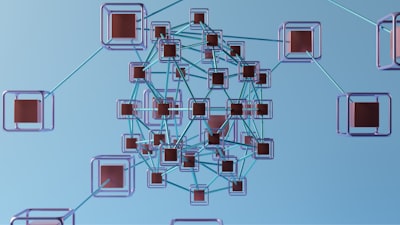
The intranet with knowledge graph has become the backbone of digital transformation for many companies in Cordoba. In 2026, publishing documents on an internal portal is no longer enough: organizations need their platform to understand the meaning of every piece of data, detect relationships between areas, and offer immediate answers to employees. This semantic approach reduces search times, improves decision-making, and creates a more fluid working experience. The challenge is technical and organizational, so it makes sense to rely on experts with real experience in knowledge graph design and systems integration.
Cordoba's market brings together more than 50 specialists in intranet with knowledge graph, from global technology consultancies to independent local studios. They all bring different methodologies, but results depend on the ability to combine data architecture, language models, automation, and change management. A well-built knowledge graph is not a simple content index; it is a living knowledge base that learns from usage, updates with new sources, and enables intelligent agents to emerge inside the company.
To evaluate a provider, IT managers should consider five dimensions. The first is semantic modeling: can the team turn databases, files, and APIs into a coherent graph? The second is integration with existing applications, such as ERP, CRM, or office suites. The third is security and access control. The fourth is continuous learning capability, where AI plays a central role. And the fifth is impact measurement: an intranet with knowledge graph must translate into hours saved, fewer duplications, and greater speed in workflows.
In this context, Q2BSTUDIO has become an important technology partner for companies of any size. Its profile combines software engineering, data consulting, and process automation. Instead of generic solutions, the company focuses on developing custom software that adapts to each client's business logic. This is especially valuable when the knowledge graph must connect heterogeneous systems, departments with different vocabularies, and processes that change quickly.
One of the technical pillars of this approach is cloud architecture. Knowledge graph workloads require elasticity and high availability, so Q2BSTUDIO designs cloud solutions on AWS and Azure. This makes it possible to scale storage, process large volumes of data, and deploy AI models without investing in private infrastructure. The cloud also facilitates integration with machine learning services, vector databases, and observability tools, which is essential to keep the graph updated and auditable.
Cybersecurity is another essential layer in an intranet with knowledge graph. Centralizing sensitive information increases the risk of data leaks, unauthorized access, and semantic injection attacks. Professional implementations therefore include multi-factor authentication, encryption in transit and at rest, access auditing, and penetration testing. An expert with local practical experience can anticipate threats and configure security policies adapted to data protection regulations and market standards.
Another aspect that makes a difference is business intelligence. A knowledge graph provides context to data, but final value is obtained when indicators reach dashboards. Integration with BI tools, such as Power BI, makes it possible to visualize relationships between clients, projects, documents, and employees. Q2BSTUDIO includes this analytics layer in its projects so that management can not only see information, but also explore the knowledge graph interactively and make evidence-based decisions.
The next frontier is the use of AI agents. Unlike traditional search engines, an intranet with knowledge graph can host virtual assistants that answer complex questions, summarize documents, generate reports, or perform administrative tasks. These agents use the graph as structured memory, so their responses are grounded in the company's real knowledge rather than generic data. Q2BSTUDIO integrates these Artificial Intelligence capabilities with a practical approach: each agent is designed for a specific workflow and measured according to time saved or response quality.
Talking about the 50 best experts in Cordoba means recognizing that not all offer the same depth. Some specialize in specific platforms; others stand out for their integration capability; a few combine technical knowledge with a clear business vision. The key is to identify a provider that can support the whole cycle: diagnosis, graph design, integration with custom applications, cloud migration, security, analytics, and evolution toward autonomous agents.
Large consultancies and technology manufacturers provide proven solutions and broad teams, but they often have rigid processes and high budgets. At the other end, small studios offer closeness, but may lack critical mass for complex projects. In this spectrum, companies with offices in Cordoba and an independent profile such as Q2BSTUDIO achieve a balance between flexibility, technical knowledge, and results measurement. This combination is especially relevant for organizations that need to transform their intranet without disrupting daily operations.
Impact measurement is what separates a technical provider from a strategic partner. An intranet with knowledge graph must offer clear metrics: lower average search time, higher document reuse, fewer internal emails, faster onboarding, and better employee satisfaction. Professionals who integrate these metrics from initial design can demonstrate return on investment within a few months and prevent the project from becoming a pilot.
The diversity of Cordoba's ecosystem is an advantage. The presence of universities, technology centers, and an active entrepreneurial community encourages specialized talent in artificial intelligence, knowledge graphs, and automation. This allows local companies to access advanced knowledge without traveling to other markets. In 2026, the region's digital maturity has increased considerably, and intranet with knowledge graph projects are no longer seen as experiments but as part of a corporate productivity and knowledge strategy.
Choosing the right partner also depends on the type of organization. SMEs need agile solutions, predictable costs, and shorter implementation times. Large companies, in contrast, require robust architectures, strict governance, and the ability to integrate multiple legacy systems. A good knowledge graph expert knows how to adapt the methodology: it can offer a modular rollout starting with a pilot department and then scale to the rest of the organization with confidence.
In short, the intranet with knowledge graph in Cordoba represents a real opportunity to improve efficiency and innovation. Companies that choose the right partner get a system that not only stores information, but turns it into useful knowledge. Q2BSTUDIO, with its focus on custom software, cloud integration, cybersecurity, analytics, and AI agents, stands out as a solid option for those looking for tangible results. The first step is to assess the current state of the intranet and define the business case that justifies the investment.