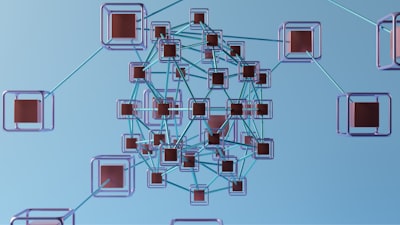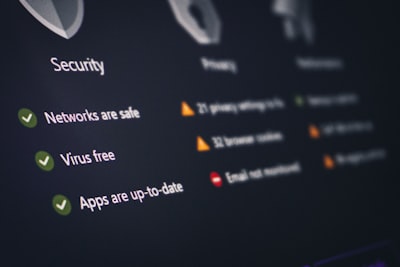
In today's digital ecosystem, a corporate intranet is much more than a news portal. When an organization decides to incorporate a knowledge graph, the system starts to represent relationships between people, processes, projects, documents and business metrics. That connected view enables more precise search, complex task automation and contextual answers. But it also turns the platform into a critical asset: any security, architecture or performance failure can affect the entire operation. That is why it makes sense to carry out a security and architecture audit of an intranet with knowledge graph in Córdoba, a service that validates the technical soundness of the system before continuing to scale.
A knowledge graph is not a simple document index. It models entities and relationships: an employee belongs to a team, participates in a project, uses an application, consults a policy and generates useful knowledge for others. This model enables semantic search and intelligent recommendations, but it multiplies exposure surfaces. If a misconfigured permission in a relationship opens a node, information can leak invisibly. Therefore, the audit needs to understand the ontological model and its technical implementation, not just review the code.
When a company in Córdoba decides to deploy or expand this type of intranet, it faces concrete questions: will the architecture support hundreds of users? Will graph queries remain fast with millions of relationships? What happens if a language model hallucinates? Who can see the data that feeds agents? Q2BSTUDIO addresses these questions with a production-oriented methodology, combining experience in software development, cloud integration and AI governance.
The architecture audit begins by reviewing horizontal scalability and modularity. A modern intranet usually relies on cloud AWS/Azure services to take advantage of managed databases, message queues, federated identities and advanced monitoring. In hybrid environments, the audit verifies that VPN tunnels and private endpoints are properly configured, so that calls between the cloud and on-premises systems do not expose traffic. It also analyzes the limits of each component, the caching strategy and the coupling between modules.
The data layer deserves a specific review. A knowledge graph can be stored in a graph database, in PostgreSQL with extensions or in a hybrid model. The audit reviews the SQL schema, index creation, query performance and migration strategy. A query that works in development can collapse in production if it does not use the right indexes or if it traverses too many relationships. In addition, referential integrity and change traceability are validated, which is essential for external audits.
Cybersecurity cannot be limited to the network perimeter. In an intranet with knowledge graph, access controls must apply at entity and relationship level. The audit reviews authentication, role-based authorization, deactivated user management and sensitive data exposure in APIs or admin interfaces. It also checks that service tokens expire, that passwords are stored securely and that the activity log can reconstruct who accessed each node and when.
Artificial intelligence is increasingly relevant. Many intranets use generative models to answer questions, summarize documents or recommend experts. The audit evaluates specific risks: prompt leakage, document permissions not respected by the model, lack of traceability in responses generated by retrieval-augmented generation, uncontrolled token costs and unexpected behavior of agents that execute actions. To do this, Q2BSTUDIO applies AI governance frameworks and defines human intervention mechanisms. In this area, AI agents must be able to operate autonomously, but always within clear and auditable limits.
Deployment is also deeply analyzed. The audit reviews secret management, environment separation, build chain and continuous integration, backup strategy and disaster recovery plans. An intranet with knowledge graph becomes a critical system; if it is not prepared for partial network or cloud provider failures, business continuity can be compromised. It also checks that production environments do not contain default credentials or unnecessary open ports.
For the business area to make decisions, observability must be integrated from design. Q2BSTUDIO recommends centralizing usage, latency, error and cost metrics in BI/Power BI dashboards, so that managers see the real impact of the intranet. Beyond technical logs, it is important to measure process indicators: employee onboarding time, reduction of manual tasks, knowledge search speed and user satisfaction. The audit checks which metrics are captured, how they are stored and who has access.
Beyond security, the audit provides cost visibility. Many organizations do not know how much they actually spend on cloud services, AI model calls, databases and maintenance. The audit identifies unnecessary workloads, underused resources and optimizations that can reduce the monthly bill without losing performance. This economic analysis is complemented by a prioritized remediation roadmap, so the technical team knows what to fix first and the estimated time for each action.
Q2BSTUDIO, as a software and technology development company, organizes the work in phases: first, a discovery phase to understand the data model, workflows and business objectives; then technical tests on architecture, code, SQL, security and deployment; finally, a report with findings, severity levels, quick wins and implementation recommendations. The audit does not end with the document: the team provides support to resolve critical issues and validate that solutions work in production. This approach is especially useful for companies that need custom software that fits their digital strategy.
In summary, an intranet with knowledge graph in Córdoba can transform the way an organization shares knowledge, but it demands a high level of technical rigor. The security and architecture audit reduces risk, protects data, controls costs and prepares the platform to grow with confidence. Whether the system is still under development or already operating with real users, reviewing its architecture and security is an investment with measurable return: fewer incidents, better performance and much safer AI adoption.