This case study shows how a company in Córdoba transformed its corporate intranet in 2026 with a knowledge graph and support from Q2BSTUDIO. The company, focused on operational services for industrial clients, had a familiar challenge: information lived in many separate systems, teams were slow to find answers, and management lacked a global view. Instead of replacing all existing tools, the organization chose to build a knowledge layer that connected data and gave people more context for decisions. The project took less than three months and left an infrastructure ready to scale.
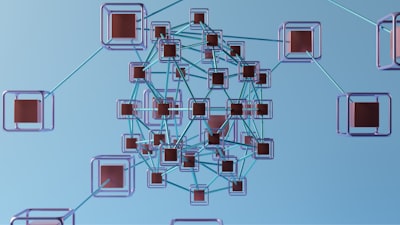
What exactly is a knowledge graph in an intranet? It is a semantic model that represents people, documents, processes, clients and projects as related entities. When an employee searches for a procedure, the system does more than retrieve files by keywords; it understands the relationship between that procedure, the person responsible, the system where it is processed and the related risk level. This connected view turns the intranet into an operational assistant rather than a simple repository.
The starting point was complex. The company used an ERP, a CRM, SharePoint, Microsoft Teams and several internal applications developed over the years. Each department managed data with different logic, and Excel templates had become the organization's unofficial memory. New employees needed weeks to understand workflows, and key knowledge lived with a few experienced people. At the same time, administrative workload grew without additional headcount, and duplicate information caused constant errors.
Facing this diagnosis, Q2BSTUDIO proposed a different approach: not to create a beautiful intranet, but a smart one. The design started with a discovery workshop to map critical processes, data sources, decisions that depended on knowledge, and the metrics that management wanted to improve. This previous work made it possible to define a realistic MVP and establish a measurement baseline. The lack of clear indicators is a common reason why many AI projects fail to demonstrate return, so the entire effort was oriented from the start toward observable outcomes.
During the following weeks, Q2BSTUDIO built a custom solution. On top of custom software, the team implemented a knowledge service that ingested internal documents, ERP records and relevant Teams conversations. Every object was classified and related through a graph, so the search engine understood concepts, synonyms and relationships. For example, a query about a renewed contract could return the connected client, the account manager, the signed document and the next billing milestone, always with permission controls.
Automation played a central role. Processes that once required manual steps across many screens became automated workflows with approval checkpoints. Where necessary, an AI agent generated a draft response, sent it to a human for validation, and only then updated the system. This combination of AI agents and human supervision reduced errors and built trust with employees. Teams interested in these capabilities can review the process automation services offered by Q2BSTUDIO.
Security was a priority from the architecture. The platform was deployed in the cloud, using AWS and Azure infrastructure to scale AI services without exposing internal data. Role-based access, federated identity with Active Directory, encryption in transit and at rest, audit logging for every interaction, and GDPR compliance were configured from the start. Cybersecurity was treated as a design requirement, not as an add-on. Every call to the language models was recorded to provide traceability for internal audits and client requirements.
Management particularly valued the dashboard layer. Q2BSTUDIO implemented Power BI dashboards linked to operational and financial KPIs. The leadership team could see in one screen the volume of resolved requests, cycle time, bottlenecks, and the economic impact of each workflow. This visibility helped prioritize improvements and justify the investment to the steering committee.
The results in Córdoba exceeded expectations in the initial phase. At the end of the rollout, average time to resolve an internal request fell by more than half, repetitive administrative work dropped by about a third, and the operational error rate went from 15% to 3%. Management reassigned several operations employees to higher-value activities. The investment was recovered before the first year was complete, and the new workflow model absorbed additional workload without hiring more people.
An important factor was team involvement. Instead of presenting a closed solution, Q2BSTUDIO worked in phases: first a small group of users tested the MVP; then operations and customer service departments joined; finally the solution was expanded to the entire organization. This gradual implementation reduced friction and allowed workflows to be adjusted before generalization. According to company leaders, adoption was much faster than in previous traditional software projects.
One of the most important lessons is that technology matters less than integration. The most advanced language models are useless if they cannot access the right data at the right time. The real competitive advantage lies in the knowledge graph design, the quality of integrations, and the decision logic around the AI.
Another lesson is the need for human checkpoints in critical processes. Not every decision should be automatic. In invoicing, contracts, or access level changes, human supervision reduces risk and improves acceptance. The goal is not to replace people, but to eliminate repetitive tasks and give every employee contextual information to make better decisions.
Q2BSTUDIO is a software development and technology company with expertise in custom software, artificial intelligence, cybersecurity, AWS/Azure cloud, and BI/Power BI. Its proposal combines business orientation with technical rigor and works with companies of all sizes in Córdoba and other regions. In intranet with knowledge graph projects, Q2BSTUDIO contributes not only programming but also consulting to identify use cases with the highest return.
Organizations that want to modernize their intranet should start with a brief diagnosis. It is not necessary to replace the ERP or implement cutting-edge systems to obtain significant benefits. What matters is designing a knowledge layer that connects existing systems and lets employees access the right information without friction. Q2BSTUDIO helps define the scope and estimate expected ROI before writing a single line of code.
The Córdoba company in this case was not looking for an aesthetic innovation project; it wanted to solve concrete operational problems. The combination of intranet, knowledge graph, AI agents and automation turned organizational knowledge from something trapped in people and files into an asset that is searchable, measurable and secure. This experience shows that digital transformation can also be pragmatic and delivered in short timeframes.
If your company in Córdoba faces a similar situation, it makes sense to talk to a team that understands both business and technology. Q2BSTUDIO offers a discovery session to analyze the specific case and propose a realistic plan. With the right combination of artificial intelligence solutions and automation, it is possible to turn the intranet into a real competitive advantage. The 2026 case proves that with a good strategy, results arrive sooner than expected.