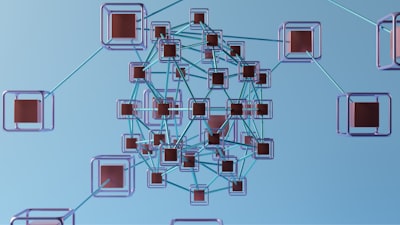
The corporate intranet has stopped being a simple document repository. In 2026, an intranet with knowledge graph in Córdoba is the foundation for companies to compete in a digital environment: it is not a static portal, but a system that understands how data, people and processes relate within the organization. This technology, combined with artificial intelligence, turns business information into actionable knowledge.
A knowledge graph is a semantic database that models entities and their relationships: employees, departments, projects, documents, customers, suppliers. Instead of searching by exact keywords, the intranet understands the meaning of queries and returns contextual answers. For example, if someone asks 'who manages billing for customer X?', the system not only finds documents, but also identifies the responsible person, their role, their team and the associated processes. This level of understanding turns the intranet into an intelligent assistant, not a simple search engine.
Traditional intranets often fail because information is fragmented across folders, databases, emails and third-party tools. Employees waste time looking for data that already exists, and management lacks a unified view. The knowledge graph solves this problem by creating a semantic layer over all company systems. Instead of replacing existing tools, it connects them. This is especially relevant in Córdoba, where many mid-sized companies live with old software and need to modernize without disrupting operations.
Integrating AI into the intranet multiplies its value. Natural language models allow employees to converse with the platform: 'summarize the main agreements of Monday's meeting', 'give me the status of the projects in the commercial area' or 'prepare an incident report for the last month'. Behind this user experience there is a complex orchestration of AI agents, which are software components capable of planning tasks, querying databases, invoking APIs and coordinating responses. These agents act as digital assistants specialized in each department.
For this vision to be viable, technology must adapt to each company, not the other way around. That is why having custom software is essential to model knowledge according to the particularities of the business. Generic development imposes structures that rarely fit the operational reality of a company. Custom software ensures that the intranet reflects exactly the workflows, roles and internal policies from day one.
Infrastructure also matters. An intranet with knowledge graph processes growing volumes of data and requires a scalable architecture. This is where AWS/Azure cloud services come into play, offering on-demand computing capacity, managed databases and pre-trained AI services. The choice of cloud provider depends on data sovereignty, latency and cost requirements. In many cases, a hybrid approach is best: sensitive data remains on-premises or in a private cloud, while AI workloads run on the public cloud.
Speaking of sensitive data means speaking of cybersecurity. A modern intranet is an attractive target for attacks because it concentrates critical information. Protection must be comprehensive: encryption in transit and at rest, multi-factor authentication, role-based access control and continuous monitoring. Moreover, AI models introduce new attack vectors, such as prompt injection or data exfiltration through generated responses. Implementing a cybersecurity strategy specific to intelligent environments is essential to prevent leaks and ensure employee trust.
Another key piece is business analytics. An intranet with knowledge graph generates a huge amount of usage data: what people search for, where they find answers, which spaces have more activity, where bottlenecks occur. With BI/Power BI tools, executives can visualize these indicators in interactive dashboards and make evidence-based decisions. The intranet stops being a general expense and becomes a measurable investment, with metrics directly linked to business objectives.
Q2BSTUDIO, as a software development and technology company, supports organizations in this transformation process. Its approach combines solid software engineering with applied artificial intelligence, always with a practical, results-oriented perspective. From the initial audit to deployment and team training, the goal is for the client to be autonomous and not depend on consultants for day-to-day operations. This autonomy is achieved by delivering an administrative web portal from which business users can configure prompts, monitor costs and update knowledge without writing code.
The first step in any project is understanding the starting point. Q2BSTUDIO conducts a discovery workshop in which the company's main pain points, existing systems and improvement opportunities are identified. From there, a phased delivery plan is defined, with a minimum viable product in a few weeks. This allows validating assumptions, measuring real impact and adjusting course before scaling. Throughout the process, integrations with SAP, Odoo, Salesforce, Microsoft Dynamics and other platforms are carried out, avoiding replacement of systems that already work.
Use cases are numerous: onboarding of new employees, where the intranet guides the user through company procedures; customer service, where the knowledge graph helps resolve doubts in real time; project management, where AI agents automatically update status and alert about risks; and training, where personalized itineraries are generated according to role. In all cases, the result is reduced search times, better decision quality and a team more focused on high-value tasks.
In short, the intranet with knowledge graph is much more than a technological trend: it is a concrete response to the productivity and knowledge management challenges faced by companies in Córdoba in 2026. To move in this direction, it is not necessary to replace all existing infrastructure or hire a large data team. It is enough to have a technology partner that understands the business, masters artificial intelligence and builds AI with sound judgment: robust, secure solutions adapted to each organization.