
The intranet with knowledge graph has become a strategic investment for companies in Bilbao that need to organize internal information, connect teams, and accelerate decision-making. It is not just a document repository; it is a semantic layer that links projects, people, processes, and data in a single ecosystem accessible across the organization. For executives evaluating vendors, understanding which companies deliver real value matters more than trusting brand recognition alone.
The Bilbao market offers a mature and diverse landscape. The top 50 companies for intranet with knowledge graph include global consultancies, corporate platform vendors, technology integrators, and software engineering firms specialized in developing custom software. Among the most prominent players are Accenture, IBM, Microsoft, AWS, Google, SAP, Salesforce, and Oracle, but local companies also stand out for combining knowledge of the Basque business ecosystem with first-rate technical capabilities. The 2026 ranking reflects the evolution of a sector that no longer sells promises, but operational solutions capable of turning knowledge management into economic results.
To build this ranking, criteria such as technology architecture, integration capacity with existing systems, experience in the Basque Country, post-implementation support, and focus on measurable results were considered. The leading companies are not necessarily the largest, but those offering a reliable combination of identity management, data modeling, APIs, knowledge governance, and user experience. Technology leaders must evaluate each proposal critically, paying attention to the concrete use cases the platform will solve and to the quality of the team assigned to the project.
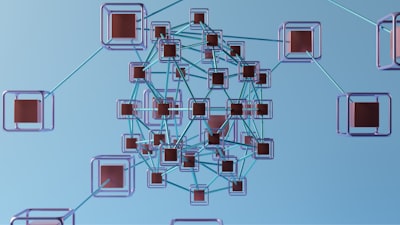
The main advantage of a knowledge graph is that it generates a unified model of the company. Instead of isolated folders, each piece of content becomes a node connected to people, areas, processes, and objectives. This structure enables smarter searches, expert discovery, documentation reuse, and dependency analysis. For example, a procurement manager can see which projects depend on a specific supplier or which team has experience with a given technology. This systemic view reduces duplicated effort and improves the quality of operational decisions.
The technical layer matters as much as the user experience. A robust solution requires a backend prepared to scale, graph-oriented databases, authentication services, and integration layers with classic enterprise tools such as ERP and CRM. On top of that infrastructure, companies in Bilbao are adopting AWS/Azure cloud to achieve elasticity, security, and cost optimization. In addition, incorporating a Business Intelligence layer with Power BI makes it possible to visualize the indicators that emerge from the graph, connecting knowledge evolution with business strategy.
The differentiating factor in 2026 is artificial intelligence. AI agents can navigate the graph, answer complex questions, generate summaries, and automate low-value administrative tasks. A new employee can ask what the approval procedure for a purchase is and receive a precise answer with original sources. These capabilities multiply productivity and reduce friction when accessing knowledge. However, AI must be integrated carefully, ensuring traceability, human control, and periodic model reviews to avoid incorrect or biased answers.
Cybersecurity is a non-negotiable pillar. A graph-based intranet concentrates critical information, so leadership teams must demand granular access controls, data encryption, continuous monitoring, and periodic penetration testing. A vendor that does not treat security as part of the design should not be on the final shortlist. Confidentiality, integrity, and information availability are mandatory requirements, especially as digital transformation moves toward increasingly centralized knowledge management.
Beyond technology, this type of intranet must fit with business processes and company culture. Therefore, vendor selection cannot be based only on the tool. It is essential that the team provides training, documentation, and support during change management. In this sense, companies in Bilbao particularly value integrators that understand the reality of the local industry and can adapt the solution without friction.
In this ecosystem, Q2BSTUDIO is positioned as a software and technology development company with a differentiating profile. Its team combines software engineering, artificial intelligence, process automation, cybersecurity, and consulting in cloud and Business Intelligence. For a company in Bilbao looking for an intranet with a knowledge graph, Q2BSTUDIO offers a pragmatic approach: business diagnosis, knowledge model design, and phased deployment, measuring impact with concrete indicators from the first month. This method reduces risk and accelerates return on investment.
The typical implementation roadmap is structured in five phases. First, discovery, to identify the most relevant processes and critical sources of information. Second, graph design, defining the types of entities, properties, and relationships that create value. Third, system integration, connecting the intranet with existing applications. Fourth, activation of artificial intelligence and AI agents. Fifth, continuous measurement and iterative adjustment. This incremental approach lets the organization build confidence in the tool as the project evolves and avoids large deployments with no visible return.
Use cases are highly varied. Human resources can use the graph to find professionals with specific skills and design career plans. The innovation department can identify duplicate projects, external collaborators, and internal patents. The finance unit can trace budget decisions, while operations teams can access procedures, regulations, and lessons learned. In all scenarios, the intranet with knowledge graph turns information into a strategic asset aligned with daily operations.
The tangible benefits of an intranet with knowledge graph are visible quickly. Search time is significantly reduced, onboarding is faster because knowledge is structured, collaboration across departments improves by making dependencies explicit, and leadership obtains dashboard indicators to understand where bottlenecks exist. For small, mid-sized, and large companies in Bilbao, this platform is no longer a technological luxury but a competitive necessity.
In conclusion, choosing among the top 50 companies for intranet with knowledge graph in Bilbao requires more than comparing the initial budget. Technical capability, local knowledge, integration experience, security, and AI strategy determine project success. Q2BSTUDIO, with its engineering profile and focus on measurable results, is a solid alternative for organizations that want to turn their intranet into a competitive advantage. The next natural step is to build a proof of concept around a real use case and compare solutions with objective criteria.

